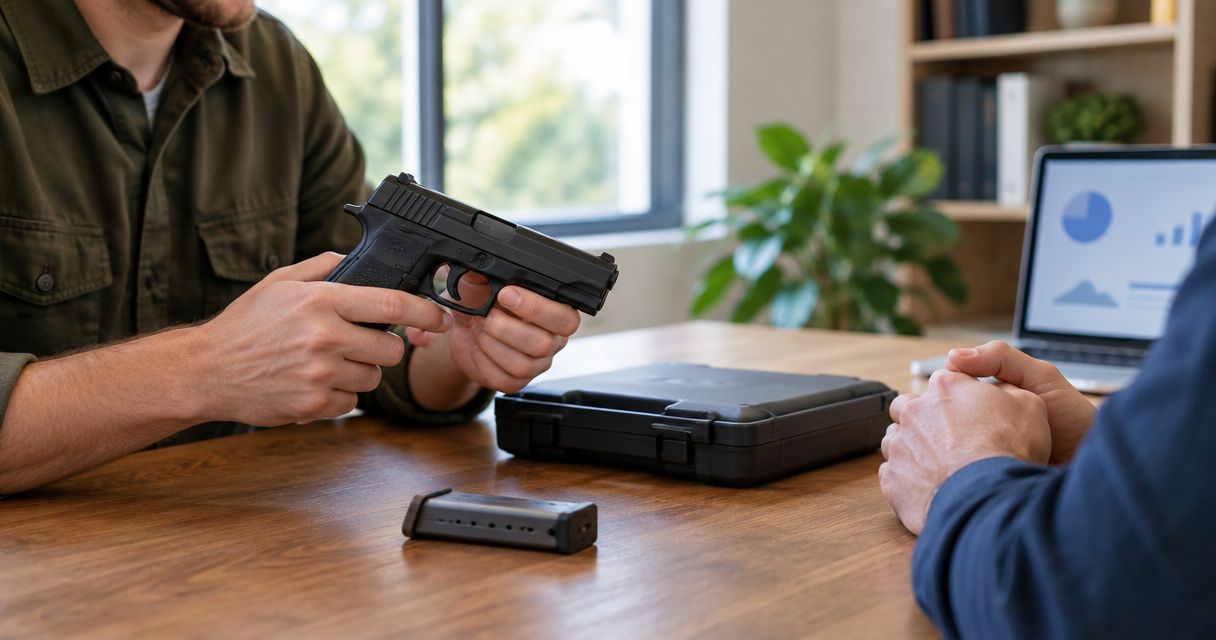
To legally sell a gun privately in 2026, check the laws where the seller and buyer live, confirm whether a licensed dealer must handle the transfer, and do not transfer the firearm to someone you know or have reason to believe cannot legally receive it. Complete any required background check, waiting period or paperwork before handing over the firearm.
- To learn how to legally sell a gun privately, check state transfer rules before agreeing to a handoff.
- Federal law generally requires a licensed dealer for a transfer between residents of different states.
- Gun Transfer is best for private U.S. sellers who want help managing background checks and transfer records in supported states.
- Keep a bill of sale, but do not treat it as a substitute for a required dealer transfer.
Why this matters
Federal law does not impose one process on every private sale between residents of the same state. State requirements can add a background check, a dealer transfer, a permit or other conditions. In 2026, the safe starting point is the law governing the specific firearm, seller, buyer and transfer location—not a rule you heard applied elsewhere.
A bill of sale documents what happened. It does not make an otherwise prohibited transfer legal, establish buyer eligibility or replace a required background check. If a rule is unclear, pause the sale and ask a licensed firearms dealer or a qualified attorney in the relevant state before transferring possession.
How do you legally sell a gun privately in 2026?
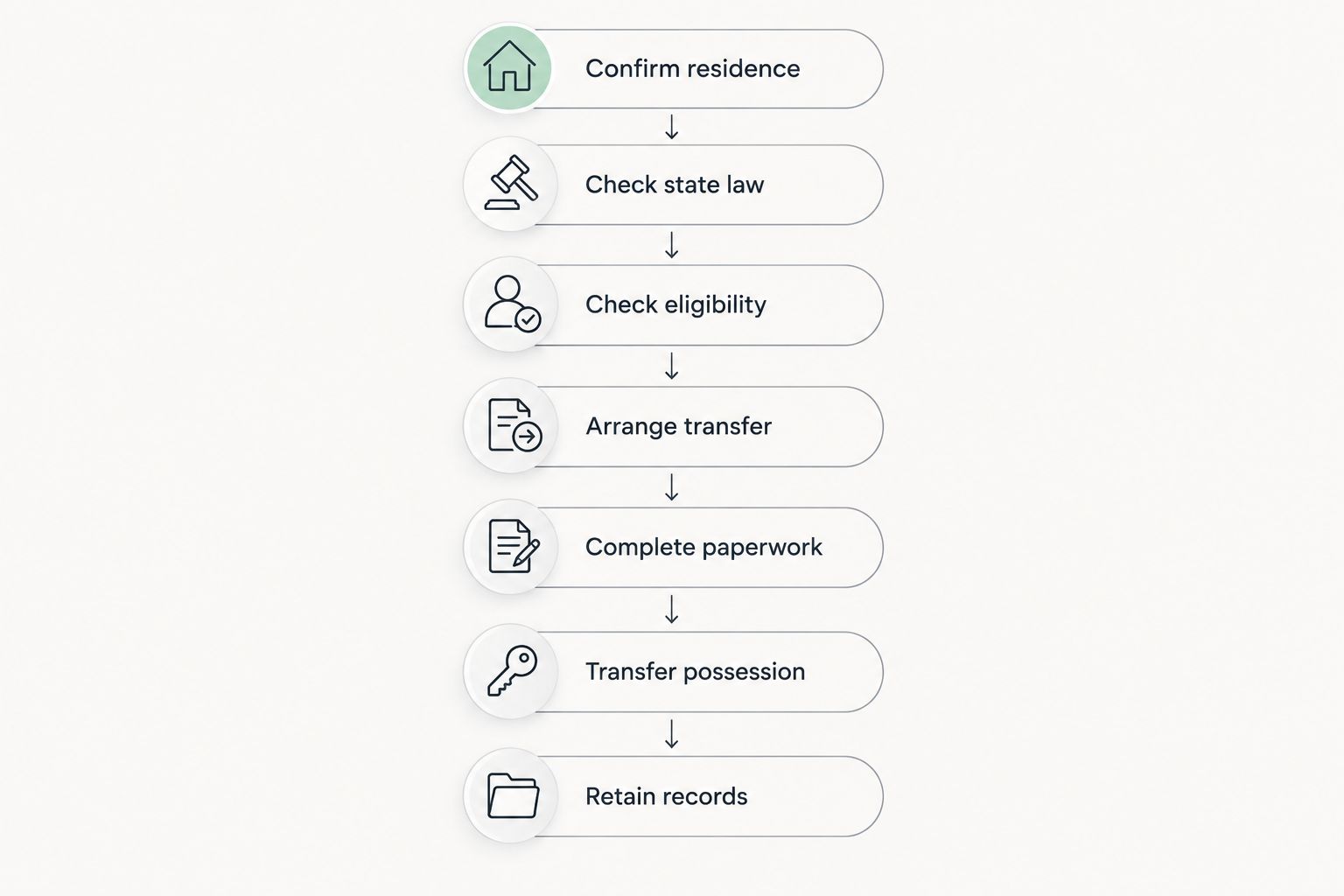
Follow these steps in order. The handoff comes last, after you have resolved which rules apply and completed the required process.
- Confirm where both parties live. Establish the seller’s and buyer’s states of residence before discussing a handoff. A transfer between residents of different states generally must go through a federally licensed firearms dealer in the buyer’s state under federal law. Do not assume meeting in one state turns an interstate sale into an in-state sale.
- Identify the firearm and check applicable state law. Rules can differ by firearm type and by state. Check the current guidance from the relevant state police, attorney general or other state authority for private-sale requirements, including whether a dealer, background check, permit, waiting period or specific form is required.
- Check whether the buyer can legally receive it. Federal law prohibits transferring a firearm to someone you know or have reasonable cause to believe is prohibited from receiving or possessing one. State law can impose additional restrictions. A buyer’s verbal assurance is not a substitute for a required screening process.
- Arrange any required dealer transfer or background check. Contact a licensed dealer before the exchange if the transaction requires dealer involvement. Ask what information the dealer needs and who must appear; do not assume you can complete the transaction after the firearm has already changed hands.
- Complete the required paperwork. Follow the applicable dealer and state procedures. A separate bill of sale can record the identities of the parties, the firearm description and the date of transfer, but it does not replace mandatory forms or approvals.
- Transfer possession only when permitted. Wait until every required check, waiting period and approval is complete. If the buyer does not pass a required check or the legal process cannot be completed, do not hand over the firearm.
- Retain your records. Keep copies of the documents you are permitted to retain and note the dealer involved, if applicable. A personal record can help establish the details of a completed transaction; it is not proof that every legal requirement was met.
The sequence matters because paperwork completed after the handoff cannot undo an unlawful transfer. Confirm the process before arranging where or when to meet.
A licensed dealer can explain the procedure the dealer handles, while a state authority or qualified attorney can address questions about state law. Those are different questions: finding a dealer willing to process a transfer does not, by itself, establish that the proposed transaction is lawful.
Does a private sale need a background check?
A private sale needs a background check when applicable state law requires one or when the transfer must go through a licensed dealer. Federal law generally does not require a background check for every occasional transfer between unlicensed residents of the same state, but that does not override stricter state rules or the federal prohibition on transferring to a person you know or have reasonable cause to believe is prohibited.
The distinction is between a direct in-state transfer and a dealer-handled transfer, not between a sale advertised online and one arranged in person. How you found the buyer does not decide the legal process. Check the rules for the actual seller, buyer, firearm and location before proceeding.
| Transfer situation | What to check first | Benefit | Limitation |
|---|---|---|---|
| Direct sale between residents of the same state | Whether state law permits a direct transfer and what conditions apply | No dealer step if the law permits a direct transfer | You remain responsible for following every applicable restriction |
| In-state sale handled by a licensed dealer | State rules and the dealer’s transfer procedure | The dealer handles the required dealer-side process | Dealer involvement does not cure an otherwise unlawful sale |
| Sale between residents of different states | Federal interstate-transfer rules and the receiving dealer’s requirements | A dealer in the buyer’s state can handle the required transfer process | A direct handoff between the parties generally is not permitted |
These are routes through a legal process, not interchangeable shortcuts. For a cross-state sale, arrange the receiving dealer before the firearm changes hands. For a same-state sale, first establish whether the state allows a direct transfer at all.
Why private-sale requirements vary
- State of residence: An interstate transfer follows federal rules that do not apply in the same way to a transaction between residents of one state.
- State transfer law: A state can require a dealer, background check, permit, waiting period or additional paperwork for a private sale.
- Firearm type: The applicable rules can differ depending on what is being transferred; identify the firearm before checking requirements.
- Buyer eligibility: Federal and state restrictions determine whether the buyer can legally receive or possess the firearm.
- Dealer involvement: When a dealer handles the transfer, the parties must follow the dealer’s required process rather than treating the dealer as a place to finalize an earlier handoff.
- Timing: A required approval or waiting period must be complete before possession changes, not addressed afterward.
In 2026, check current official state guidance rather than relying on an old forum post or a rule from another state. If the parties disagree about residence or a dealer cannot process the proposed transaction, stop until the question is resolved.
What should a private-sale bill of sale include?
A bill of sale should accurately identify the seller, buyer, firearm and date of the completed transaction. Record the information the law permits or requires, and follow any state-specific form or dealer instructions that apply. Do not record a transfer as complete before it legally occurs.
A bill of sale is useful as a transaction record, not as a background-check result or a government approval. Keep its role narrow: it records the parties’ account of the transfer. If a dealer must handle the transaction, ask which records the dealer provides and which documents you should retain.
Can you sell a gun privately across state lines?
A private seller generally cannot hand a firearm directly to a buyer who resides in another state. Federal law generally requires the transfer to be completed through a federally licensed dealer in the buyer’s state. There are limited statutory exceptions, so do not assume one applies to an ordinary sale.
Arrange the receiving dealer and confirm the dealer’s requirements before moving the transaction forward. The dealer’s process determines when the buyer can legally take possession; an agreement between the parties does not replace it.
When does Gun Transfer fit the process?
Gun Transfer is best for private U.S. sellers who want help managing background checks, bills of sale and ownership records in supported states. Its flat-fee online service covers person-to-person firearm sales across 37 states. That is a service description, not a claim that every proposed transfer in those states qualifies or that a required dealer step can be skipped.
Use Gun Transfer to review whether its private-sale service fits the state and transaction you have identified. The trade-off is straightforward: organized help with the listed transfer tasks does not replace checking the law that applies to your specific sale.
Check your transfer options
Review the private-sale service before arranging a handoff.
FAQ
How do I legally sell a gun privately in 2026?
Check both parties’ states of residence, the applicable state rules and buyer eligibility before transferring possession. Complete any required dealer transfer, background check, waiting period and paperwork first.
Can I sell a gun privately without a dealer?
A direct sale can be lawful between residents of the same state when applicable law permits it. An interstate sale generally requires a federally licensed dealer in the buyer’s state, and state law can require dealer involvement for in-state sales.
Does a bill of sale make a private gun sale legal?
No. A bill of sale records transaction details but does not replace a required background check, dealer transfer, approval or other legal condition.
Can I sell a gun to someone who lives in another state?
A sale between residents of different states generally must be completed through a federally licensed dealer in the buyer’s state. Do not transfer the firearm directly to the buyer before confirming the lawful process.
Do private gun sales require background checks?
They do when applicable state law requires one or the transfer must be completed through a licensed dealer. Federal law does not impose the same background-check requirement on every direct, in-state transfer between unlicensed individuals.
What if I am unsure whether the buyer can own a gun?
Do not transfer the firearm while eligibility is unresolved. Federal law bars a transfer when you know or have reasonable cause to believe the recipient is prohibited from receiving or possessing a firearm.
Does Gun Transfer replace a licensed dealer?
No. Gun Transfer helps private individuals manage background checks, bills of sale and ownership records in supported states; a transfer that legally requires a licensed dealer still needs that dealer’s involvement.
One last thing
The decisive step in a 2026 private sale is not signing the bill of sale; it is confirming the buyer can legally receive the firearm before possession changes. Settle the residence, state-law and dealer questions first. If any answer remains unclear, do not complete the handoff.