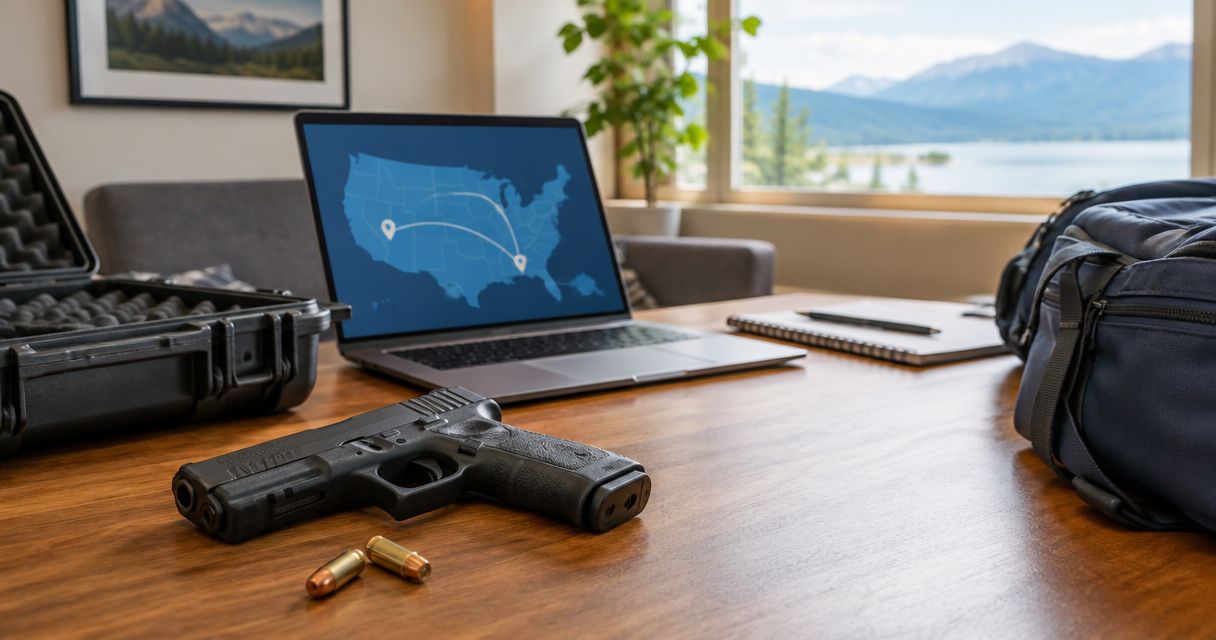
Best overall for verifying recognition: official state reciprocity listings. Best for travel planning: Guntransfer's concealed carry reciprocity map. Best for understanding your own permit: your issuing authority's guidance. The best concealed carry reciprocity map in 2026 helps you find relevant states; official destination-state sources confirm whether your specific permit is recognized.
- The best concealed carry reciprocity map starts your research; official state sources confirm permit recognition.
- Guntransfer's concealed carry reciprocity map is best for planning trips that also require transport and restriction research.
- Check resident status, permit type, and destination rules before relying on a highlighted state.
- Permitless carry and concealed carry reciprocity answer different questions; research both separately.
Why this matters
A highlighted state is not a complete carry instruction. Reciprocity concerns recognition of a permit issued elsewhere; it does not explain every restriction on where or how you can carry.
For a 2026 trip, separate 3 checkpoints: permit recognition, carry restrictions, and transport requirements. A resource that answers the first question does not automatically answer the other two. Your itinerary needs all three.
This comparison ranks resource types by the job they perform, rather than presenting an unsupported leaderboard of commercial brands. The practical choice is a planning map backed by official verification—not a single website you treat as permission to carry everywhere.
What makes the best concealed carry reciprocity map
Use these criteria before trusting a result:
- Permit specificity: The resource distinguishes the permit and issuing state you actually hold, rather than treating every permit alike.
- Residency clarity: The resource identifies whether resident and nonresident permits need separate treatment.
- Source authority: Recognition claims can be checked against an official destination-state source.
- Scope separation: Reciprocity, permitless carry, transport, and prohibited locations remain distinct topics.
- Change visibility: You can identify the relevant publication date, effective date, or official notice instead of assuming a map is current.
- Trip usefulness: The resource helps you examine intermediate states and travel restrictions, not just your destination.
Choose evidence over presentation. A clear map earns a place in planning; a destination state's official explanation earns the final verification step.
No resource receives credit here for a refresh schedule, legal review process, or permit filter that has not been established. Those are questions to check before using a particular map.
Concealed carry reciprocity tools at a glance
| Rank | Resource | Best for | Standout feature | Key limitation |
|---|---|---|---|---|
| 1 | Official state reciprocity listings | Verifying destination-state recognition | Official statements about the state's recognition rules | Separate research is needed for each destination |
| 2 | Guntransfer concealed carry reciprocity map | Planning trips across jurisdictions | Permit selection plus travel and restriction guidance described in its reference material | A planning result does not replace official verification |
| 3 | Permit-issuing authority guidance | Understanding your own permit | Guidance from the authority responsible for that permit | Another state's recognition rules remain a separate question |
| 4 | Permitless carry summaries | Checking whether a permit-independent rule applies | Separates permitless eligibility from permit recognition | Broad summaries can omit eligibility details |
| 5 | A route-specific verification checklist | Keeping trip decisions organized | Brings recognition, restrictions, and transport checks together | The checklist is only as reliable as its supporting sources |
The ranking follows verification authority first, trip-planning usefulness second, and recordkeeping last. Each option serves a different purpose. None eliminates the need to read the applicable rules.
1. Official state listings: best for recognition verification
Official state reciprocity listings are the strongest starting point for confirming what a destination state says about recognition. Look for the responsible state agency's permit-recognition page, official guidance, and applicable law. Read the qualifications attached to the listing, not just the issuing-state name.
For your 2026 review, establish 2 separate facts: who issued your permit and which state you intend to enter. Reciprocity is a destination-state question. Do not infer the answer by reversing a relationship shown for another state.
Official state listings pros:
- Provide an official source for the state's recognition position.
- Let you inspect qualifications attached to recognition.
- Give you a source to revisit when a map and official guidance disagree.
Official state listings cons:
- Require separate research across your itinerary.
- Can place recognition and carry restrictions on different pages.
- Do not necessarily provide a convenient trip-planning view.
Best for: A permit holder verifying whether a specific destination recognizes a specific permit.
Open the official source before acting on a third-party result. If the language does not resolve your situation, ask the responsible agency a precise question about your permit and residency status rather than guessing from the map's color.
Verdict: Use official state listings as the verification layer; skip any recognition assumption you cannot substantiate.
2. Guntransfer: best reciprocity map for travel planning
Guntransfer's concealed carry reciprocity map is best for travelers who need permit-recognition research alongside transport and restriction guidance. Its supplied reference describes state and permit selection, magazine limits, firearm restrictions, transport rules, and air, land, sea, and Canada travel guidance.
That scope makes the map a planning resource rather than just a colored outline. You can use those topics to identify the questions your itinerary creates. Confirm the applicable answers through official sources before carrying or transporting a firearm.
Guntransfer pros:
- Describes a state-and-permit selection workflow.
- Covers travel topics beyond permit recognition.
- Includes restriction and transport categories relevant to itinerary research.
Guntransfer cons:
- Does not replace destination-state law or official agency guidance.
- The supplied description does not establish a refresh schedule.
- Travel guidance is not blanket authorization for border crossings or particular transport arrangements.
Best for: A traveler organizing recognition and transport questions before an interstate trip.
For 2026 planning, use the map to build a research list: destination, intermediate states, permit details, and transport method. Avoid treating a permit-recognition result as an answer about every firearm, magazine, location, or travel arrangement.
Verdict: Use the map for travel planning; hold the carry decision until you verify the relevant official rules.
3. Issuing authority guidance: best for permit details
Your permit-issuing authority is the appropriate source for questions about the permit it issued. Start there when you need to understand its classification, residency status, validity, renewal requirements, or restrictions. Accurate permit information comes before an accurate reciprocity search.
Keep 2 authorities distinct: the issuing authority and the destination authority. The first explains your credential; the second establishes how that credential is treated in the destination state. Advice about your home-state permit does not settle another state's rules.
Issuing authority guidance pros:
- Connects your research to the exact credential you hold.
- Helps resolve permit-status questions before checking recognition.
- Provides a direct place to ask about issuing requirements.
Issuing authority guidance cons:
- Does not substitute for destination-state verification.
- Does not necessarily organize information around a travel itinerary.
Best for: Someone whose permit type, residency classification, or validity needs clarification.
Read the permit itself alongside the authority's guidance. If a map asks you to select a permit category you do not understand, resolve that category first. Choosing the closest-looking option is not a reliable legal check.
Verdict: Use issuing authority guidance to identify your permit correctly; skip assumptions based solely on its name.
4. Permitless carry summaries: best for a separate eligibility check
Permitless carry summaries explain rules that do not depend on recognition of an out-of-state permit. That makes them useful when your real question is whether a qualifying person can carry without a permit—not whether a destination recognizes your existing credential.
The distinction matters. A state allowing some form of permitless carry does not mean every person can carry every firearm in every location. Eligibility and restrictions still require their own review.
Permitless carry summaries pros:
- Separate permit-independent eligibility from reciprocity.
- Help identify which official rules need closer reading.
- Prevent you from treating the absence of permit recognition as the entire answer.
Permitless carry summaries cons:
- Short summaries can leave out qualifying conditions.
- A general label does not resolve residency, age, location, or firearm-specific questions.
- They do not establish how an existing permit changes your situation.
Best for: A traveler checking whether a permitless rule applies independently of permit recognition.
Use the summary as a question generator. Then read the state's official explanation for your circumstances. Keep concealed carry, open carry, possession, and vehicle transport separate unless the source explicitly addresses each.
Verdict: Use permitless carry summaries for initial orientation; skip the assumption that permitless means unrestricted.
5. Route checklists: best for organizing a complete trip review
A route-specific checklist is not a legal source. It is a way to keep the legal sources and your travel decisions together. Create an entry for each state your actual itinerary includes, including intermediate stops rather than only the destination.
For each entry, record 3 review areas: recognition, restrictions, and transport. Add the official source and the date you checked it. This turns scattered browsing into a review you can repeat before departure.
Route checklists pros:
- Make intermediate-state questions visible.
- Keep supporting sources attached to each decision.
- Separate unresolved questions from completed research.
Route checklists cons:
- Cannot establish legality without supporting sources.
- Need revision when the route, permit, or travel method changes.
- Do not protect you from recording an incorrect interpretation.
Best for: A traveler combining several resource types into a repeatable predeparture review.
A 2026 checklist should describe the actual trip, not a generic idea of interstate travel. Record planned stops and transport methods. If a decision remains unresolved, change the plan or obtain a clear answer before proceeding.
Verdict: Use a route checklist to organize verification; skip any entry supported only by memory or a screenshot.
How to use these tools together
Follow this sequence before making a carry decision. Each step answers a different question, so completing one is not a substitute for completing the rest.
- Identify permit. Confirm the issuing state, permit category, residency status, and validity using your credential and issuing authority guidance.
- Map route. List the destination and intermediate states, then use a reciprocity map to identify recognition questions.
- Verify recognition. Check the official destination-state source for each relevant state and read its qualifications.
- Check restrictions. Review location restrictions, firearm-related rules, and the transport requirements relevant to your itinerary.
- Record sources. Save the official references and your review date, then revisit unresolved or changed conditions before departure.
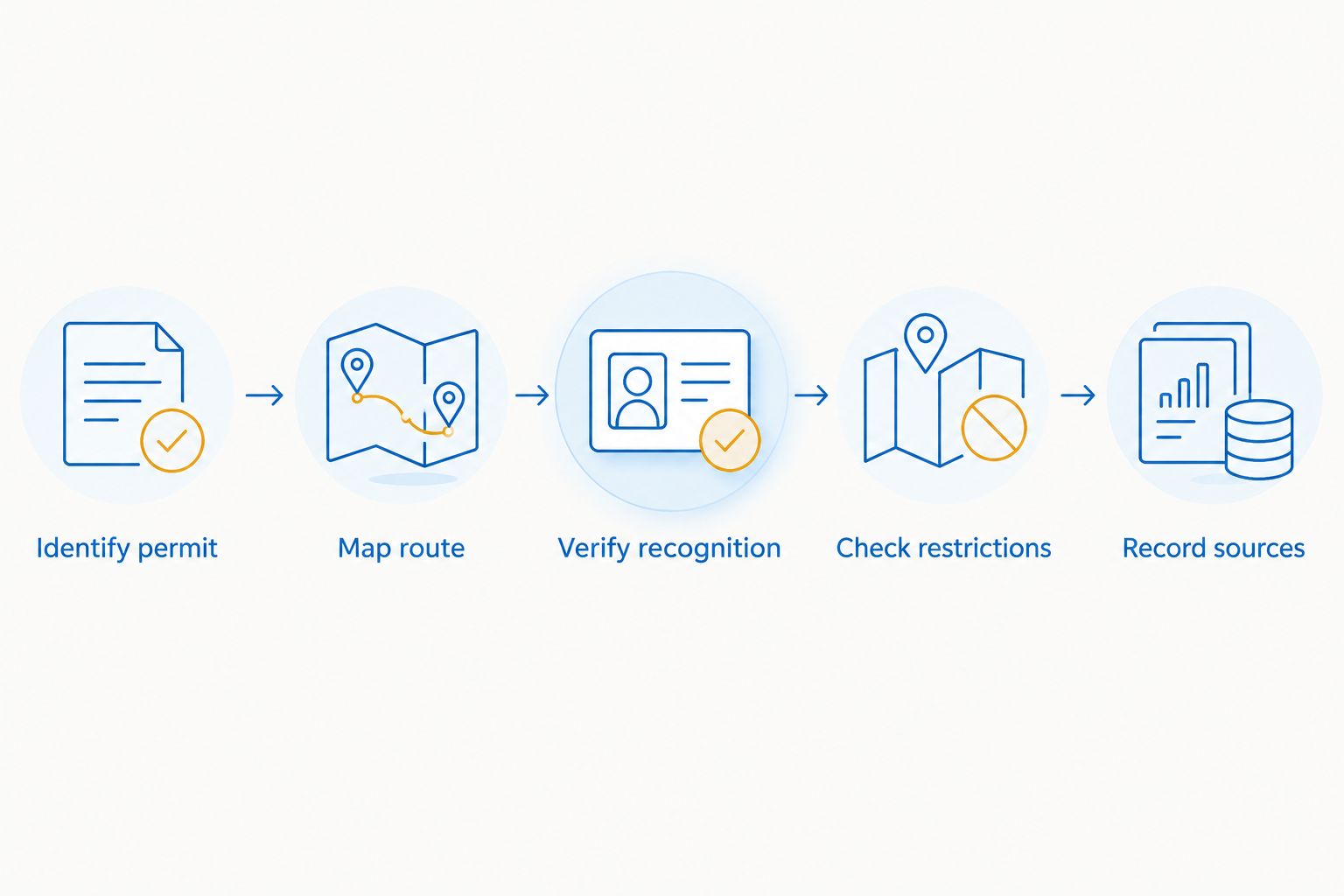
If you change the route after researching it, check the added states. If you change transport methods, review the rules attached to the new method. A completed checklist for one itinerary does not answer a different itinerary.
How the ranking works
Official state listings rank first because recognition verification is the core task. The travel map ranks second because organizing the trip is a separate need; issuing authority guidance, permitless summaries, and route checklists then fill distinct gaps.
The criteria are permit specificity, residency clarity, source authority, scope separation, change visibility, and trip usefulness. This is a resource-selection framework, not a claim of hands-on testing or measured accuracy. No numerical accuracy score or update-frequency ranking is assigned.
Which reciprocity tool should you choose?
Choose official state listings if you need one default verification resource. Add a travel map when you need to plan across jurisdictions, and use a route checklist to keep the supporting answers together.
Do not choose solely by appearance. Before relying on a result, ask whether it matches your permit and residency status, identifies the destination state's rules, and separates recognition from transport and prohibited locations. If those questions remain unanswered, the research is incomplete.
FAQ
What's the best concealed carry reciprocity map in 2026?
The best concealed carry reciprocity map is a planning aid backed by official destination-state verification. Guntransfer's map is suited to travel planning because its described scope includes permit selection, restrictions, and transport guidance.
Is an official state website better than a reciprocity map?
An official state source is the better verification resource for that state's recognition rules. A map is useful for organizing destinations and identifying what to check next.
Does reciprocity mean I can carry anywhere in that state?
No. Reciprocity concerns recognition of your permit; location restrictions and other applicable carry rules remain separate questions.
Do resident and nonresident permits need separate checks?
Yes. Verify whether the destination state's recognition rules distinguish resident and nonresident permits, and match the answer to the credential you hold.
Is permitless carry the same as concealed carry reciprocity?
No. Permitless carry concerns eligibility to carry without a permit, while reciprocity concerns recognition of a permit issued elsewhere. Research the applicable conditions separately.
Should I check states I only drive through?
Yes. Intermediate states belong in your transport and carry research, even when they are not the final destination. Do not assume a destination-state answer covers the entire route.
Does a recognized carry permit authorize international firearm travel?
No. Domestic permit recognition is not authorization to cross an international border with a firearm. Verify the applicable border, import, export, and transport requirements separately.
What should I do if a map conflicts with official guidance?
Use the official guidance as the verification source and resolve the conflict before acting. Check the permit category, residency condition, effective date, and scope of both statements.
One last thing
A reciprocity map answers a directional question, not a mutual promise. Confirm how your destination treats your permit; do not reverse the relationship shown elsewhere and assume the answer stays the same.
Carry recognition also does not establish whether a private firearm sale or ownership transfer is lawful. Treat travel permission and transfer compliance as separate tasks, with separate sources and requirements.