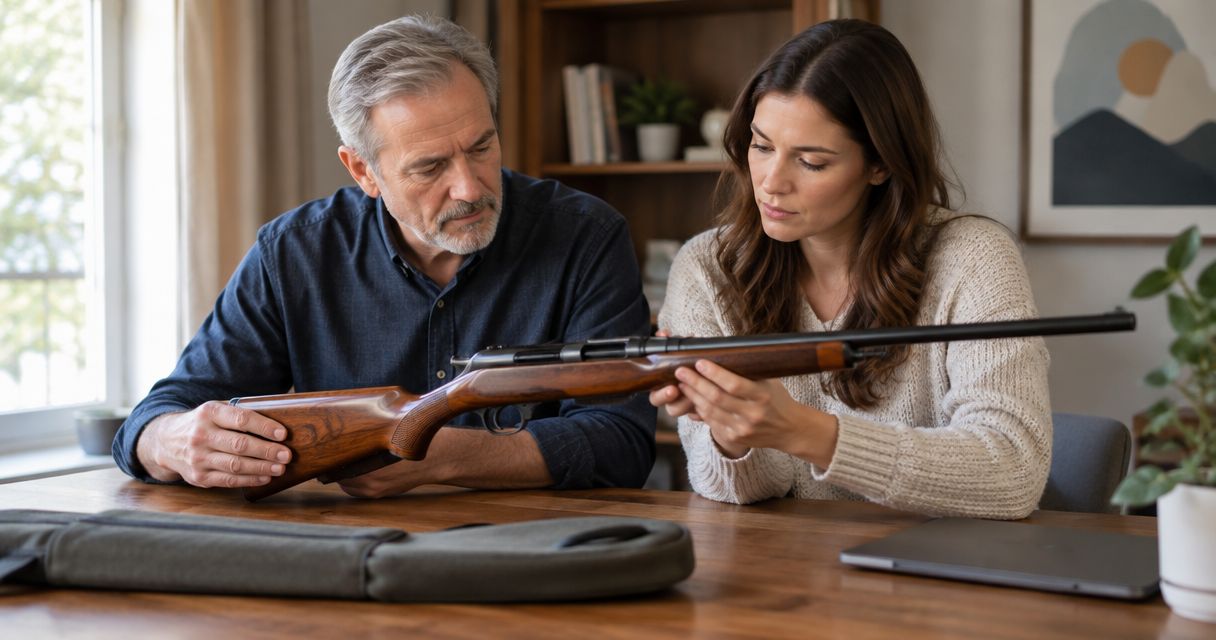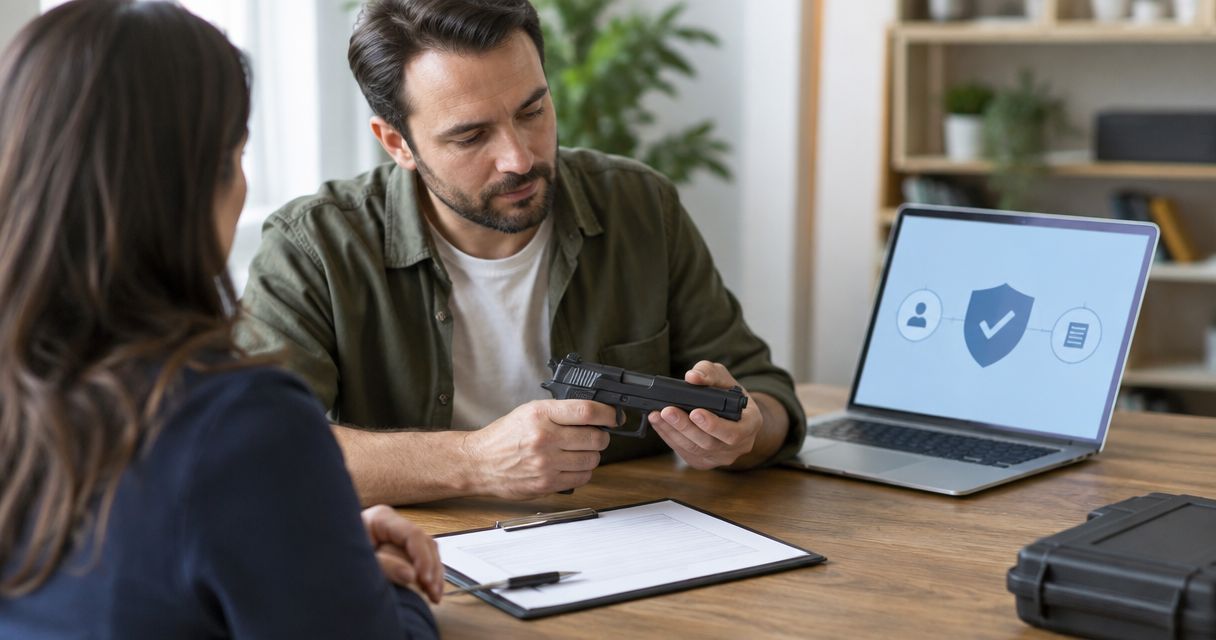
Best overall for buying a gun out of state: transfer through a licensed dealer in your home state. Best for an eligible rifle or shotgun purchased while traveling: an in-person sale through an out-of-state licensed dealer. Best for meeting a private seller: arrange the transaction at a licensed dealer in your home state. The right route in 2026 depends on the firearm, your state of residence, and both states’ laws—not where you find the listing.
- Buying a gun out of state generally requires a licensed dealer; a private bill of sale does not replace one.
- Use a home-state licensed dealer for an interstate handgun purchase.
- An out-of-state dealer can deliver eligible rifles and shotguns in person when both states’ laws permit.
- Guntransfer supports private-transfer documentation across 37 states; its service does not replace a required interstate dealer transfer.
Why this matters
An interstate purchase has separate steps: agreeing to buy the firearm and legally receiving it. You can arrange a purchase before delivery, but the seller cannot simply hand you a firearm because you signed paperwork or passed a private screening.
Guntransfer provides private firearm transfer compliance services, including background checks, bills of sale, and ownership records across 37 states. For an interstate transaction, documentation supports the transfer; it does not remove the federal requirement to use a licensed dealer where applicable.
This 2026 guide compares lawful delivery routes rather than marketplaces. A website, auction, or classified listing connects buyer and seller; it does not determine which transfer rules apply.
What makes the best out-of-state transfer method
Choose the route against these criteria before committing to the purchase:
- Federal eligibility: The route must comply with the rules for transfers between residents of different states.
- Firearm classification: Handguns, rifles, shotguns, and receivers do not share the same delivery rules.
- State-law compliance: Check the buyer’s state and the state where the dealer delivers the firearm.
- Dealer acceptance: Confirm that the receiving dealer accepts the transaction and the seller’s shipment or delivery arrangements.
- Documented handoff: Keep the purchase agreement separate from the dealer’s required transfer records.
- Pickup requirements: Confirm identification, permits, waiting periods, and any state-specific approval before traveling.
Residence—not the seller’s location—sets the starting point for choosing your transfer route. Federal firearm residency rules are more specific than simply having an address or owning property somewhere.
Out-of-state gun purchase methods at a glance
| Method | Best for | Standout feature | Key limitation |
|---|---|---|---|
| Shipment to a home-state FFL | Interstate handgun purchases and remote purchases | Places the final delivery with a dealer in your state of residence | Requires advance coordination with the receiving dealer |
| In-person purchase from an out-of-state FFL | Eligible rifles and shotguns purchased while traveling | Allows qualifying long-gun delivery at the selling dealer | Must satisfy the applicable laws of both states |
| Private seller meets your home-state FFL | In-person interstate private purchases | Keeps the seller meeting and required dealer transfer in one location | The dealer must agree to handle the transaction before anyone travels |
An FFL is a federal firearms licensee. Here, the term means a licensed dealer handling the purchase and delivery—not a private seller with a permit to carry a firearm.
1. Home-state FFL: best for interstate handgun purchases
A home-state FFL receives the firearm and handles delivery to you under the applicable federal and state requirements. This is the default route for an ordinary interstate handgun purchase, whether you find the firearm through a dealer, an online listing, or a private seller.
Arrange the receiving dealer before the seller sends anything. The receiving dealer must agree to accept the firearm and explain what information, documents, and delivery arrangements the transaction requires.
Home-state FFL pros:
- Fits the federal delivery requirement for ordinary interstate handgun purchases.
- Works for remote purchases without traveling to the seller.
- Gives you a local point of contact for identification and state-specific requirements.
- Separates the purchase agreement from the legally required delivery process.
Home-state FFL cons:
- Requires coordination between the seller and receiving dealer.
- Dealer acceptance, state approvals, and waiting periods can affect pickup.
- An unlawful or restricted firearm does not become lawful merely because a dealer receives it.
Best for: Buyers purchasing a handgun from a seller in another state, and buyers arranging a remote firearm purchase.
For 2026 purchases, confirm the receiving dealer’s requirements before paying the seller. Ask whether the dealer accepts shipments from private individuals, what sender information is required, and whether the firearm is lawful for you to receive.
Do not treat a shipment notification as permission to collect the firearm. Delivery to the dealer and delivery to the buyer are different events; the dealer must complete the required transfer process first.
Verdict: Buy through a home-state FFL when purchasing an interstate handgun or arranging a remote transfer.
2. Out-of-state FFL: best for eligible long guns while traveling
A licensed dealer outside your state can deliver a rifle or shotgun to you in person when the transaction meets federal requirements and complies with the applicable laws of both states. This exception does not extend to ordinary handgun delivery to an out-of-state buyer.
The exception also does not make every long gun eligible. The dealer must evaluate the particular firearm, your eligibility, and the applicable state restrictions before completing the sale.
Out-of-state FFL pros:
- Allows qualifying rifle or shotgun purchases during an in-person visit.
- Lets the selling dealer handle the required background-check process.
- Avoids a separate home-state delivery when direct delivery is lawful and the dealer agrees.
Out-of-state FFL cons:
- Does not permit ordinary direct handgun delivery to a nonresident.
- Requires compliance with both states’ applicable sale and delivery laws.
- Does not override permits, waiting periods, or firearm restrictions.
Best for: Travelers purchasing an eligible rifle or shotgun directly from a licensed dealer.
Under federal dealer rules, the minimum purchase age is generally 18 years for rifles and shotguns and 21 years for other firearms, including handguns. State law can impose additional restrictions. A receiver is not treated as a rifle or shotgun merely because you intend to build a long gun with it.
Before traveling in 2026, give the dealer your state of residence and the firearm’s exact classification. Ask the dealer to confirm whether direct delivery is permitted and what documents you must bring.
Transport is a separate legal question. A lawful purchase does not automatically authorize carrying the firearm or transporting it in every configuration through every state on your route.
Verdict: Buy directly from an out-of-state FFL only for a qualifying rifle or shotgun after the dealer confirms the transaction is lawful.
3. Home-state dealer meeting: best for private seller handoffs
For an interstate private sale, arrange for the seller to bring the firearm to a licensed dealer in your state of residence, subject to the dealer’s acceptance and applicable law. The dealer—not the parking-lot meeting—handles the legal delivery to you.
This route suits buyers who want to meet the seller rather than arrange shipment. It remains a dealer transfer even when both people stand at the counter together.
Home-state dealer meeting pros:
- Keeps the seller meeting and dealer transfer at an agreed location.
- Avoids arranging shipment when the seller can lawfully bring the firearm to the dealer.
- Gives the dealer an opportunity to explain the transfer requirements before delivery.
Home-state dealer meeting cons:
- Requires a dealer willing to accept that specific private-party transaction.
- Requires the seller to comply with transport laws while reaching the dealer.
- Does not guarantee that you can leave with the firearm that day.
Best for: Buyers and out-of-state private sellers who prefer an in-person transaction at the buyer’s home-state dealer.
Do not meet first and look for a dealer afterward. Confirm the location, the dealer’s acceptance, the required identification, and the firearm’s eligibility before either party travels.
A meeting across the border does not turn an interstate transaction into an intrastate one. If buyer and seller reside in different states, their residency remains relevant even when the handoff happens in one state.
Verdict: Buy through a prearranged home-state dealer meeting when an interstate private seller will deliver the firearm in person.
How the methods rank
The ranking puts legal fit before convenience. A home-state FFL is the default for interstate handguns and remote purchases; direct out-of-state dealer delivery serves eligible long-gun buyers; a home-state dealer meeting serves private buyers who want an in-person seller handoff.
These are different use cases, not competing claims about dealer quality. The best method is the one that lawfully delivers your particular firearm to you—not the one with the fewest steps.
Confirm the transfer before committing
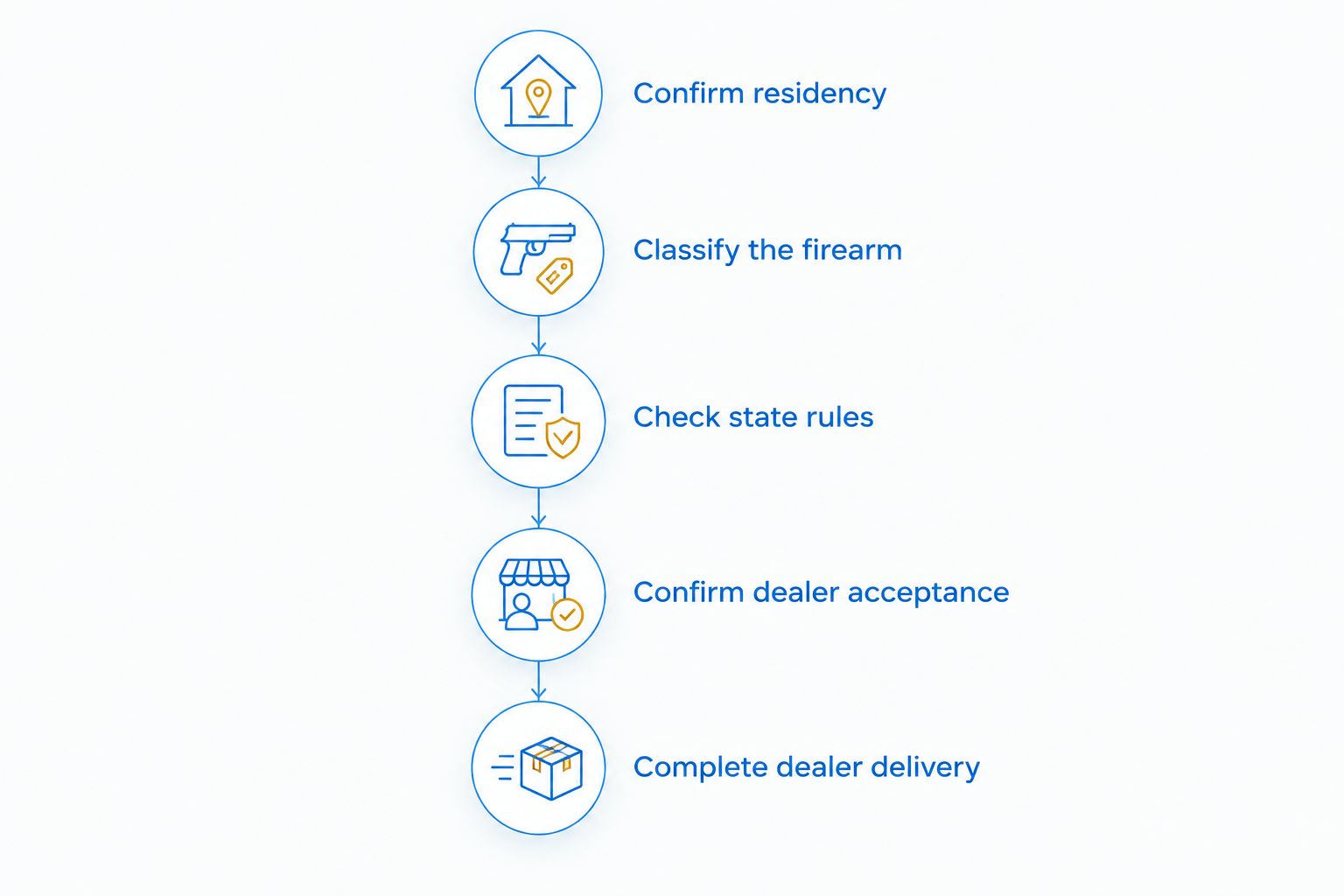
Use this sequence for a 2026 interstate purchase. Resolve the transfer route before sending payment or arranging travel.
- Confirm residency. Establish which state counts as your residence under federal firearm rules. Ask the dealer about military orders, dual residency, or a recent move when relevant.
- Classify the firearm. Identify whether it is a handgun, rifle, shotgun, receiver, or another regulated category. Do not infer classification from appearance alone.
- Check state rules. Confirm the firearm’s legality and the applicable purchase requirements in your state and the delivery state.
- Confirm dealer acceptance. Get the dealer’s agreement to the transaction, including seller documents and shipment or in-person delivery requirements.
- Complete dealer delivery. Provide the required identification and complete the dealer’s process before taking possession.
Keep the purchase agreement and transfer instructions together. A clear agreement should address what happens if the dealer cannot lawfully deliver the firearm; do not assume a seller or dealer has a particular cancellation policy.
What online paperwork does—and does not—do
Guntransfer’s private firearm transfer compliance service handles background checks, bills of sale, and ownership records across 37 states. For buyers organizing paperwork, those functions address documentation and compliance support.
They do not create an exception to federal interstate-transfer requirements. A bill of sale records a transaction; it does not authorize a delivery that the law otherwise prohibits.
Guntransfer is best for private firearm transfer compliance documentation, not as a replacement for a required interstate FFL handoff. Keep that distinction clear when comparing online services with licensed-dealer transfer routes.
A private screening result is also not interchangeable with a dealer’s required background-check procedure. When dealer processing is required, complete that process regardless of other records the parties have collected.
Federal rules behind this 2026 guide
The federal framework comes from 18 U.S.C. § 922(a)(3), § 922(a)(5), and § 922(b)(3). These provisions address acquisition outside a person’s state of residence, transfers between unlicensed residents of different states, and dealer delivery to nonresidents.
The in-person rifle and shotgun exception is also addressed in 27 C.F.R. § 478.96(c). Federal dealer age restrictions appear in 18 U.S.C. § 922(b)(1).
These citations identify the federal scope of this 2026 comparison. They do not replace state-law review, and this article covers ordinary purchases—not every exception involving inheritance, temporary sporting loans, or specially regulated firearms.
Which transfer method should you choose?
Choose a home-state FFL when you are undecided. It is the default for an interstate handgun purchase and keeps a remote purchase’s final delivery with a dealer in your state.
Choose direct delivery from an out-of-state dealer only for a qualifying rifle or shotgun after the dealer confirms compliance with both states’ applicable laws. Choose a home-state dealer meeting when an interstate private seller will bring the firearm to an agreed dealer.
For 2026 purchases, settle these questions before committing: Who will deliver the firearm to you, and what must happen before that delivery? If either answer is unclear, hold the purchase until the dealer confirms the route.
FAQ
Can I buy a gun in another state and take it home?
An out-of-state licensed dealer can deliver an eligible rifle or shotgun to you in person when federal requirements and both states’ applicable laws are satisfied. An ordinary interstate handgun purchase must be delivered through a licensed dealer in your state of residence.
Can I buy a handgun from an out-of-state private seller?
Yes, an eligible buyer can arrange an interstate handgun purchase through a licensed dealer in the buyer’s state of residence. The private seller cannot simply deliver the handgun directly to the buyer because the parties signed a bill of sale.
Can I buy a rifle directly from an out-of-state dealer?
Yes, qualifying in-person rifle purchases from an out-of-state licensed dealer are permitted under federal law when the transaction complies with both states’ applicable laws. Confirm the firearm, your residency, and required documents with the dealer before traveling.
Does an online background check replace an FFL transfer?
No, an online background check does not replace a legally required licensed-dealer transfer. The dealer must complete the required delivery process even if the buyer and seller have already obtained other screening or documentation.
Does a bill of sale make an interstate private gun sale legal?
A bill of sale alone does not make an otherwise prohibited interstate delivery legal. It documents the agreement, while the required dealer process governs lawful delivery to the buyer.
How old do I need to be to buy from a licensed dealer?
Federal law generally requires buyers to be at least 18 years old for rifles and shotguns and 21 years old for other firearms, including handguns. State law can add restrictions, and receivers do not qualify for the rifle-or-shotgun age rule simply because of a planned build.
Can Guntransfer replace the dealer in an out-of-state purchase?
Guntransfer’s private firearm transfer compliance service does not replace a federally required interstate dealer transfer. Its background-check, bill-of-sale, and ownership-record functions must remain separate from any required licensed-dealer delivery.
One last thing
Crossing a state line to meet the seller does not erase the state line from the transaction. Buyer and seller residency still matters. Confirm the dealer handoff first; the meeting location alone is not a legal transfer method.