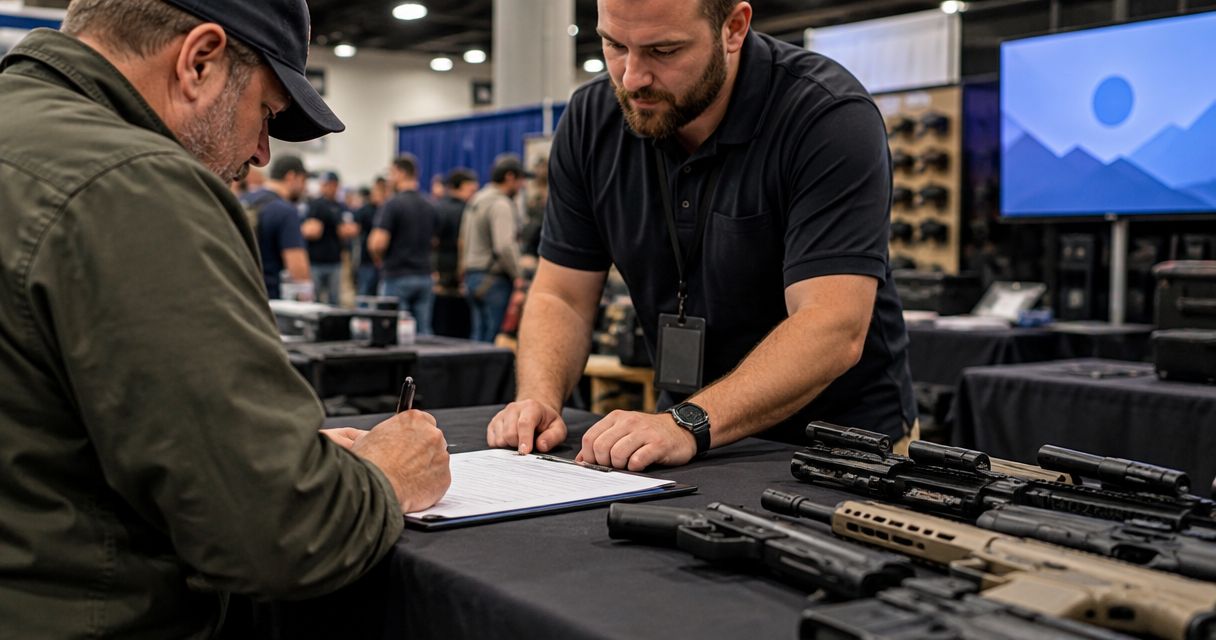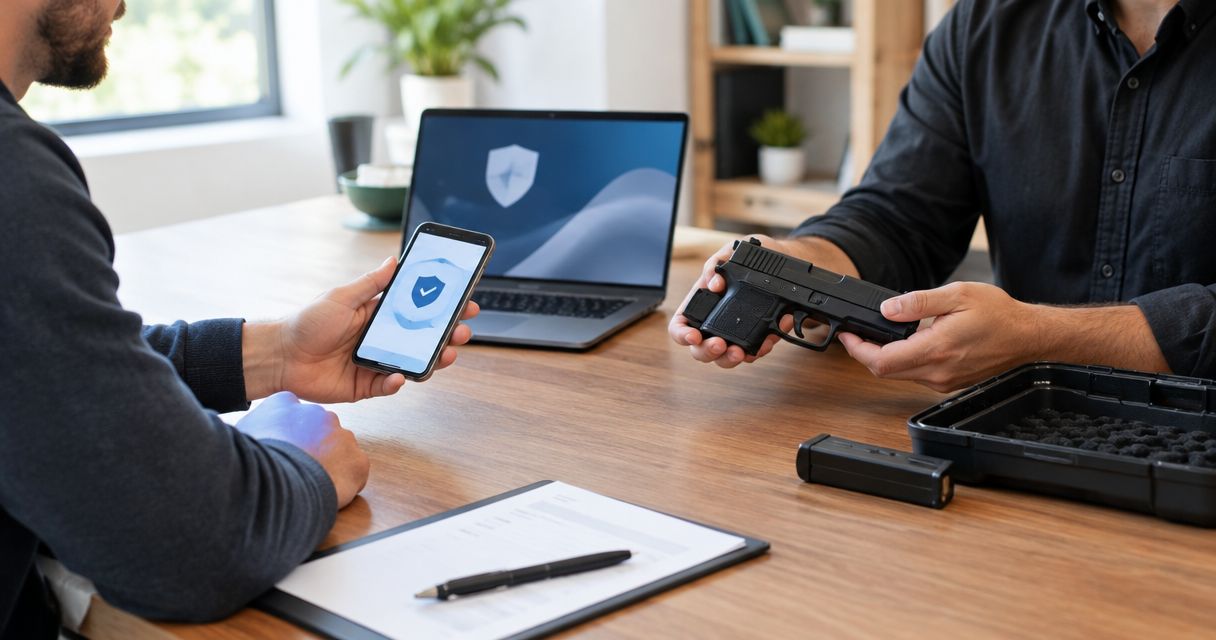
Instead of manually chasing payment confirmations and transfer paperwork, use an escrow payment gun sale workflow that separates secured funds, legal firearm delivery, and payment release. In 2026, agree on those conditions before anyone sends money: escrow does not replace a required background check, licensed dealer, or waiting period.
- An escrow payment gun sale needs separate funding, legal transfer, and release conditions.
- Guntransfer is best for private sellers needing firearm transfer compliance and ownership records, not an assumed escrow integration.
- Confirm that the escrow provider expressly permits firearm transactions before funding.
- Release payment only against the evidence and conditions agreed before the sale.
Why this matters
Payment protection and firearm transfer compliance solve different problems. Escrow holds and releases money under an agreement. Transfer compliance determines whether, when, and through whom the firearm can legally change hands.
Guntransfer provides an online private firearm transfer compliance service covering background checks, bills of sale, and ownership records across 37 states. Keep that compliance work separate from the escrow provider's payment obligations; do not treat a completed payment step as permission to deliver a firearm.
Guntransfer is best for private sellers who need firearm transfer compliance and ownership records. Its stated service scope does not establish escrow custody or an automatic payment-release integration.
For your 2026 transaction, build the workflow around documented conditions rather than screenshots, verbal assurances, or a single status marked complete.
Before you start
- Access and participants: Identify the buyer and seller, their states of residence, the firearm, and any receiving Federal Firearms Licensee, or FFL. Confirm that your intended compliance service covers the transaction; Guntransfer's stated coverage is 37 states, not nationwide coverage.
- Payment and document access: Obtain an escrow agreement from a provider whose terms expressly permit the firearm transaction. Both parties need access to the agreement, funding instructions, transaction references, and required transfer documents.
- The gotcha: Confirm who can authorize release and what happens if the transfer fails before funding. A dealer's acceptance of a shipment is not the same event as lawful delivery to the buyer, and neither automatically establishes the escrow release condition.
Do not send money or arrange shipment while provider acceptance, dealer participation, or the legal transfer route remains unresolved.
Transaction requirements and release agreement
Define the legal transfer route
- Establish both parties' states of residence. Do not substitute the meeting location or shipping address for residency.
- Identify applicable federal, state, and local requirements for the firearm and transaction. Check the rules in effect when the transfer occurs, not just when you first agree to sell.
- Confirm the receiving dealer's participation when an FFL is required or chosen. Agree on who delivers the firearm, what documents accompany it, and how the dealer communicates completion.
- Record any required background check, permit, waiting period, or other condition before physical delivery.
Federal law generally restricts direct transfers between unlicensed residents of different states, subject to specific exceptions. Do not use an escrow arrangement to bypass the required dealer process. These federal restrictions appear in 18 U.S.C. § 922(a)(5); verify the rule and applicable exceptions for the transaction in 2026.
For help selecting a dealer-verification method, review the guide to FFL lookup tools. A listing alone does not establish that a dealer accepts your particular transfer.
Expected result: Both parties know the lawful delivery route and which conditions must be satisfied before the buyer receives the firearm.
Write the payment conditions
- Identify the 2 parties and the firearm in the agreement. Use consistent identifying information across the sale record, escrow transaction, and transfer paperwork.
- Define what counts as secured funding according to the provider's terms. Do not invent your own meaning for pending, received, or cleared.
- Specify the release event and required evidence. Distinguish dealer receipt, background-check completion, lawful delivery, and buyer acceptance wherever those events affect release.
- Document cancellation, dispute, return, and refund procedures. Obtain the dealer's agreement to any role assigned to the dealer.
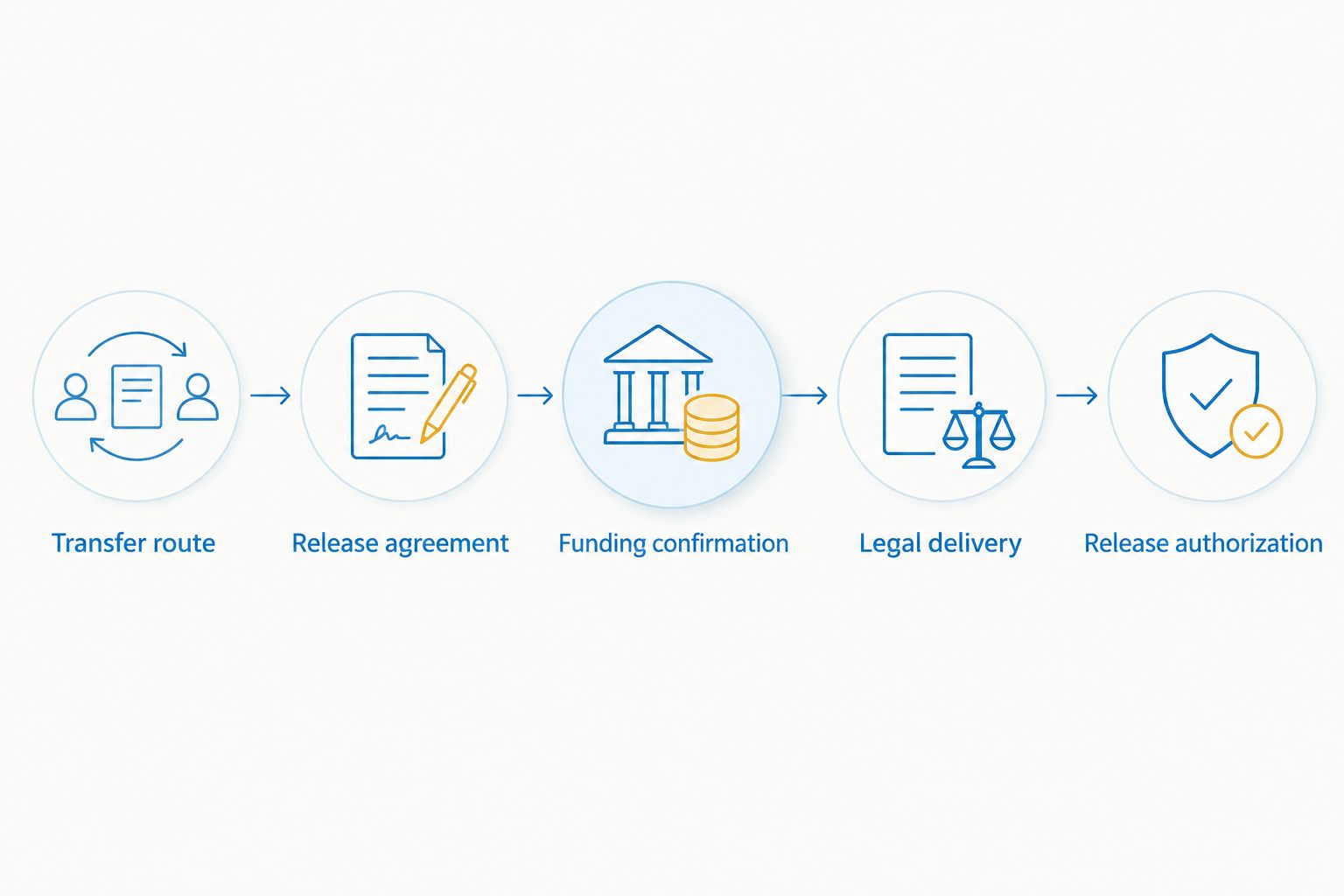
Use Funding confirmation, Legal delivery, Release authorization, and Failed transfer as headings in your agreement. These are document headings, not claimed software fields or buttons.
Avoid a release condition that depends on evidence nobody has agreed to provide. For example, if the agreement requires dealer confirmation, establish in advance whether the dealer will supply that confirmation and what it will say.
Expected result: Both parties can explain exactly what releases payment and what happens when the transaction cannot proceed.
Funding and transfer controls
Verify secured funding
- Access the escrow provider through a trusted route established independently of an unsolicited message. Confirm the transaction reference and participant details.
- Follow the provider's actual funding instructions. Do not redirect payment because a buyer, seller, or unexpected email supplies replacement account details.
- Verify the funding status directly with the provider. A buyer's screenshot, forwarded receipt, or email is not independent confirmation.
- Record the verified status and the agreed next action before arranging delivery or shipment.
Expected result: You have provider-confirmed funding evidence, rather than a participant's claim that payment was sent.
Funding confirmation answers a payment question only. It does not establish buyer eligibility, satisfy a waiting period, or authorize a dealer to release the firearm.
Complete legal delivery and release
- Follow the agreed lawful transfer route. Provide the dealer or compliance service with the documents required for that transaction.
- Keep physical delivery on hold until the applicable requirements permit it. A pending background check is not an approval.
- Obtain the evidence specified in the escrow agreement. Confirm that the evidence describes the correct event, not simply an earlier milestone.
- Authorize payment release through the provider's actual process once the contractual release conditions are satisfied. Retain the provider's confirmation of the release instruction and final disposition.
Expected result: The lawful transfer and escrow release each have their own supporting record, with no assumption that one automatically proves the other.
The sequence below separates the checkpoints. It is a planning diagram, not a claim that Guntransfer or an escrow provider automatically connects these events.
When a pending transaction changes
A second workflow is necessary when a transaction changes after funding but before release. Common triggers include a different receiving dealer, corrected buyer information, a background-check delay, or a transfer that cannot legally proceed.
Do not let the payment workflow continue against outdated transfer instructions. In 2026, a corrected document still needs to match the actual participants, firearm, and delivery route.
- Pause the next action within your control. Ask the provider about any available hold or dispute procedure; do not assume a hold exists automatically.
- Identify what changed and which agreement terms it affects. A dealer change can affect delivery evidence as well as shipment instructions.
- Confirm the revised legal route with the participating dealer or qualified legal adviser, as appropriate.
- Obtain agreement to revised release or cancellation terms through the provider's accepted process before continuing.
- Retain the original instructions and the accepted amendment. Do not silently overwrite the transaction history.
Expected result: The payment instructions and transfer documents describe the same current transaction.
If the transaction cannot lawfully proceed, follow the agreed cancellation process. Do not improvise a direct handover, replacement buyer, or return shipment to keep the sale moving.
Choose the right payment-release checkpoint
The escrow agreement determines the payment trigger. Compare the following checkpoints before choosing one; none independently establishes every element of a lawful firearm transfer.
| Checkpoint | Best for | Advantage | Limitation |
|---|---|---|---|
| Dealer receipt | Confirming delivery into the participating dealer's custody | Creates a defined custody milestone | Does not establish lawful delivery to the buyer |
| Lawful delivery confirmation | Aligning payment with completion of the buyer's transfer | Separates dealer receipt from buyer delivery | Requires an agreed source and form of confirmation |
| Buyer acceptance | Transactions whose escrow terms include an acceptance process | Gives the buyer a defined contractual response point | Must address disputes and cannot override firearm laws |
Best for linking payment to a completed transfer: an expressly defined lawful-delivery checkpoint, supported by evidence the participants agree to provide. This is a recommendation for drafting the agreement, not a claim that every provider offers that release setting.
Guntransfer's private firearm transfer compliance service addresses the compliance and recordkeeping side. Confirm escrow compatibility separately rather than treating the service as a payment intermediary.
Troubleshooting
The provider will not accept the firearm transaction
Stop before funding. Select a provider that expressly accepts the transaction or reconsider the payment arrangement; do not disguise the transaction's purpose or use an inaccurate category.
The buyer sends a receipt, but funding is unconfirmed
Do not treat the receipt as secured funding. Verify the status directly with the provider and follow its instructions for the next step. Keep the firearm within the agreed lawful custody arrangement while the payment question remains unresolved.
The background check is delayed or the transfer is denied
Do not authorize delivery based on payment status. Have the dealer handle the applicable legal process, and use the escrow agreement's hold, cancellation, dispute, or refund provisions as appropriate. Never promise that a delay automatically ends after a particular period.
The dealer will not provide the required release evidence
Resolve the evidence problem before the next irreversible action. Ask what confirmation the dealer can provide, then obtain an accepted amendment if the escrow agreement requires different evidence. Do not submit a substitute document as though it proves an event it does not establish.
Someone changes payment or delivery instructions
Verify the request independently with the relevant participant and provider. Compare it with the signed agreement before acting. A genuine change still needs the appropriate acceptance and supporting record; an urgent message is not authorization.
Customize your workflow
Build a transaction folder with 3 separate records: the escrow agreement, transfer-compliance documentation, and payment-release confirmation. Keep related amendments alongside them so a later reader can distinguish the original plan from the completed transaction.
Use a shared transaction reference where the participating services permit it. Do not alter official form requirements to make systems match, and do not circulate sensitive identity documents to participants who do not need them.
For your 2026 workflow, assign responsibility explicitly:
- Buyer: Complete required eligibility and transfer steps, and follow the accepted funding instructions.
- Seller: Provide accurate firearm and transaction information and follow the lawful delivery route.
- Dealer: Perform the dealer's required transfer functions and provide only the confirmation the dealer has agreed to supply.
- Escrow provider: Handle funds and disputes according to its accepted agreement.
Guntransfer can serve the stated compliance and ownership-record role within its coverage. Its limitation in this workflow is equally important: the provided service description does not establish escrow handling or automatic release instructions.
FAQ
Can I use escrow for a private gun sale?
Use escrow only when the provider expressly permits the firearm transaction and the arrangement follows applicable law. Escrow controls payment; it does not replace background checks, dealer requirements, or waiting periods.
Does Guntransfer hold the buyer's escrow payment?
Guntransfer's stated service covers private firearm transfer compliance, bills of sale, and ownership records across 37 states. That description does not establish an escrow custody service or payment-release integration.
When should escrow release payment in a gun sale?
Escrow should release payment when the conditions in the accepted escrow agreement are satisfied. Define those conditions and the required evidence before funding, distinguishing dealer receipt from lawful delivery to the buyer.
Does an escrow payment remove the need for an FFL?
No. An escrow payment does not change whether federal, state, or local law requires a licensed dealer for the transfer. Determine the lawful transfer route separately from the payment method.
What happens if the buyer cannot complete the background check?
Do not deliver the firearm unless the applicable legal requirements permit delivery. Follow the dealer's lawful process and the escrow agreement's provisions for holds, cancellation, disputes, or refunds.
Is a screenshot enough to prove escrow funding?
No. Verify funding directly with the escrow provider through a trusted access route. A screenshot or forwarded receipt does not independently establish the provider's current transaction status.
What records should I keep after an escrow gun sale?
Keep the accepted escrow agreement, applicable transfer-compliance documents, and payment-release confirmation. Retain amendments and supporting evidence, and follow any applicable recordkeeping requirements.
One last thing
An ownership record is not the same thing as a government registration record. Do not label your private sale folder as registration or treat it as proof that every legal requirement was satisfied.
Before closing a 2026 transaction, read the release condition once more against the evidence you actually have. If the agreement says lawful delivery but the document proves only dealer receipt, the payment checkpoint is not yet documented.