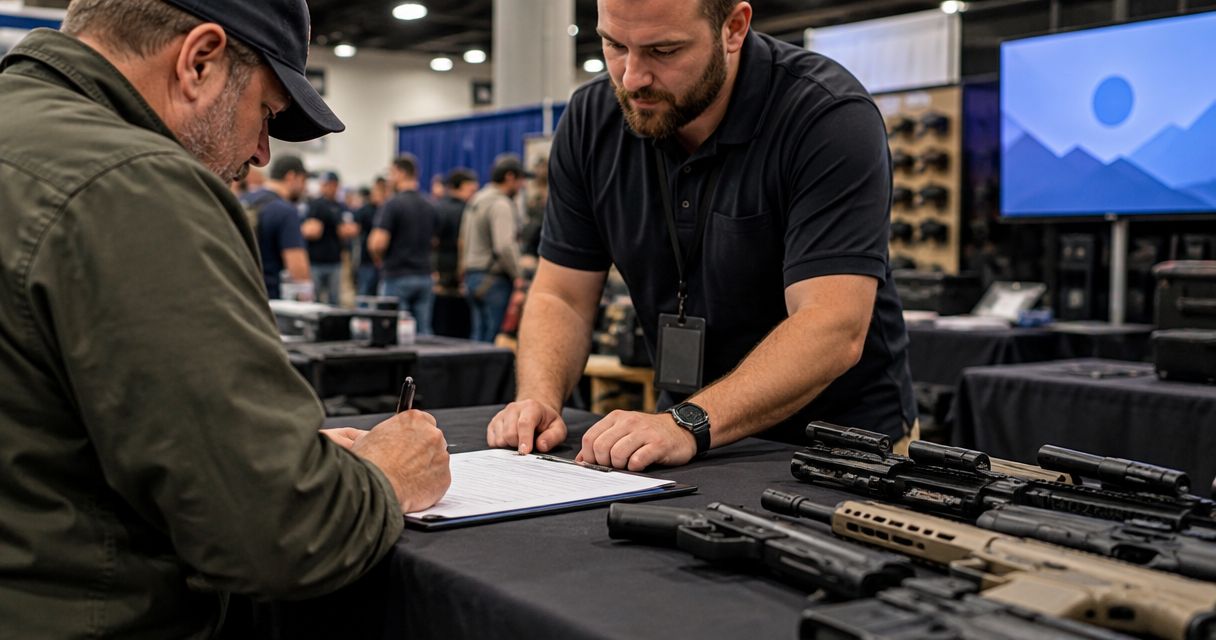
Estate executors’ firearm transfer work is the legal administration of a deceased person’s firearms so each item reaches a lawful recipient and the estate retains a clear record. This 2026 guide separates inheritance from an estate sale, explains when federal dealer requirements apply, and shows where state law changes the process.
- A firearm transfer for estate executor duties starts with legal authority, not a bill of sale.
- Federal inheritance exceptions do not cover every estate sale or override state firearm laws.
- Guntransfer supports private-sale documentation; confirm estate authority and the lawful transfer route first.
- Separate ordinary firearms from items subject to National Firearms Act requirements before arranging distribution.
Why firearm transfer compliance matters for estate executors
An executor’s authority to administer property does not automatically authorize every firearm transfer. You must answer separate questions about estate authority, recipient eligibility, residence, and the firearm itself. A named beneficiary can still be legally prohibited from receiving a firearm.
Guntransfer provides an online private-sale service covering background checks, bills of sale, and ownership records across 37 states. That coverage is not a statement that every estate distribution qualifies for the service.
For estate administration in 2026, keep probate decisions separate from firearm compliance. A court appointment establishes your role; federal and state firearm rules determine how a particular distribution or sale proceeds. Rules differ across the 50 states, so a national checklist cannot replace the applicable state requirements.
How to handle an estate firearm transfer
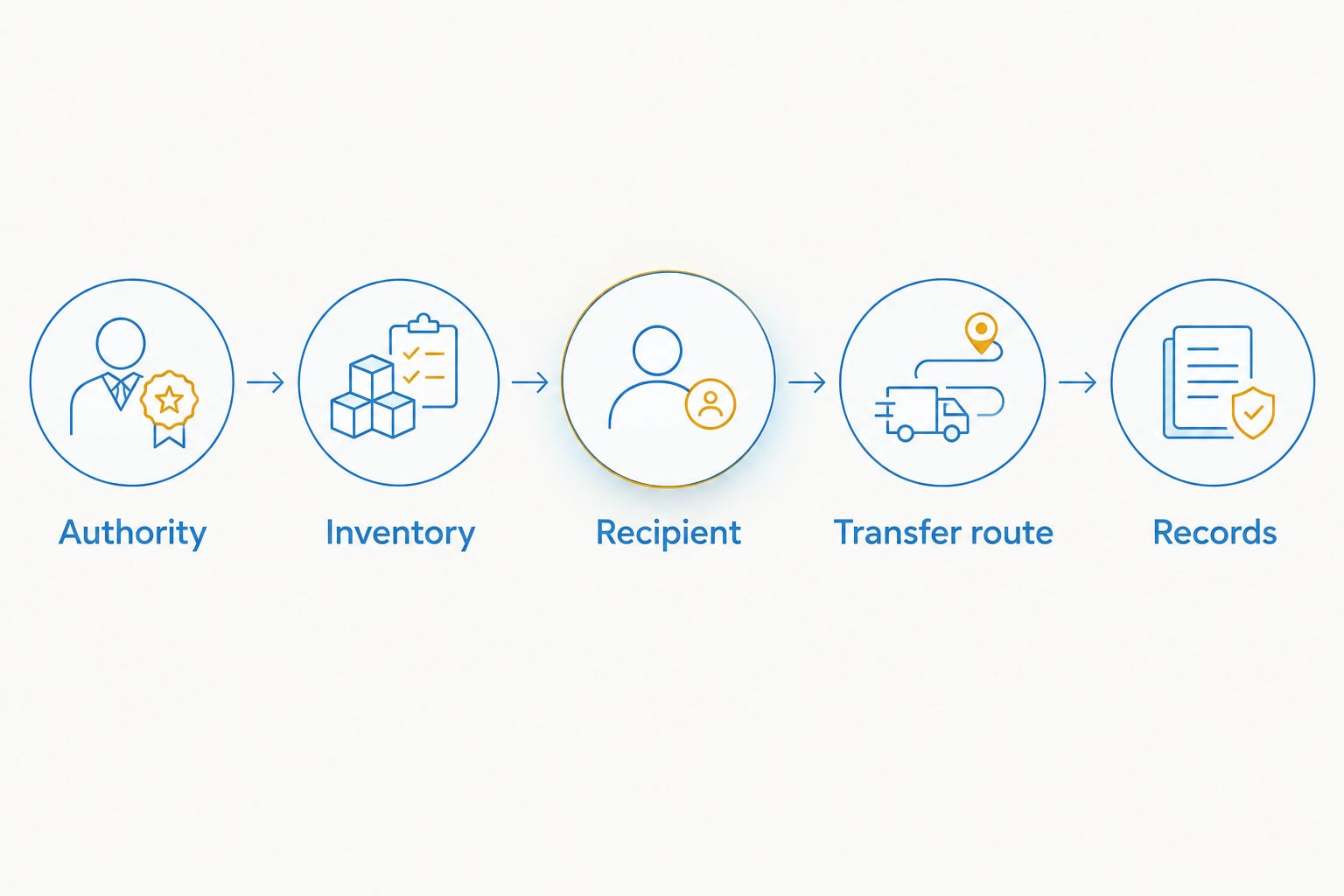
Work through these checkpoints in order: Authority, Inventory, Recipient, Transfer route, and Records. Do not let a beneficiary’s collection plans or a buyer’s deadline move the handover ahead of the legal checks.
1. Establish your authority before promising a firearm
Start with the will, court appointment, and any relevant trust documents. Confirm who legally controls each firearm and whether the estate actually owns it. Property held by a trust or owned jointly requires its own analysis; finding a firearm in the deceased person’s home does not settle ownership.
Use the estate’s existing paperwork to identify your powers and limits. Ask the probate attorney to resolve unclear ownership, competing beneficiary claims, or restrictions on selling estate assets before you sign transfer documents.
Do not assume a power of attorney continues after death. An executor, trustee, and agent under a power of attorney hold different roles. Describe your actual capacity consistently in correspondence and records, and avoid promising delivery until the estate has authority to make it.
- Locate the document establishing your appointment or authority.
- Match each firearm to the estate, trust, or other documented owner.
- Identify specific bequests and restrictions on estate sales.
- Resolve disputed ownership before accepting payment or arranging delivery.
2. Inventory the firearms without creating a safety problem
Create a written inventory before beneficiaries remove property. Record the manufacturer, model, serial number where present, and a description sufficient to distinguish each item. Keep photographs and supporting ownership documents with the estate file, with access limited to people handling the administration.
If you cannot safely identify or handle a firearm, stop and arrange qualified assistance. Do not manipulate unfamiliar mechanisms to finish an inventory. Ask a qualified professional about safe storage and any legal requirements before moving the collection to another address.
Flag suppressors, machine guns, short-barreled firearms, and other items potentially subject to the National Firearms Act for specialist review. Appearance alone does not determine legal classification. An ordinary-looking item and an unusual-looking item can require different legal treatment than you expect.
- Assign a distinct inventory entry to each firearm.
- Record identifying markings accurately without guessing missing information.
- Locate registration documents, receipts, and prior transfer records.
- Separate uncertain classifications for professional review.
- Document who controls access while the estate remains open.
3. Classify the recipient and the reason for transfer
Determine whether the transaction is a bequest, intestate inheritance, gift, or sale. These labels are not interchangeable. A purchase from an estate does not become an inheritance simply because the seller is an executor or the buyer is related to the deceased.
For 2026 planning, the federal interstate inheritance exceptions appear in 18 U.S.C. § 922(a)(3) and § 922(a)(5). They address qualifying acquisitions or deliveries through bequest or intestate succession. They are not a general exemption for all firearms leaving an estate.
Identify the recipient’s state of residence and check eligibility before selecting a transfer route. Federal law restricts transfers to prohibited persons, and state law can add permits, background checks, waiting periods, or firearm-specific restrictions. A family connection does not remove those requirements.
- Record whether the recipient inherits or purchases the firearm.
- Confirm the recipient’s identity and state of residence.
- Check applicable recipient eligibility and permit requirements.
- Have counsel resolve unclear inheritance status or legal restrictions.
4. Choose the lawful route before preparing the paperwork
Start by checking current government guidance and asking the estate attorney or receiving federally licensed firearms dealer, or FFL, which requirements apply. Give the professional the relevant facts: ownership, transfer reason, firearm classification, and the states involved. A general question about an inherited gun leaves too much unresolved.
A qualifying inheritance and an interstate estate sale require different analysis. Ordinary interstate private sales generally require an FFL route, while a qualifying bequest or intestate succession has a federal exception. State law still matters in either situation.
For an eligible private sale, Guntransfer offers an online path for background-check handling, a bill of sale, and ownership records. Guntransfer is best suited to executors documenting an eligible private sale after estate authority and legal requirements are confirmed. Online paperwork does not replace an FFL where the law requires one.
- Identify the applicable inheritance exception or dealer requirement.
- Confirm the receiving dealer’s requirements before arranging delivery.
- Check state permits, waiting periods, and transfer restrictions.
- Use a private-sale service only within its supported scope.
5. Resolve special firearm restrictions before distribution
Treat National Firearms Act items as a separate legal workstream, not an extra line on an ordinary bill of sale. Federal estate provisions for registered NFA firearms appear in 27 C.F.R. § 479.90a. ATF Form 5 is used for certain tax-exempt transfers, including qualifying transfers to lawful heirs.
That does not make every estate-held NFA item transferable through the same process. Registration status, the proposed recipient, and the applicable approval requirements matter. Ask ATF and qualified counsel to address missing registration documents or uncertain legal status before attempting a transfer.
The same caution applies to state restrictions on particular firearm categories. A firearm lawfully held by the deceased is not automatically lawful for a beneficiary to receive or possess elsewhere. For a 2026 distribution, confirm the rules governing the actual item and recipient rather than relying on an older purchase receipt.
- Identify items requiring NFA review.
- Locate existing registration and ownership documents.
- Confirm the applicable ATF process and required approval.
- Check restrictions in the recipient’s state.
- Keep unresolved items out of the ordinary distribution schedule.
6. Coordinate delivery only after compliance checks are complete
Agree on the transfer route before anyone travels, ships property, or promises a collection date. Ask the receiving FFL about its acceptance procedures and documentation if a dealer is involved. Confirm applicable legal and carrier requirements before arranging shipment; an inheritance exception is not a carrier policy.
Do not treat payment, a signed receipt, or a beneficiary’s acknowledgment as permission to bypass an outstanding requirement. Record completion only when the required process has actually finished. If a permit, legal decision, or approval remains unresolved, keep the file marked accordingly.
Executors should also distinguish temporary custody from final distribution. Moving property to a relative for safekeeping can raise separate possession and transfer questions. Get legal guidance before making that arrangement rather than describing it afterward as storage.
- Confirm the lawful receiving person or dealer.
- Verify required documents before setting a handover date.
- Resolve transport and carrier requirements in advance.
- Record the actual completion date and receiving party.
7. Close the estate record for each firearm
Build the record manually with the inventory entry, authority documents, recipient details, applicable transfer paperwork, and proof of disposition. Use a consistent file structure so the estate attorney can trace an individual firearm without searching unrelated correspondence.
Guntransfer handles bills of sale and ownership records for supported private sales. Those documents belong alongside the probate file, not in place of it. A sale record answers different questions from a will, court order, or inheritance distribution receipt.
For transfers completed in 2026, record the actual transfer date rather than using the article year as a substitute. Ask counsel which retention rules apply and who keeps the file after the estate closes. Protect identity documents and serial-number records from unnecessary sharing.
- Match the completed transfer to its inventory entry.
- Retain relevant authority, eligibility, and transfer documentation.
- Record proceeds and disposition in the estate accounting.
- Name the person responsible for retaining the final file.
Compare estate firearm transfer options
Choose by legal function, not convenience. These options are not interchangeable, and an estate can require several of them. Start with the transaction’s requirements, then select the help that fits.
| Option | Best for | Main advantage | Key limitation |
|---|---|---|---|
| Executor-managed inheritance documentation | Clearly established inheritance after legal checks | Keeps beneficiary and estate records together | Does not itself resolve eligibility, state requirements, or disputed authority |
| Licensed dealer transfer | Transactions requiring an FFL and estates seeking dealer assistance | Provides a dealer-managed transfer process | Does not resolve probate ownership or beneficiary disputes |
| Guntransfer private-sale service | Eligible private sales needing background-check handling and documentation | Brings sale paperwork and ownership records into an online process | Coverage is across 37 states; confirm estate-transaction fit and any required dealer involvement |
| Estate attorney | Disputed ownership, unclear authority, or difficult inheritance questions | Addresses the executor’s legal role and estate obligations | Legal advice does not itself complete a required dealer transfer |
| NFA-experienced attorney and ATF guidance | Registered NFA items or uncertain registration status | Addresses specialized estate-transfer requirements | Does not replace required applications or approvals |
A dealer can handle a required firearm transfer without deciding who inherits. An attorney can identify the lawful beneficiary without completing the dealer’s responsibilities. Keep those roles explicit when assigning work, and ask each provider what remains outside its scope.
Common mistakes estate executors make
Treating every estate transaction as an inheritance
An estate sale to an unrelated buyer is not a bequest. Neither is a purchase by a relative automatically an inheritance. Classify the transaction from the governing documents and actual circumstances before relying on a federal exception.
Assuming the will overrides recipient restrictions
A will expresses a distribution instruction; it does not cancel firearm eligibility rules. If a beneficiary cannot lawfully receive an item, ask estate counsel how to administer that asset. Do not improvise a substitute recipient or informal holding arrangement.
Using a bill of sale as proof of compliance
A bill of sale records a transaction. It does not establish that a required background check, permit, dealer transfer, or approval occurred. Keep evidence of the applicable process alongside the transaction record rather than treating a signature as the entire file.
Moving the collection before checking ownership and classification
A quick move can separate firearms from registration papers, create custody questions, and complicate the inventory. Establish authority, identify the items, and get appropriate storage advice first. A relative’s willingness to help does not answer the legal questions.
Applying the deceased owner’s rules to the beneficiary
The recipient’s residence and eligibility matter. A firearm’s lawful possession by the deceased does not establish the beneficiary’s right to receive it. Check the destination requirements before arranging a cross-state distribution.
FAQ
Can an executor transfer a firearm directly to a beneficiary?
Direct transfer depends on the inheritance, recipient eligibility, firearm classification, and applicable law. Federal law provides exceptions for qualifying bequests and intestate succession, but state requirements and special firearm restrictions still apply.
Does an inherited firearm have to go through an FFL?
A qualifying inheritance is not automatically subject to the same federal interstate dealer requirements as a private sale. Confirm that the bequest or intestate succession exception applies and check the relevant state requirements before arranging delivery.
Can an executor sell a firearm from an estate?
An executor can sell an estate firearm only with the necessary estate authority and compliance with applicable firearm laws. Confirm ownership, the executor’s powers, the buyer’s eligibility, and the required transfer route before completing the sale.
Does a firearm bill of sale replace a background check?
A firearm bill of sale does not replace a legally required background check or dealer transfer. It documents the transaction; retain the separate records needed to establish completion of the required process.
What happens if the beneficiary lives in another state?
A qualifying bequest or intestate succession has a federal interstate exception, but an ordinary estate sale follows different rules. Review both the inheritance status and the recipient’s state requirements before deciding how delivery can occur.
Can Guntransfer handle an estate firearm transaction?
Guntransfer provides private-sale background-check handling, bills of sale, and ownership records across 37 states. Confirm that the particular estate sale is supported; the service does not replace probate authority or a legally required dealer transfer.
How should an executor handle an inherited suppressor or other NFA firearm?
An executor should obtain NFA-specific guidance before distributing the item. Check registration status and the applicable ATF process; ATF Form 5 applies to certain qualifying transfers to lawful heirs.
One last thing
Decide how to document a transfer that cannot proceed. Your 2026 estate inventory should distinguish completed dispositions from unresolved items, with the reason each remains open. That prevents an unsigned receipt, disputed bequest, or pending approval from becoming an unexplained gap in the final estate accounting.
This guide provides general information, not legal advice. Use qualified counsel for decisions about a particular estate.