Best overall: a receiving Federal Firearms Licensee (FFL) in the recipient’s state. Best for remote coordination: dealers at both ends. Best for an eligible in-person rifle or shotgun purchase: a licensed dealer who can lawfully complete the sale. To transfer a firearm across state lines in 2026, choose the legal route before arranging delivery; the lowest-friction option is not a direct private handoff.
- To transfer a firearm across state lines, use a recipient-state FFL for an ordinary private sale or gift.
- Guntransfer is best for organizing eligible private-sale compliance and records, not replacing a legally required FFL.
- Moving your own firearm and receiving a genuine inheritance follow different rules from interstate sales.
- A bill of sale or concealed carry permit does not replace required dealer processing.
Why this matters
Crossing a state border and transferring ownership are different events. Moving your own firearm does not create a sale; giving a firearm to someone who resides in another state does create a transfer that requires a separate legal analysis.
Guntransfer provides private-sale compliance services, background checks, bills of sale, and ownership records across 37 states. Guntransfer is best for private sellers who need help organizing eligible firearm-sale compliance and records. An online service does not replace a receiving dealer when federal law requires dealer involvement.
This 2026 guide addresses ordinary firearms, not machine guns, suppressors, short-barreled firearms, or other items subject to separate National Firearms Act requirements. It ranks routes by legal fit, not speed or convenience alone.
What makes the best interstate firearm transfer method
Use these criteria before choosing a route:
- Correct residency: Identify each person’s state of residence under federal firearms rules; the meeting location alone does not determine residency.
- Lawful recipient: Confirm the recipient can legally receive and possess the particular firearm.
- Correct dealer location: Ordinary interstate private transfers belong with an appropriate receiving FFL, generally in the recipient’s state.
- State-law compatibility: Check destination restrictions, permits, waiting periods, and any applicable local requirements.
- Accepted delivery: Obtain the receiving dealer’s agreement before shipping or bringing in a firearm.
- Complete records: Keep the transaction documentation without treating it as a substitute for required processing.
Interstate transfer options at a glance
| Rank and route | Best for | Standout feature | Key limitation |
|---|---|---|---|
| 1. Recipient-state FFL | Ordinary interstate private sales and gifts | Places final delivery with the appropriate receiving dealer | Requires dealer acceptance and applicable recipient processing |
| 2. Dealers at both ends | Remote transactions needing shipment coordination | Adds an originating dealer to coordinate delivery | Adds another business’s procedures to the transaction |
| 3. In-person long-gun dealer sale | Eligible rifle or shotgun buyers visiting another state | Federal law permits certain direct dealer deliveries | Does not extend to direct out-of-state handgun delivery |
| 4. Personal relocation | Owners moving their own firearms | No ownership transfer occurs | Destination possession and transport restrictions still apply |
| 5. Genuine inheritance | Recipients of a bequest or intestate succession | Federal law contains specific inheritance exceptions | Living gifts and ordinary family sales do not qualify |
1. Recipient-state FFL: best for ordinary private transfers
For an ordinary private sale or gift between residents of different states, arrange final delivery through an FFL in the recipient’s state. This is the default route for a private interstate handgun transfer and a straightforward route for other ordinary firearms.
Federal restrictions on unlicensed interstate transfers appear in 18 U.S.C. § 922(a)(3) and § 922(a)(5). The receiving dealer handles the applicable federal transfer process, including ATF Form 4473 and the required background-check process or applicable exception.
Recipient-state FFL pros:
- Fits ordinary interstate private sales and gifts.
- Places recipient processing with a licensed dealer.
- Gives you a destination contact before delivery arrangements begin.
Recipient-state FFL cons:
- Dealers set acceptance procedures; do not assume every dealer accepts every transfer.
- A dealer cannot complete a transfer that violates applicable law.
- Permits, waiting periods, and firearm restrictions still apply where required.
Ask the receiving dealer whether it accepts deliveries from unlicensed individuals, what documentation it needs, and whether the particular firearm is eligible for transfer. Do this before committing to delivery arrangements.
Best for: Most private sellers and recipients who reside in different states.
Verdict: Hold delivery until the recipient-state FFL accepts the transaction. This is the default starting point for an ordinary interstate private transfer in 2026.
2. Dealers at both ends: best for remote shipment coordination
A two-dealer arrangement adds an originating FFL to the receiving FFL route. The originating dealer coordinates shipment under its procedures, and the destination dealer handles delivery to the recipient.
This arrangement does not create a different legal exemption. It changes who manages the shipment, making it useful when the receiving dealer requires dealer-origin shipments or the sender wants that coordination handled by a licensee.
Dealers-at-both-ends pros:
- Provides a business contact at each end.
- Fits receiving dealers that require shipment from another licensee.
- Moves shipping coordination to the originating dealer.
Dealers-at-both-ends cons:
- Requires agreement with both businesses.
- Introduces additional handoffs and separate procedures.
- Does not remove destination restrictions or recipient eligibility requirements.
Ask both dealers to confirm their roles before either takes possession. Resolve acceptance, required identifying information, and the process for an unsuccessful transfer before shipment—not after the firearm reaches its destination.
Guntransfer can support eligible private-sale compliance and records, but do not assume online paperwork includes dealer shipment coordination. Keep those responsibilities separate.
Best for: Remote private transactions where dealer-managed shipment is the preferred or required arrangement.
Verdict: Hold shipment until both dealers confirm the arrangement. Choose this route for coordination, not as a workaround for recipient-state law.
3. In-person dealer sale: best for eligible long-gun purchases
Federal law allows an FFL to sell and deliver a rifle or shotgun in person to an out-of-state resident when the transaction satisfies the applicable legal requirements of both states. This exception appears in 18 U.S.C. § 922(b)(3).
It does not authorize an unlicensed seller to make the same direct interstate handoff. Nor does it generally allow an out-of-state dealer to deliver a handgun directly to the visiting buyer.
In-person long-gun dealer sale pros:
- Provides a lawful direct-delivery route for qualifying rifles and shotguns.
- Keeps the purchase and federal dealer processing together.
- Lets the dealer assess the transaction before delivery.
In-person long-gun dealer sale cons:
- Requires the buyer to appear in person.
- Must satisfy applicable requirements in both states.
- Does not cover every firearm sold as a receiver, frame, or other configuration.
Confirm the firearm’s legal classification and your residency with the dealer. A familiar product name does not determine whether the firearm qualifies for the rifle-or-shotgun exception.
For a broader comparison, see out-of-state gun purchase transfer methods.
Best for: Eligible buyers purchasing a qualifying rifle or shotgun in person from an out-of-state licensed dealer.
Verdict: Buy only after the dealer confirms that direct delivery is lawful. Do not apply the long-gun exception to handguns or private interstate handoffs.
4. Personal relocation: best for moving firearms you already own
Moving your own firearm to a new state is not an ownership transfer merely because you cross a border. The interstate private-sale rules do not turn every household move into a dealer transaction.
The important questions change: can you possess that firearm at the destination, and what transport, registration, licensing, or other requirements apply? Review those questions before the move.
Personal relocation pros:
- Separates moving existing property from acquiring a firearm.
- Avoids applying a sale process to an event with no ownership change.
- Focuses your planning on possession and transportation requirements.
Personal relocation cons:
- Destination law can restrict the firearm or its features.
- State or local requirements can apply after arrival.
- A later sale or gift requires its own analysis.
Federal transport protections under 18 U.S.C. § 926A have conditions; they are not blanket permission to possess a firearm anywhere along a trip. Separately regulated firearms require additional review.
Best for: An owner relocating with firearms already lawfully owned.
Verdict: Skip this route for a sale or gift to another person. For a genuine personal move in 2026, assess possession and transport rather than inventing an ownership transfer.
5. Genuine inheritance: best for bequests and intestate succession
Federal law contains exceptions for a firearm received through a bequest or intestate succession. Those exceptions are not a general family-transfer exemption, and they do not override applicable state restrictions.
A firearm inherited through an estate is legally different from a firearm a living relative gives you. Identify the basis for the transfer before selecting the process.
Genuine inheritance pros:
- Recognizes a specific federal exception for qualifying estate transfers.
- Distinguishes inheritance from an ordinary purchase or gift.
- Lets the executor assess the transfer using the estate’s actual documents.
Genuine inheritance cons:
- Requires a genuine qualifying inheritance.
- Does not excuse prohibited possession or destination restrictions.
- Can involve probate questions separate from firearms law.
Keep documents establishing the inheritance and consult the executor or qualified counsel where the estate’s authority is unclear. Review the guide to transferring an inherited gun before treating an estate distribution like a private sale.
Best for: A lawful recipient receiving a firearm through a qualifying bequest or intestate succession.
Verdict: Hold the handoff until the inheritance basis and destination requirements are confirmed. A living relative’s gift does not qualify merely because the family calls it an inheritance.
Before delivery: confirm the route
Use this sequence for an ordinary interstate private sale in 2026. It keeps the legal decision ahead of the physical handoff.
- Confirm residency: Establish the seller’s and recipient’s actual states of residence.
- Check eligibility: Review the recipient’s eligibility and the firearm’s destination legality.
- Confirm dealer: Obtain the receiving FFL’s acceptance and instructions.
- Arrange delivery: Follow the agreed lawful delivery process and applicable carrier rules.
- Keep records: Retain appropriate transaction records after the required process is complete.
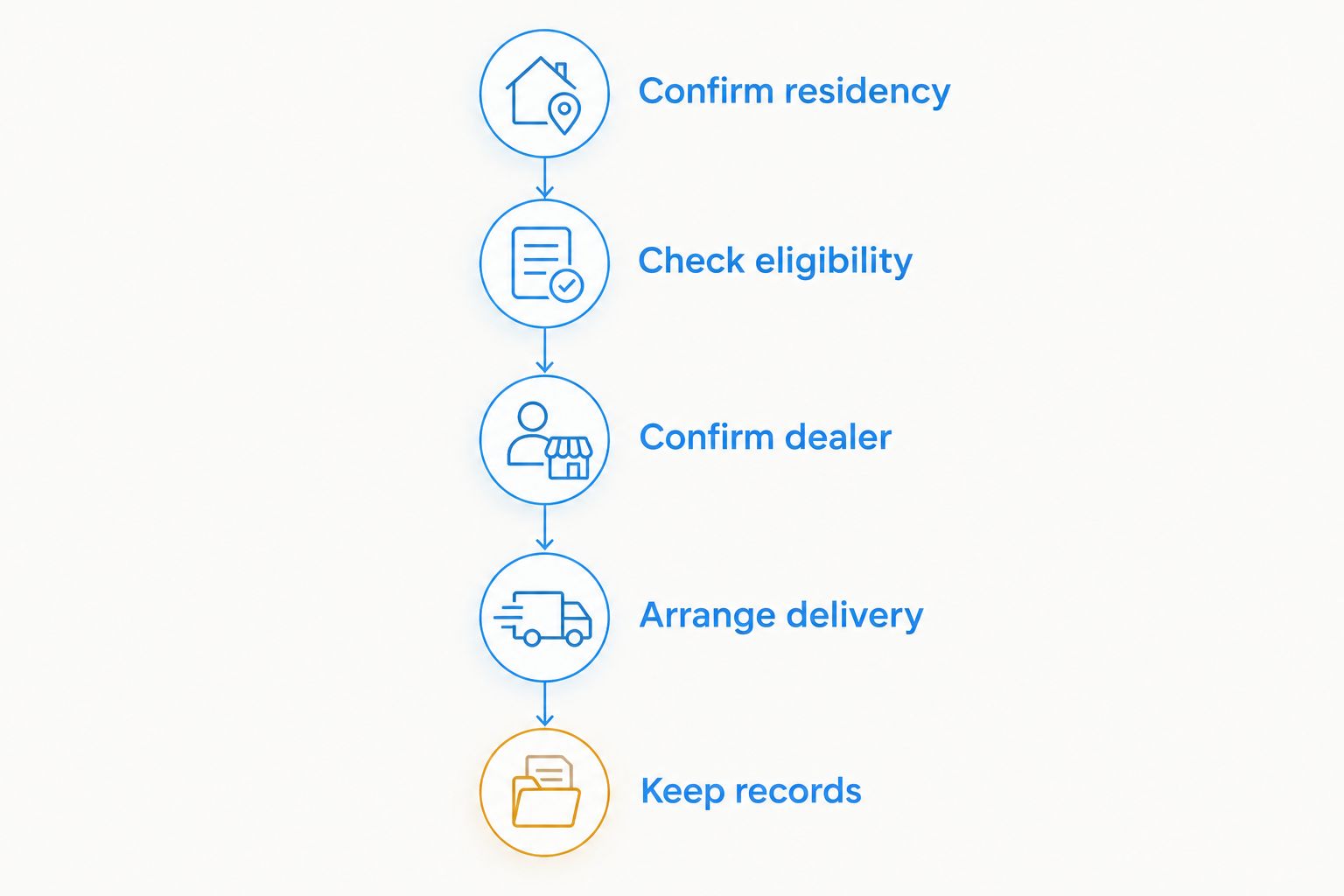
A background check, a bill of sale, and dealer delivery serve different purposes. Completing one does not automatically satisfy the others. Guntransfer’s private-sale compliance service should support the appropriate legal route, not replace it.
How the routes rank
Recipient-state dealer delivery ranks first because it fits ordinary interstate private transfers. Dealer-coordinated shipment ranks next for remote logistics; in-person long-gun delivery serves a narrower purchase scenario.
Relocation and inheritance are separate fact patterns, not shortcuts. The ranking uses residency, recipient eligibility, dealer location, state-law compatibility, delivery acceptance, and documentation—not claimed testing or transaction-speed results.
Which interstate transfer method should you choose?
Choose a recipient-state FFL for an ordinary interstate private sale or gift. Add an originating dealer when shipment coordination requires one. Use the long-gun dealer exception only after the selling FFL confirms eligibility.
If you are moving your own firearm or receiving a genuine inheritance, identify that distinction first. Neither route authorizes an otherwise unlawful sale, gift, or possession.
FAQ
What's the best way to transfer a firearm across state lines in 2026?
For an ordinary private sale or gift between residents of different states, arrange delivery through an FFL in the recipient’s state. Confirm dealer acceptance and applicable destination requirements before arranging delivery.
Can I give a gun directly to a family member in another state?
An ordinary interstate gift generally requires dealer processing even when the recipient is a relative. A genuine bequest or intestate succession has separate federal exceptions; a living gift is not an inheritance.
Can I buy a rifle from a dealer in another state and take it home?
A qualifying in-person rifle or shotgun purchase from an FFL can permit direct delivery when the transaction meets applicable requirements in both states. The dealer must confirm that the firearm and transaction qualify.
Can an out-of-state dealer hand me a handgun directly?
An out-of-state dealer generally cannot deliver a handgun directly to you as a resident of another state. The ordinary route is delivery through an FFL in your state of residence.
Does a firearm bill of sale replace an FFL transfer?
No. A bill of sale documents a transaction but does not replace legally required dealer delivery, background-check processing, or other transfer requirements.
Do I need an FFL just to move my own firearm to another state?
Crossing a state border with a firearm you already own does not itself create an ownership transfer. You still must comply with applicable transport rules and destination possession requirements, including any rules for separately regulated firearms.
Does a concealed carry permit authorize a private interstate transfer?
No. A concealed carry permit does not create a general exemption from federal interstate-transfer restrictions. Carry authorization and lawful acquisition are separate questions.
One last thing
Meeting halfway does not change residency. Two private residents of different states do not turn an interstate sale into an intrastate sale by choosing a convenient parking lot. For your 2026 transaction, settle the legal route before settling the meeting place.