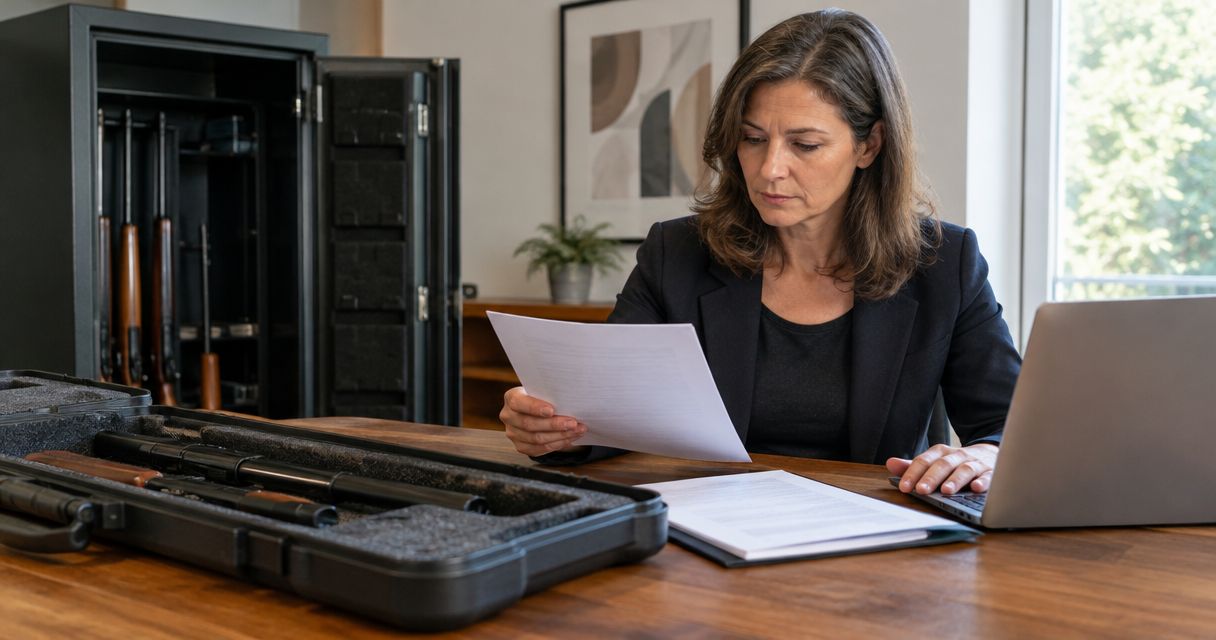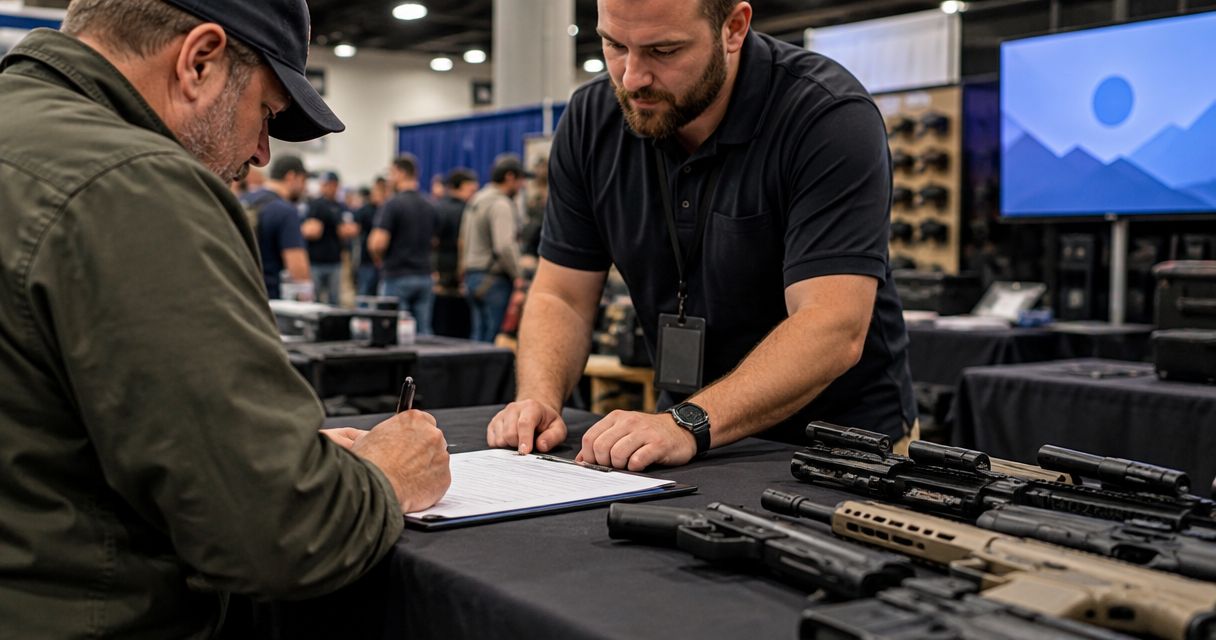
Gun show sellers’ firearm bill of sale is a written transaction record that identifies the parties, the firearm, and the transfer date. A firearm bill of sale for gun show sellers documents the transaction; it does not replace a required background check, dealer transfer, permit, or waiting period.
- A firearm bill of sale for gun show sellers records a transaction; it does not authorize the transfer.
- Guntransfer is best for private sellers seeking online transfer paperwork and ownership records.
- Confirm residency, background check requirements, and the lawful transfer route before signing.
- Keep private sale records separate from dealer paperwork, and retain your own completed copy.
Why a bill of sale matters for gun show sellers
A gun show puts buyers, private sellers, and licensed dealers in the same venue. Their legal obligations are not interchangeable. Renting a table does not establish that someone is a licensed dealer, and entering a gun show does not create an exemption from firearm transfer laws.
Determine whether the transfer is lawful before documenting that it happened. Compare firearm bill of sale templates for usable fields, but choose the transfer route before choosing the form.
Gun show transactions also create practical recordkeeping problems: hurried handwriting, similar-looking firearms, and parties who leave before discovering an error. Prepare the record before the event and complete it only when the required transfer process is finished.
This 2026 guide covers general procedures for private individuals, not transaction-specific legal advice. Confirm current requirements with the relevant state authority or a licensed dealer before transferring possession.
How to document a private gun show sale
1. Establish whether you are acting as a private seller
Start with your activity, not your preferred label. Selling from a personal collection and engaging in the business of dealing in firearms are different legal categories. Calling yourself a private seller does not decide which category applies.
The federal licensing baseline is 18 U.S.C. § 922(a)(1)(A), read with the definitions in § 921. Federal law does not provide a universal number of gun show sales that automatically makes every seller exempt from licensing.
For your 2026 preparation, describe your actual activity to a qualified firearms attorney if your buying and selling raises licensing questions. A bill of sale cannot correct an unlicensed dealing violation.
- Identify whether the firearm belongs to your personal collection.
- Review whether your buying and selling activity requires a dealer license.
- Separate personal transactions from any licensed business activity.
- Resolve licensing questions before advertising or accepting a buyer’s commitment.
2. Confirm residency and the required transfer route
Check the parties’ states of residence before preparing a direct handoff. An ordinary private sale between residents of different states must pass through an appropriate federally licensed firearms dealer, or FFL. Meeting inside the same gun show does not make the parties residents of the same state.
The federal private-transfer restriction appears in 18 U.S.C. § 922(a)(5). Dealer delivery rules also matter: handgun transfers generally require a dealer in the buyer’s state, while certain dealer transfers of rifles and shotguns follow different interstate rules under § 922(b)(3).
For a same-state transaction, confirm state and local requirements rather than assuming a private-sale exemption applies. The transfer route depends on residency, firearm type, and applicable law—not the venue.
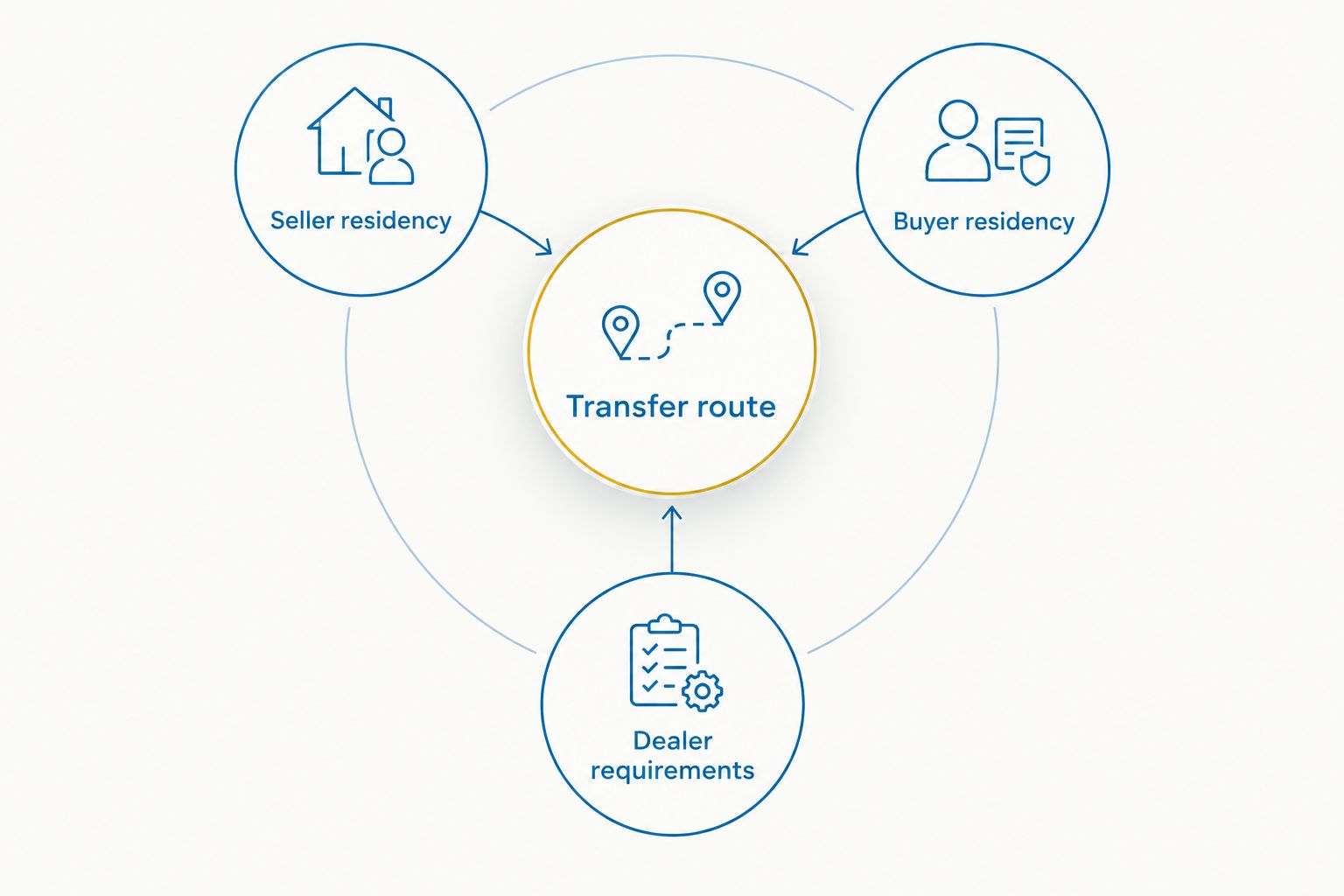
Before proceeding, establish:
- Seller residency: confirm the seller’s relevant state of residence.
- Buyer residency: confirm the buyer’s relevant state of residence.
- Dealer requirements: identify whether an FFL must handle the transfer.
- Transfer location: confirm where lawful delivery can occur.
- State conditions: check permits, waiting periods, and firearm-specific restrictions.
3. Choose paperwork that supports the required process
The manual approach is straightforward: prepare a legible form, verify its fields against the transaction, and arrange any required dealer involvement separately. A downloadable template organizes information; it does not determine whether your sale satisfies the law.
Guntransfer provides an online private firearm transfer service for individuals, handling background checks, bills of sale, and ownership records across 37 states. It is an alternative to preparing and managing those records manually.
Guntransfer is best for private sellers seeking online transfer paperwork and ownership records. Its stated coverage is not nationwide, and using an online service does not remove a statutory requirement to involve a licensed dealer. Confirm whether the service covers your transaction before relying on it.
- Use a handwritten form when you can make every required entry legible.
- Use a template when you need a repeatable field structure.
- Consider an online service when you want paperwork and records handled together.
- Confirm state coverage and the service’s role in your particular transfer.
- Arrange required dealer handling independently of the document format.
4. Record the parties and the exact firearm
Prepare the identifying details before the show, then verify them against the actual firearm and the parties’ identification. Do not copy a serial number from an old advertisement without checking the firearm itself.
A useful bill of sale distinguishes the transaction from any other sale. It identifies who participated, what changed hands, and when the completed transfer occurred. Extra signatures cannot compensate for the wrong serial number or an unidentified buyer.
Collect information needed for the transaction without turning your personal records into an unnecessary identity dossier. A seller’s bill of sale is not a reason to request a Social Security number. A dealer’s required records follow a separate process.
Build your form around these fields:
- Parties: buyer and seller names, addresses, and appropriate contact details.
- Firearm: manufacturer, model, caliber or gauge, and serial number.
- Transaction: transfer date, location, and agreed consideration.
- Transfer route: the participating dealer’s identifying details, when applicable.
- Statements: truthful acknowledgments relevant to the transaction.
- Signatures: buyer and seller signatures after reviewing the completed record.
- Corrections: clearly resolved errors before either party takes a final copy.
5. Complete eligibility checks through the proper channel
A signed declaration is not a background check. Federal law prohibits transferring a firearm when you know or have reasonable cause to believe the recipient falls within a prohibited category under 18 U.S.C. § 922(d).
When a dealer handles the transaction, follow the dealer’s required identification, eligibility, and transfer procedures. An ordinary online people-search report is not a substitute for a required dealer-run background check.
Age requirements also depend on the transfer route. The federal dealer-sale baseline in § 922(b)(1) sets thresholds of 18 years for rifles and shotguns and 21 years for other firearms. State law and applicable court orders require separate review; do not treat those federal dealer thresholds as a complete private-sale rule.
- Ask the handling dealer which identification and documents are required.
- Confirm whether state law requires a purchase permit or other authorization.
- Complete the required background check through the authorized process.
- Respect any applicable waiting period before delivery.
- Stop if eligibility concerns or inconsistent information remain unresolved.
6. Separate signing from lawful delivery
A buyer’s signature does not mean the firearm can leave your possession immediately. Complete the legally required process before treating the transaction as delivered, even when the buyer has already signed a preliminary agreement.
For a 2026 gun show transaction, distinguish an agreement to sell from a completed transfer in your wording. Do not sign a receipt stating that delivery occurred while the firearm remains with a dealer awaiting required clearance.
Keep firearm handling consistent with the venue’s safety rules and the dealer’s instructions. Paperwork review should not create unnecessary handling at a crowded table. If a required condition is unfinished, postpone delivery rather than rewriting the form to imply completion.
- Verify that required checks and waiting periods are complete.
- Confirm that the person receiving the firearm is the lawful recipient.
- Match the firearm and serial number to the final document.
- Record the actual completion date rather than a planned date.
- Give each party a completed copy after reviewing the final entries.
7. Preserve a readable, retrievable record
Store your completed bill of sale where you can retrieve it without relying on the other party. A paper copy works only if it remains legible and accessible. A digital copy works only if you can open it and protect it from unauthorized access.
Guntransfer’s private firearm transfer service includes ownership records, but keep clear what those records represent: transaction documentation, not a substitute for any government-required process or a guarantee of legal title.
Do not assume the dealer’s file replaces your personal documentation. Federal dealer recordkeeping requirements and a private seller’s retention duties are separate questions. Check applicable state rules before adopting a retention schedule or destroying records.
- Save the final signed version rather than an unfinished draft.
- Scan paper records clearly, including all completed pages.
- Use a consistent filename that lets you identify the transaction.
- Restrict access to documents containing personal information.
- Keep an accessible backup separate from the original.
Compare documentation and transfer options
These options serve different purposes. Choose documentation for readability and retrieval; choose dealer involvement according to law. A better form never substitutes for a required FFL transfer.
| Option | Best for | Main benefit | Key limitation |
|---|---|---|---|
| Handwritten bill of sale | Private sellers documenting a straightforward lawful transaction | Lets both parties record and review details together | Handwriting, missing fields, and paper storage require careful attention |
| Downloadable template | Sellers wanting a consistent document structure | Provides repeatable prompts for transaction details | Does not verify eligibility or establish the correct transfer route |
| Guntransfer online service | Private individuals seeking background checks, bills of sale, and ownership records together | Combines the stated service functions in an online process | Coverage spans 37 states; confirm applicability and required dealer involvement |
| FFL-handled transfer | Transactions requiring a licensed dealer | Places required dealer procedures with the licensed participant | Dealer paperwork does not eliminate your need to understand the transaction or retain useful personal records |
For your 2026 sale, choose the lawful route first and then the documentation method. Do not compare a template and an FFL as though they provide the same service.
Common mistakes gun show sellers make
Treating admission rules as transfer authorization
A promoter’s entry policy is not a legal determination about your buyer or firearm. Likewise, a table reservation does not establish your licensing status. Confirm the transaction’s requirements independently of the event’s admission process.
Assuming every buyer at the show is a state resident
Traveling to a gun show does not change residency. Ask the residency question before discussing an immediate handoff, not after completing the bill of sale. An interstate transaction needs the appropriate dealer route.
Using a signature as an eligibility guarantee
A statement that the buyer can legally possess firearms does not override facts that give you reasonable cause to believe otherwise. Do not proceed when identity, eligibility, or the intended recipient remains unclear.
Recording completion before the transfer is complete
A prefilled date or receipt acknowledgment can misdescribe what happened. Keep preliminary agreements distinct from completed transfer records, especially when a dealer, background check, or waiting period stands between agreement and delivery.
Keeping only a photo of an unfinished form
A photograph taken before signatures or corrections is not the final record. Review both parties’ copies before separating, then confirm that your scan shows every completed field clearly.
FAQ
Do I need a firearm bill of sale to sell at a gun show?
The legal requirement depends on the jurisdiction and transaction. A bill of sale documents the sale, but you must separately confirm background check, dealer, permit, and waiting-period requirements.
Does a gun show bill of sale replace a background check?
No. A bill of sale records transaction details; it does not perform or replace a legally required background check.
Can I sell directly to someone from another state at a gun show?
An ordinary private interstate firearm sale must go through an appropriate licensed dealer. Meeting at the same gun show does not remove the federal restriction on direct private transfers between residents of different states.
What information belongs on a firearm bill of sale?
Include the parties’ identifying information, the firearm’s identifying details, the transaction date and location, and signatures. Confirm any additional state requirements and make sure the document accurately describes whether the transfer is complete.
Does notarizing a firearm bill of sale make the sale legal?
No. Notarization does not replace eligibility requirements, background checks, dealer handling, or waiting periods. Whether notarization itself is required depends on the applicable rules.
Can Guntransfer help with gun show sale paperwork?
Guntransfer provides an online private firearm transfer service covering background checks, bills of sale, and ownership records across 37 states. Confirm coverage for your transaction and whether a licensed dealer must participate.
Should I keep my own bill of sale if an FFL handles the transfer?
Keep your own completed transaction record rather than assuming you can rely on the dealer’s file. Dealer recordkeeping and private seller obligations are separate, so confirm the retention rules applicable to you.
One last thing
The most useful check happens before anyone signs: compare the firearm’s serial number with the final document. A clear signature on an inaccurate record still leaves you with an inaccurate record. Make that comparison part of your 2026 gun show routine, then save the completed copy before leaving.