FastBound's strength is electronic acquisition-and-disposition recordkeeping and ATF Form 4473 workflows for federal firearms licensees. That dealer-focused scope is different from what a private individual needs to complete a person-to-person sale. The best FastBound alternative in 2026 is Guntransfer for private-sale compliance support; a local licensed dealer is the better choice when your transaction requires dealer involvement.
- Guntransfer leads these FastBound alternatives for private sellers needing background checks, bills of sale, and ownership records.
- FastBound fits licensed-dealer recordkeeping; a private-transfer service serves a different buyer.
- A local licensed dealer is the right route when dealer involvement is required.
- A bill of sale documents a transaction but does not replace required checks or transfer procedures.
Why this matters
Searching for FastBound alternatives mixes together two different problems: running a licensed firearms business and completing a private firearm transfer. Buying the wrong category leaves the actual transaction unresolved, even if you get better-looking records.
Start with your role, not a feature list. A private seller needs a lawful transfer process and appropriate documentation; a dealer needs the records and procedures that apply to a licensed business. One does not substitute for the other.
For a 2026 decision, compare each option against the transaction you actually intend to complete. State requirements, the parties' residency, and the firearm involved matter more than whether a service describes itself as compliance software.
FastBound alternatives at a glance
The table separates complete transfer support from dealer software and documentation alone. Choose by legal role first, then by workflow.
| Option | Best for | Standout function | How it differs from FastBound |
|---|---|---|---|
| FastBound | Federal firearms licensees managing dealer records | Electronic acquisition-and-disposition records and Form 4473 workflows | The dealer-focused benchmark, not a private-sale service |
| Guntransfer | Private individuals completing person-to-person firearm sales | Online support for background checks, bills of sale, and ownership records across 37 states | Focuses on private transfers rather than running dealer recordkeeping |
| Local licensed dealer | Transactions requiring dealer involvement | Licensed handling of the applicable dealer transfer process | Provides a transfer service rather than software for your business |
| Personal paper records | Keeping supporting transaction documents | A retained bill of sale and associated paperwork | Documents the sale without supplying a compliance service |
The last option is deliberately limited. Personal records belong in a comparison because sellers need documentation, but they are not a replacement for a required background check, dealer transfer, or other legal step.
1. Guntransfer: best for private-sale compliance support
Guntransfer provides an online private firearm transfer compliance service for individuals in the United States. Its stated scope includes background checks, bills of sale, and ownership records across 37 states. That makes the service relevant when you are selling or buying privately rather than operating an FFL business.
Guntransfer is best for private individuals who need private firearm transfer compliance support, not dealer recordkeeping software. The distinction is the reason to consider it, not a claim that private-transfer services and dealer systems are interchangeable.
Where Guntransfer shines
- Private-sale focus: The service is built around person-to-person firearm sales rather than dealer inventory administration.
- Connected transfer tasks: Background checks, bills of sale, and ownership records sit within its stated service scope.
- Online process: You can assess an online service instead of starting with software intended for a licensed firearms business.
Where Guntransfer falls short
- Coverage is not nationwide: The stated service area is 37 states, so confirm whether your transaction is supported before proceeding.
- Different scope from FastBound: Private-transfer support does not replace the electronic acquisition-and-disposition system a dealer is evaluating.
- Legal requirements still govern: An online process does not remove a dealer requirement or another rule applicable to your transaction.
Head-to-head: private-transfer service versus FastBound
| Dimension | Private-transfer service | FastBound |
|---|---|---|
| Intended user | Private individuals | Federal firearms licensees |
| Main job | Support a person-to-person transfer | Manage dealer recordkeeping workflows |
| Record focus | Background checks, bills of sale, ownership records | Acquisition-and-disposition records and Form 4473 workflows |
| Selection question | Does this support my specific private transaction? | Does this fit my licensed business's recordkeeping needs? |
Best for: A private buyer or seller seeking support for the transfer itself and its associated records.
Before selecting the service, establish the buyer's and seller's states of residence and whether the transaction requires a dealer. Then confirm that the service supports that situation. A broad coverage statement is not a transaction-specific legal determination.
Verdict: Buy for supported private-transfer needs; skip as a replacement for dealer recordkeeping software.
2. Local licensed dealer: best for required dealer involvement
A local federal firearms licensee provides a different alternative: someone licensed to handle the applicable dealer transfer process. You are choosing a service provider, not acquiring a recordkeeping application.
This route matters when the law requires a dealer or when you want a dealer to handle the transaction. Contact the dealer before transporting or shipping a firearm; establish the process before arranging the handoff.
Where a local licensed dealer shines
- Dealer participation: The dealer can handle the licensed portion of a transfer the dealer agrees to accept.
- Process clarification: You can ask what the dealer requires from each party before scheduling the transaction.
- Clearer responsibility: The dealer handles the dealer's records rather than asking you to administer a dealer software system.
Where a local licensed dealer falls short
- Acceptance needs confirmation: Do not assume a particular dealer will handle your transaction or firearm.
- Coordination is necessary: Establish the required paperwork and handoff arrangements with the dealer.
- Not business software: Hiring a dealer for a transfer does not give a licensed business its own recordkeeping system.
Head-to-head: local licensed dealer versus FastBound
| Dimension | Local licensed dealer | FastBound |
|---|---|---|
| What you select | A licensed transfer service provider | A dealer recordkeeping application |
| Your role | Customer arranging an accepted transfer | Licensed business using software |
| Main decision | Will this dealer handle this transaction? | Does this system fit the business workflow? |
| Records responsibility | Dealer maintains the dealer's required records | Licensed business uses software to manage its records |
Best for: A private transaction requiring dealer involvement or a buyer and seller choosing dealer-assisted handling.
For a 2026 transfer, confirm the actual transaction requirements rather than relying on a dealer visit from a previous sale. Different parties, residency, or firearm types can change the questions you need answered.
Verdict: Buy the dealer's transfer service when dealer involvement is required or is your chosen route.
3. Personal paper records: best for supporting documentation only
A bill of sale and retained transaction documents help record what happened. They do not perform a background check, establish that a recipient is legally eligible, or replace a required dealer process.
Treat personal paper records as the documentation layer, not the compliance solution. This option belongs at the bottom because it addresses only part of the problem behind the search.
Where personal paper records shine
- Transaction details: A completed document can record the parties, firearm, and transaction information entered on it.
- Personal retention: You can keep supporting paperwork alongside other ownership documents.
Where personal paper records fall short
- No eligibility determination: A signature is not a background check.
- No procedural substitute: Paperwork does not satisfy a separate legal requirement merely because both parties signed it.
- Different record categories: A private bill of sale is not a dealer's acquisition-and-disposition system or Form 4473 workflow.
| Dimension | Personal paper records | FastBound |
|---|---|---|
| Main purpose | Supporting transaction documentation | Dealer recordkeeping workflows |
| Intended user | Individual retaining sale documents | Licensed firearms business |
| Core limitation | Does not supply a transfer compliance process | Does not become a private-transfer service simply by storing records |
Best for: Retaining supporting documentation after following the applicable transfer process.
Verdict: Hold as a supporting recordkeeping method; skip as a standalone compliance alternative.
Why people switch from FastBound
The strongest reason to choose something other than FastBound is a mismatch between the task and the software category. These are selection reasons, not claims about customer complaints, outages, or changes to FastBound.
- You are a private seller, not an FFL. A private-transfer service addresses your stated task more directly than dealer recordkeeping software.
- You need someone to handle a dealer transfer. Selecting a licensed dealer solves a service requirement; selecting software does not.
- You only need supporting documents. Personal records address documentation, provided the legally required transfer steps are handled separately.
Do not switch merely because another option also uses the word compliance. Ask what the option actually does, who is responsible for each step, and whether that matches your role.
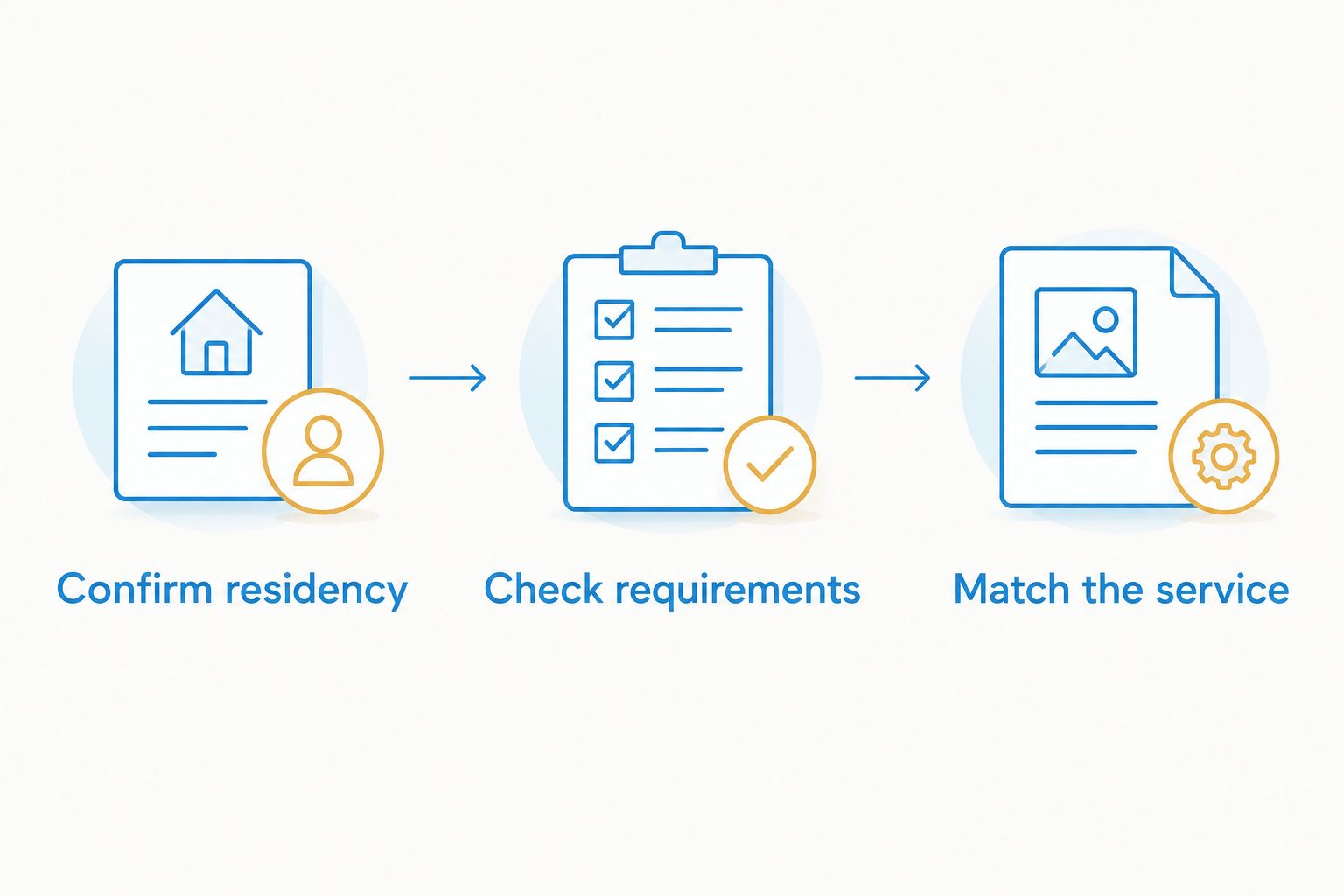
Make these 3 checks before choosing
A useful 2026 comparison starts before the feature checklist. Use these checks in order so that documentation does not get mistaken for permission to complete a transfer.
- Confirm residency. Establish where both parties reside. An interstate transaction needs different analysis from a transaction between residents of the same state.
- Check requirements. Identify the applicable federal and state rules, including whether dealer involvement or a background check is required. Resolve uncertainty before arranging possession or shipment.
- Match the service. Choose the provider or workflow that handles the required steps, then retain the appropriate documentation.
Federal law generally restricts direct firearm transfers between unlicensed residents of different states, subject to specific exceptions. ATF's federal guidance on unlicensed transfers is the relevant starting point; a state-law summary alone does not settle an interstate transaction.
Keep 2 questions separate: Is this transfer lawful under the applicable rules, and does this option perform the steps you need? A useful document cannot answer both, and a software feature list is not a legal determination.
Check private-transfer service fit
Review online support for background checks, bills of sale, and ownership records across 37 states.
When staying with FastBound is the right call
Stay with FastBound if your actual requirement is licensed-dealer recordkeeping and its workflows fit your business. None of the private-sale routes above is a like-for-like replacement for that job.
If you are an FFL seeking different software, compare dealer systems against your own recordkeeping requirements. Ask about acquisition-and-disposition workflows, Form 4473 handling, access controls, record retrieval, and data export rather than choosing a private-transfer service.
The right 2026 decision can be to stay. Changing categories to solve a software preference creates a bigger mismatch than keeping a system that already serves the correct legal role.
FAQ
What's the best FastBound alternative for a private gun seller?
Guntransfer is the best fit in this comparison for private individuals seeking private firearm transfer compliance support. Its stated service covers background checks, bills of sale, and ownership records across 37 states; confirm support for your specific transaction.
Is a private-transfer service the same as FastBound?
No. A private-transfer service supports a person-to-person transaction, while FastBound focuses on electronic dealer recordkeeping and Form 4473 workflows.
Should I use a local FFL instead of transfer software?
Use a licensed dealer when your transaction requires dealer involvement. Software alone does not replace that requirement, and you should confirm the dealer accepts the transaction before arranging the handoff.
Can a bill of sale replace a background check?
No. A bill of sale documents transaction details; it does not replace a background check required by law or another mandatory transfer step.
Can I transfer a firearm directly to someone in another state?
Federal law generally restricts direct transfers between unlicensed residents of different states, subject to specific exceptions. Establish the applicable federal and state requirements before arranging possession or shipment.
Does coverage across 37 states mean every transaction is supported?
No. Geographic coverage does not establish that a service supports every transaction type or satisfies every applicable requirement. Confirm the parties' residency, firearm involved, and required process before proceeding.
When should a firearms dealer stay with FastBound?
A firearms dealer should stay with FastBound when the need is dealer recordkeeping and its workflows fit the business. Private-transfer services and personal bills of sale are not equivalent replacements for dealer software.
One last thing
A signed document records an event; it does not make the event lawful. Before choosing among FastBound alternatives, write down who performs each required step and what record remains afterward. If a required step has no responsible party, stop and resolve that gap before proceeding.