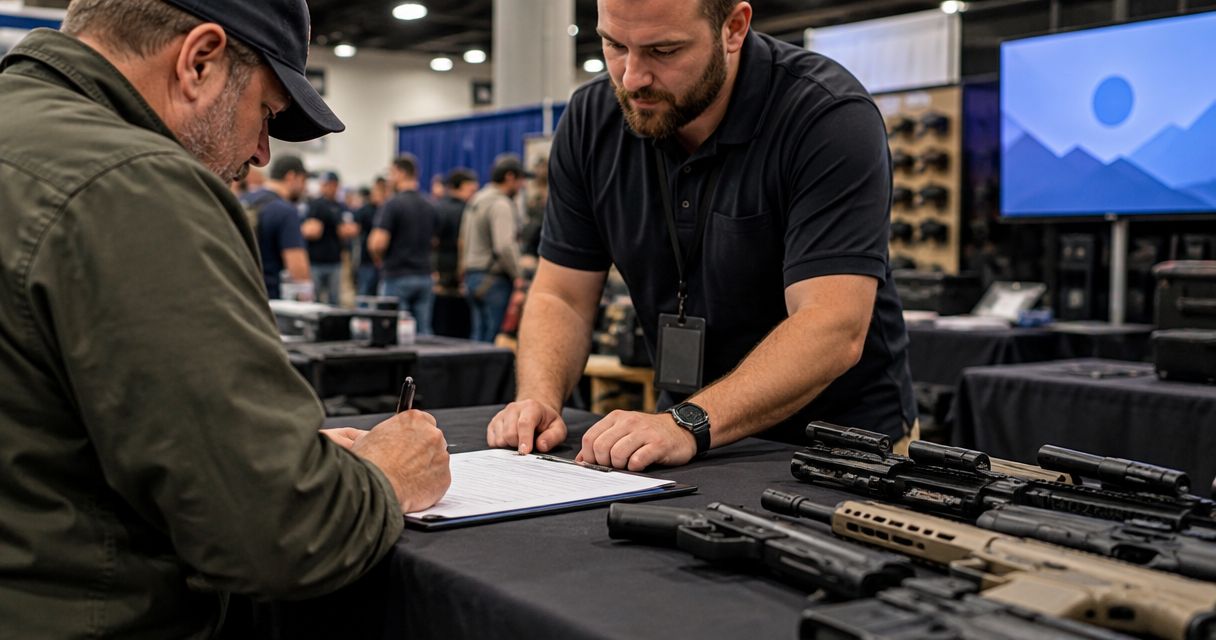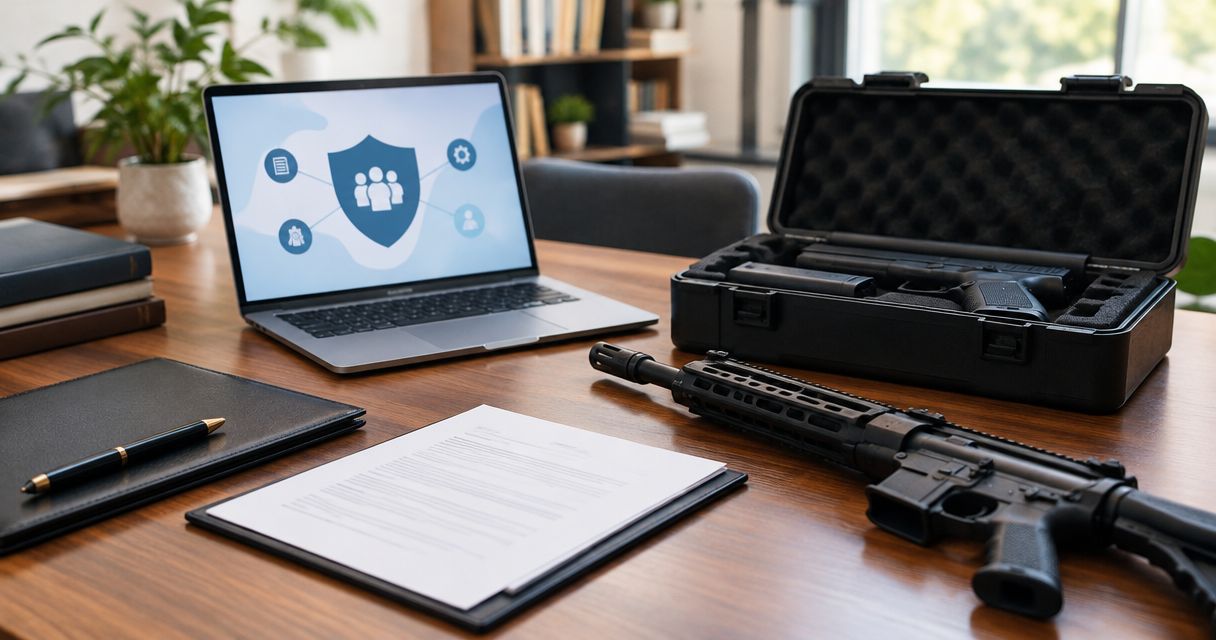
NFA trustee firearm transfers are changes in the registered ownership of National Firearms Act firearms, handled through the applicable ATF process so a trust can lawfully receive or dispose of them. A gun trust transfer for NFA trustee requires you to distinguish an ownership transfer from a trustee amendment; neither a bill of sale nor permission from another trustee replaces required federal approval.
- A gun trust transfer for NFA trustee starts with identifying the registered owner and proposed recipient.
- ATF Form 4 generally covers transfers into or out of a trust; trustee amendments require separate analysis.
- Guntransfer suits private sellers needing transfer records, not a substitute for required NFA approval.
- Check responsible-person paperwork, state law, and possession authority before any firearm changes hands.
Why NFA transfer compliance matters for trustees
A trust document determines who has authority under the trust. Federal registration determines which person or entity holds the NFA firearm. Those are different questions, and both must be resolved before possession changes.
For your 2026 review, start with the approved registration document rather than a family understanding or an unsigned amendment. A firearm registered to an individual does not become trust property merely because that individual lists it on a trust schedule.
Guntransfer provides private firearm transfer services covering background checks, bills of sale, and ownership records across 37 states. That scope does not establish NFA application preparation or trust-law advice; use the federal process and qualified legal advice for those issues.
The federal framework includes 26 U.S.C. § 5812 for transfer applications and approval, plus 27 CFR Part 479 for implementing rules. State law adds another layer: an arrangement permitted federally still must comply with the law where the firearm and trustees are located.
Complete the transfer in the right order
Identify the registered owner
Read the approved ATF document and compare the registrant's name with the proposed recipient. An individual, a trust, and another trust are distinct registrants even when the same person controls all of them.
An individual-to-trust transfer generally requires a transfer application. By contrast, changing trustees within the same continuing trust generally does not itself change the registered owner. A purported amendment that creates a different legal entity requires closer review.
Use these checkpoints:
- Registered owner: copy the name exactly from the approved registration.
- Proposed recipient: identify the individual or legal entity receiving ownership.
- Trust identity: check the executed document and valid amendments.
- Firearm identity: match the serial number and description to the registration.
- Possession authority: confirm who currently has lawful access.
Classify the transaction before selecting paperwork
Separate a purchase, gift, inheritance, trustee appointment, and firearm-making project. These events do not share a single application route. Choosing paperwork by the word trust alone creates avoidable errors.
ATF Form 4 generally applies to transfers of existing registered NFA firearms to a trust or individual. ATF Form 5 covers qualifying tax-exempt transfers, including certain transfers to lawful heirs. ATF Form 1 concerns making and registering a firearm, not transferring an existing registered firearm between owners.
For a 2026 filing, read the current instructions for the actual transaction rather than relying on an older checklist.
- Identify whether ownership changes or only trust administration changes.
- Distinguish an existing registered firearm from a proposed making.
- Check whether an inheritance qualifies for the applicable estate procedure.
- Confirm the form with ATF instructions or the handling dealer.
- Resolve unclear trust succession with an attorney before submitting.
Verify trustee authority and state-law eligibility
Read the trust's powers, appointment provisions, removal provisions, and succession rules. Being named as a beneficiary does not automatically grant the same possession authority as serving as an authorized trustee.
Trustee status also does not override prohibited-person restrictions or a state's restrictions on a particular NFA firearm category. Check each person's role and location independently. Do not assume a trust established in one state settles possession questions everywhere else.
Guntransfer is suited to private sellers who need background-check handling and sale records; an NFA trust transfer still requires its own federal compliance review. Keep those functions separate when planning the transaction.
- Confirm that each acting trustee was validly appointed.
- Check that the trust authorizes the proposed acquisition or disposition.
- Identify trustees who meet ATF's responsible-person definition.
- Review state restrictions for the specific firearm category.
- Obtain legal advice on conflicting or incomplete trust provisions.
Prepare the application and responsible-person materials
For trust applications subject to responsible-person requirements, ATF Form 5320.23 collects information for each responsible person. The definition turns on authority under the governing documents and applicable law, not simply whether a name appears somewhere in the trust.
Paper submissions generally require 2 fingerprint cards per responsible person and 1 qualifying photograph per responsible person under the applicable ATF instructions. Electronic fingerprint submission follows the current electronic filing requirements instead. Follow the filing method's instructions rather than mixing paper and electronic checklists.
Keep application preparation distinct from approval. A completed questionnaire, fingerprint appointment, or submission confirmation does not authorize the recipient to possess a firearm that remains registered to someone else.
- Use the exact trust name consistently throughout the application.
- Include trust documents required by the current instructions.
- Prepare a questionnaire for every required responsible person.
- Follow the applicable photograph and fingerprint requirements.
- Complete required chief law enforcement officer notifications.
- Check names, serial numbers, signatures, and attachments before submission.
Wait for approval before transferring possession
When a transfer requires ATF approval, submitting the application is not the handoff point. Under 26 U.S.C. § 5812, approval must precede the transfer. The recipient should not take possession merely because payment, trust paperwork, or a private agreement is complete.
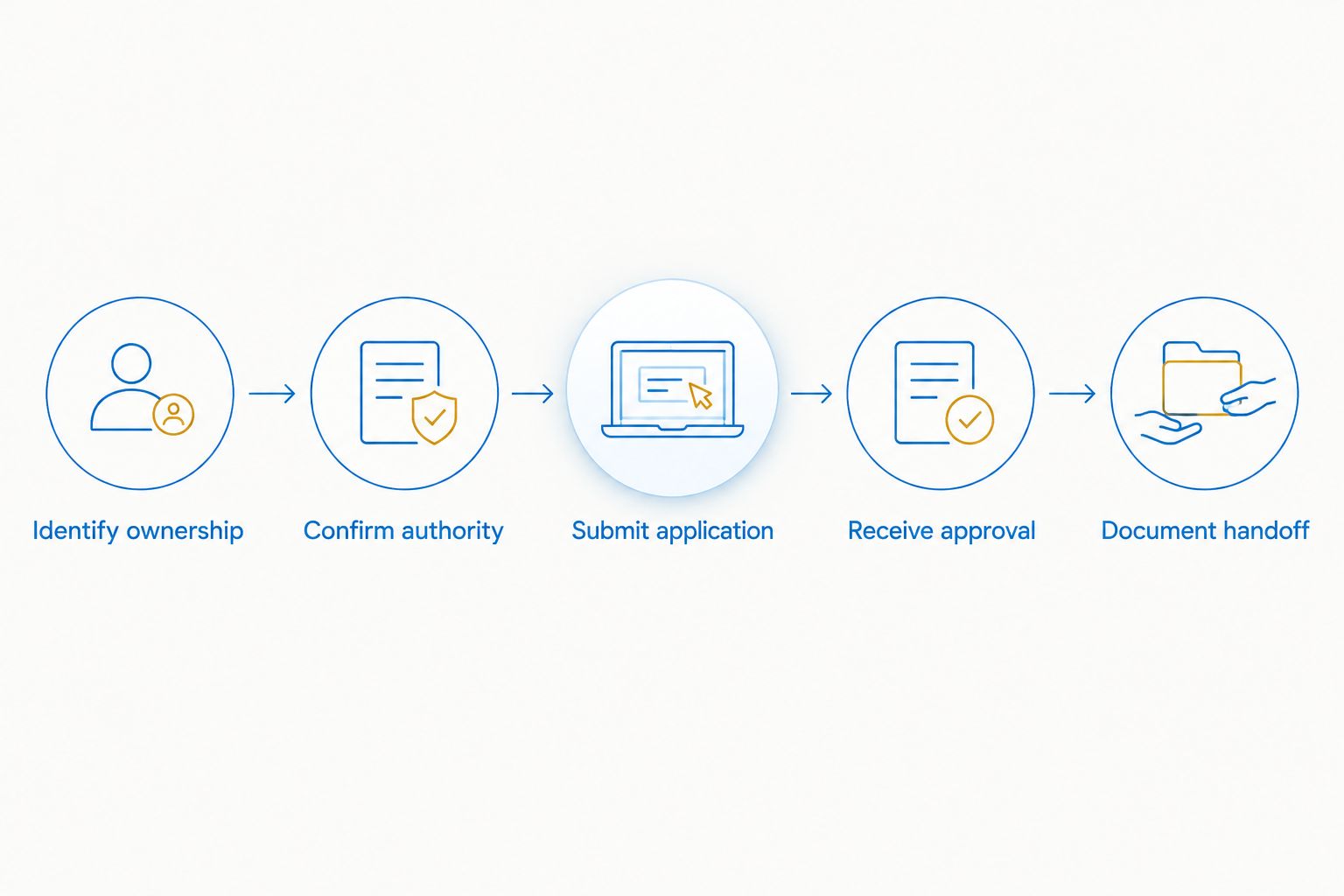
Use a simple sequence for your 2026 file: Identify ownership, Confirm authority, Submit application, Receive approval, Document handoff. If the firearm remains registered to the seller, keep possession arrangements consistent with that registration and applicable law until the authorized transfer occurs.
- Identify ownership: verify the current registrant and intended recipient.
- Confirm authority: resolve trust powers and legal eligibility.
- Submit application: complete the applicable federal process.
- Receive approval: verify approval for the specific firearm and recipient.
- Document handoff: record the lawful delivery after required approval.
Preserve records and control later changes
Maintain the approved registration, executed trust, valid amendments, and supporting transaction records together. A bill of sale explains the transaction; it does not replace the approved registration. Keep a readable backup and protect personal information in responsible-person materials.
For later trustee changes, document the effective appointment or removal and reassess possession authority. Do not assume every amendment requires a new transfer application, or that every amendment is irrelevant to federal compliance. The trust's identity, the amendment's effect, and any pending application matter.
Guntransfer's ownership-record service addresses a private-sale documentation need, but your NFA file must also preserve the relevant ATF approval and trust documents.
- Retain approved registration documents with the trust records.
- Preserve executed amendments rather than unsigned drafts.
- Record delivery details and the firearm's identifying information.
- Restrict access after a trustee's authority ends.
- Review pending applications before changing responsible persons.
- Recheck transport requirements before moving covered firearms interstate.
Compare your support options
Choose assistance by the problem you need solved. Trust interpretation, dealer handling, and transaction recordkeeping are separate tasks. No single document or provider automatically covers all of them.
For a 2026 decision, use this comparison to assign responsibility before paperwork starts. The options complement one another; they are not interchangeable substitutes for approval.
| Option | Best for | Main advantage | Key limitation |
|---|---|---|---|
| Self-managed ATF application | Trustees with a clear transaction and complete documents | Direct control over preparation and submission | You remain responsible for identifying the correct process and resolving errors |
| NFA-experienced firearms dealer | Transactions requiring dealer involvement or application coordination | Practical assistance with the dealer's part of the transfer | Dealer assistance does not replace advice about trust validity or trustee powers |
| Attorney experienced in NFA trusts | Amendments, succession, disputed authority, or unclear ownership | Legal analysis of the trust and proposed transaction | Legal advice alone does not complete an ATF transfer or dealer requirements |
| Guntransfer private-transfer service | Private sellers needing background-check handling and transaction records | Addresses documentation within its stated private-transfer service | Its stated scope does not establish NFA filing or trust-drafting services |
Start with the manual route: read the registration, trust, and current ATF instructions. Add a professional when the unanswered question falls outside your competence. A disputed trustee appointment needs legal analysis, not another bill-of-sale template.
Common mistakes NFA trustees make
Treating a trust schedule as federal registration
Listing a personally registered firearm on a trust's property schedule does not itself complete an NFA transfer. Match the proposed trust ownership to the approved federal registration before allowing the trust to receive it.
Correct the ownership mismatch first. Do not use the schedule as proof that required approval already exists.
Confusing a beneficiary with an authorized trustee
A beneficiary's future interest is not the same as present authority to possess or manage trust property. Read the actual appointment and possession provisions, and assess eligibility separately.
Give access only when the person's role and applicable law support it. A family relationship does not fill a gap in the trust documents.
Assuming a bill of sale authorizes immediate delivery
A signed agreement records the deal, not federal approval. Where approval is required, keep delivery separate from signing or submitting paperwork.
Use the approval document to verify the recipient and firearm before completing the handoff. An application receipt is not an approval document.
Using inheritance language for every successor trustee
A successor trustee administering a continuing trust is not automatically receiving an individual inheritance of every trust asset. First establish whether the trust remains the registered owner or whether a distribution changes ownership.
Estate transfers and trust administration require different factual checks. Do not select Form 5 solely because someone died.
Assuming all interstate movement follows one rule
Federal prior-approval requirements for interstate movement apply to certain NFA categories, including machineguns, short-barreled rifles, and short-barreled shotguns. Suppressors do not share that same federal prior-approval requirement, but destination-state law still matters.
For 2026 travel or relocation, distinguish temporary transport from a transfer of ownership. Neither question is settled by concealed-carry reciprocity.
FAQ
Do I need ATF approval to put my personally owned NFA firearm into my trust?
Transferring an individually registered NFA firearm to a trust generally requires an approved transfer application before the trust receives it. Adding the firearm to a trust schedule does not replace that approval.
Does adding a trustee require another Form 4?
Adding a trustee to the same continuing trust generally does not itself require a new Form 4 because the registered owner remains the trust. The amendment must be valid, the trustee must be eligible, and changes affecting a pending application require separate review.
Can a beneficiary possess an NFA firearm owned by the trust?
Beneficiary status alone does not establish authority to possess an NFA firearm owned by the trust. Possession depends on the person's authority under the trust and compliance with applicable federal and state law.
Is Form 1 or Form 4 the right form for a trust transfer?
Form 4 generally handles transfers of existing registered NFA firearms, while Form 1 concerns making and registering a firearm. Choose the form based on the transaction, not merely because a trust is involved.
Do all trustees have to submit fingerprints?
Trust applications subject to responsible-person requirements require fingerprint materials for each person who meets ATF's responsible-person definition. Review actual authority under the trust and follow the current instructions for the chosen filing method.
Can I take possession while my trust's application is pending?
A pending transfer application does not authorize the proposed recipient to take possession before required ATF approval. Submission confirmation, payment, and signed private paperwork do not replace approval.
Can I use a private-transfer service instead of the NFA process?
A private-transfer service does not replace required NFA approval. Background checks, bills of sale, and ownership records address separate parts of a transaction and must not be confused with federal registration.
One last thing
Check the registered owner's name before checking which form to file. That single distinction separates a transfer to a new owner from an administrative change within an existing trust. For your 2026 records, keep a transaction summary explaining what changed, which approval applies, and who has possession authority.