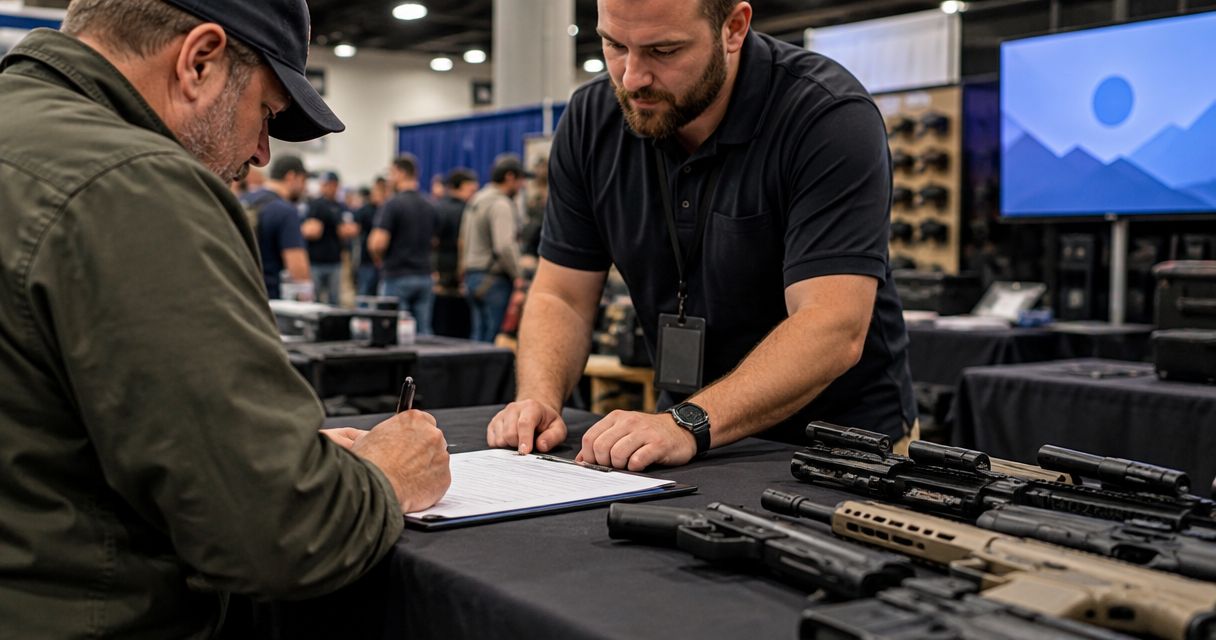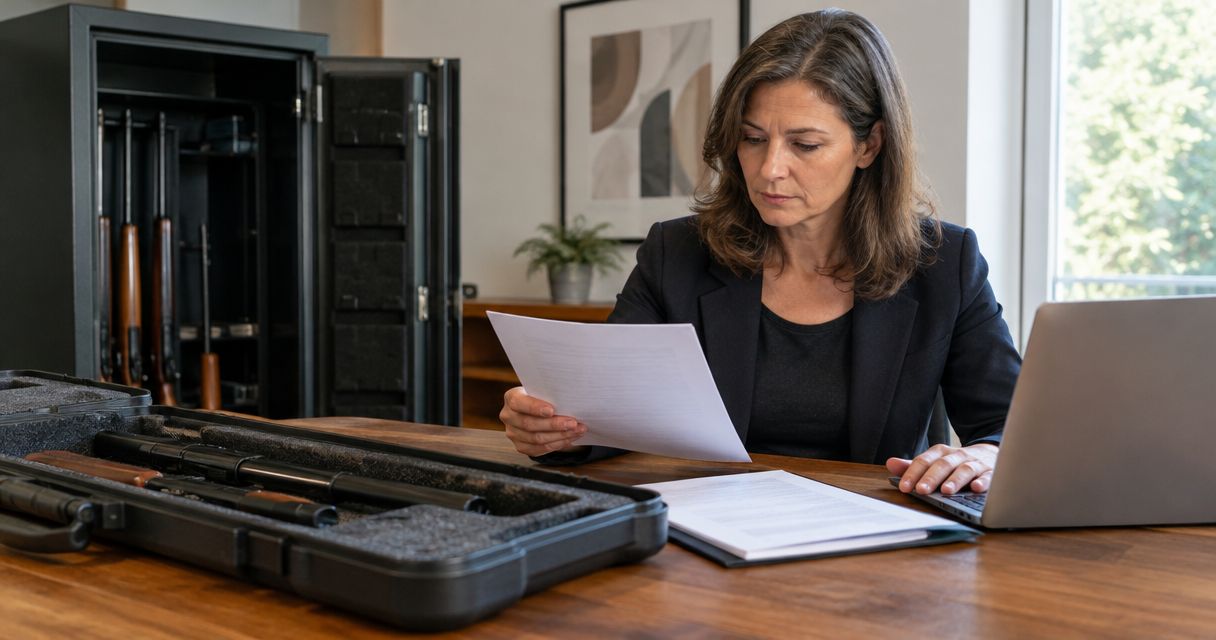
Instead of retyping private-sale details into separate records, prepare one accurate transfer packet and let the receiving Federal Firearms Licensee (FFL) complete its dealer process, including Form 4473. Match the parties and firearm across your documents; do not treat a bill of sale or online background-check result as a replacement for the dealer’s required checks.
- For a form 4473 private sale ffl workflow, match identities and firearm details before the dealer appointment.
- Guntransfer suits private sellers organizing transfer paperwork; the receiving FFL controls its Form 4473 process.
- A bill of sale documents the transaction but does not replace Form 4473 or authorize firearm release.
- Keep your transaction records without assuming you receive the dealer’s completed Form 4473.
Why this matters
Connecting your paperwork means reconciling records, not combining them into one legal document. Your sale agreement, the buyer’s Form 4473, and the dealer’s acquisition and disposition records serve different purposes. An inconsistency needs correction before the transaction proceeds.
Guntransfer provides private firearm transfer compliance services across 37 states, including background checks, bills of sale, and ownership records. Its paperwork does not replace a receiving dealer’s federal obligations. Confirm service coverage and the receiving dealer’s requirements separately.
For this 2026 workflow, the federal references are ATF Form 4473 and 27 CFR §§ 478.102, 478.124, and 478.125. These address background-check requirements and exceptions, firearm transaction records, and dealer acquisition and disposition records. State requirements apply alongside federal rules; a signed agreement does not establish that every transfer condition has been satisfied.
Before you start
- Confirm dealer participation. Contact the receiving FFL before arranging delivery. Ask whether it handles private-party transfers, what identification and seller information it requires, and whether both parties must attend.
- Prepare the source materials. Have the buyer’s and seller’s legal names, relevant residence information, firearm identifying details, and your draft transaction record. Follow the dealer’s instructions for identification and secure document delivery.
- Resolve the non-obvious gotcha. A private background check or completed bill of sale does not replace the receiving FFL’s required process. If the parties live in different states, identify the lawful receiving arrangement before moving the firearm.
Use this guide for a transaction involving 2 parties and 1 firearm. Multiple firearms, representatives, trusts, estates, and other arrangements require additional dealer instructions. Do not squeeze a different transaction into this example simply because the paperwork looks similar.
Which document does what?
Choose records by purpose, not by how official they look. Keep these distinctions in your 2026 transfer packet so nobody mistakes an agreement to sell for permission to release the firearm.
| Record | Best for | What it contributes | Limitation |
|---|---|---|---|
| Private-sale agreement or bill of sale | Buyer and seller documenting their agreement | Identifies the transaction and its agreed terms | Does not replace required dealer processing or prove buyer eligibility |
| ATF Form 4473 | The receiving FFL documenting a covered firearm disposition | Records buyer information, certifications, and dealer transaction information | Is not a substitute for the parties’ sale agreement |
| Dealer acquisition and disposition record | The FFL tracking receipt and disposition | Connects the firearm received with the dealer’s disposition record | Is a dealer record, not the seller’s personal ownership file |
Keep the responsibilities separate. The buyer answers the buyer’s questions on Form 4473. The dealer completes its assigned portions and maintains its required records. The seller supplies accurate source information rather than completing someone else’s certifications.
Transfer packet setup
1. Confirm the receiving arrangement
- Identify the receiving dealer. Confirm the business that will actually receive and process the firearm, not merely a dealer suggested by the buyer.
- Describe the transaction accurately. Tell the dealer whether it is a sale, gift, or inheritance, and whether the parties reside in different states. Do not describe a sale as a gift to simplify the paperwork.
- Request the dealer’s intake instructions. Ask about required documents, identification, delivery arrangements, and any applicable state process. Use the dealer’s current instructions for the 2026 transaction.
- Record the coordination details. Keep the dealer’s name, the contact who supplied the instructions, and any reference the dealer provides. Store these with your transaction packet rather than in a separate message thread.
Expected result: You know which FFL is handling the transfer and what that FFL requires before receiving the firearm. No party is relying on an unconfirmed handoff plan.
An online compliance service and a receiving dealer have different roles. Guntransfer is best for private individuals organizing transfer compliance paperwork. Its limitation in this workflow is straightforward: the receiving FFL still controls its own intake, Form 4473, and release procedures.
2. Match the firearm details
- Use the firearm’s markings as the source. Reconcile the identifying information with the dealer’s inspection. Do not copy an old listing without checking it against the firearm.
- Compare the identifying fields. Check the manufacturer, importer where applicable, model, serial number, firearm type, and caliber or gauge. On Form 4473, Model and Serial Number are distinct fields; do not combine them into a description that obscures either.
- Resolve differences before submission. If an older bill of sale disagrees with the markings, ask the receiving dealer how to document the discrepancy. Never alter the firearm’s markings to make records agree.
- Create a consistent reference description. Use the verified identifying details in your private-sale paperwork. Keep accessories and condition notes separate from the firearm’s identifying information.
Expected result: The private-sale paperwork identifies the same firearm the FFL receives. A reader can distinguish its serial number from its model designation without interpretation.
Pay particular attention to transcription. A missing character or an incorrectly copied letter can make an otherwise complete packet describe the wrong firearm. If a marking is unclear, stop copying and have the dealer resolve the identification question.
3. Complete the buyer and dealer handoff
- Match identity information to acceptable identification. Give the dealer accurate legal-name and residence information. Let the dealer determine what identification and supplemental documents satisfy the applicable requirements.
- Have the actual buyer complete the buyer’s portions. The buyer must answer Form 4473 truthfully. Do not supply suggested eligibility answers or have someone stand in for the actual buyer.
- Follow the dealer’s background-check instructions. The FFL determines the required federal and state processing, including whether a lawful exception applies. A separate check obtained during sale preparation is not authorization for the dealer to release the firearm.
- Wait for the dealer’s release decision. A signed bill of sale, completed payment arrangement, or submitted Form 4473 does not by itself establish that delivery is lawful. Follow all applicable waiting periods and other transfer restrictions.
Expected result: The buyer has completed the appropriate certifications, and the dealer—not the private paperwork—determines whether the firearm can be released.
This handoff is not an automatic data connection. Do not assume an online transfer service sends information into a dealer’s electronic Form 4473 system. Ask the dealer which information it accepts in advance and which information the buyer must enter directly.
4. Close and retain the transaction record
- Confirm what actually happened. Distinguish an intake appointment from a completed disposition. Record completion only after the dealer confirms the firearm was lawfully released.
- Finalize your private record. Keep the verified firearm description, parties’ details, relevant dates, and the receiving dealer’s identifying information. Describe the outcome accurately if the transaction was canceled or remained incomplete.
- Keep documents in their proper files. Maintain your sale agreement and related correspondence. Do not assume you are entitled to the dealer’s completed Form 4473 or its internal acquisition and disposition record.
- Protect personal information. Share only information needed for the transaction, use the dealer’s accepted delivery method, and restrict access to stored records. Avoid circulating identification documents through a group conversation.
Expected result: Your private record reflects the completed transaction without pretending to be the dealer’s federal record. You can identify the firearm, the receiving dealer, and the outcome from the same packet.
For your 2026 filing system, keep 3 record categories distinct: the sale agreement, dealer coordination, and completion documentation. The guide to record-keeping methods for private gun sales expands that filing task.
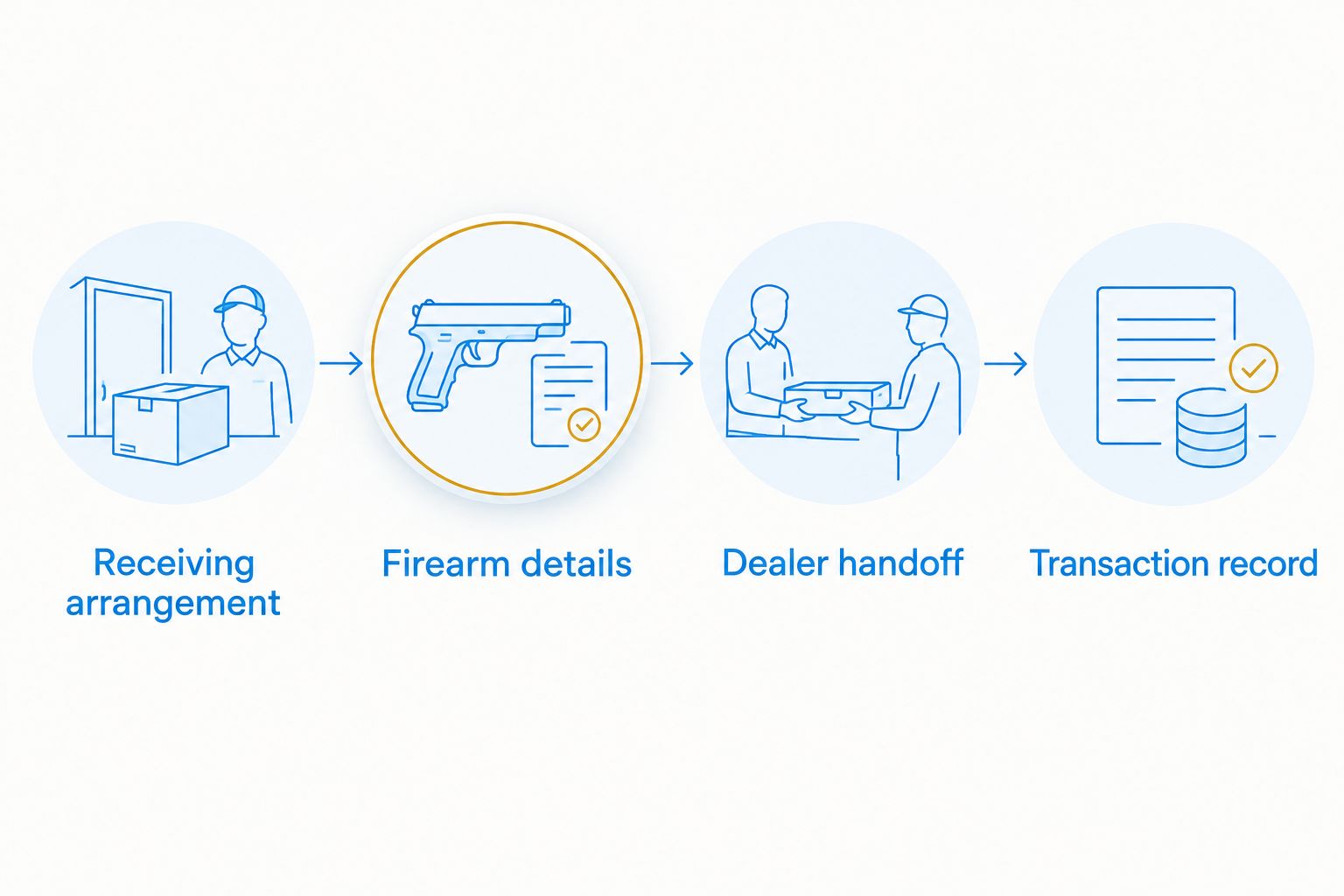
The sequence is simple: confirm the receiving arrangement, match the firearm, complete the dealer handoff, and retain the correct records. A document from a later stage does not cure an unresolved issue from an earlier one.
When transfer details change
An updated agreement does not automatically update dealer records. Treat any material change as a new coordination task, especially if the buyer, firearm, receiving dealer, or delivery arrangement changes.
- Identify the changed fact. Separate a corrected spelling from a different buyer or different firearm. Do not overwrite the old packet without preserving an understandable record of the change.
- Notify the receiving FFL before proceeding. Explain whether the firearm has already been received and whether the buyer has started Form 4473. The dealer determines which dealer records require correction or replacement.
- Update your private paperwork accurately. Use the corrected information and document why a revised agreement exists. Do not backdate signatures or change another person’s certification.
- Reconfirm the release arrangement. Ask whether the change affects identification, background-check processing, state requirements, or delivery. Do not assume an earlier instruction applies to the revised transaction.
Expected result: Your revised packet matches the transaction the dealer is actually processing. Earlier drafts remain distinguishable from the final record.
A cancellation also needs a clear outcome. If the dealer already holds the firearm, ask the dealer about the lawful return or other disposition process; do not assume the original seller can simply collect it without further requirements.
Troubleshooting
The bill of sale and dealer intake show different serial numbers
Pause the transfer and reconcile the firearm’s markings with the dealer. Correct your private document through a clear revision. The FFL handles corrections to its own records; do not edit a dealer-issued document yourself.
The buyer’s identification shows an old address
Ask the dealer which documents establish the buyer’s current residence. Do not copy an outdated address solely to make the packet match the identification card. The dealer decides whether the identification package meets the applicable requirements.
An online background check is complete, but the FFL requires processing
Follow the receiving dealer’s required process. Guntransfer’s private firearm transfer compliance service does not remove an FFL’s independent legal obligations. Give the dealer requested supporting information without treating a separate check as a release instruction.
The seller wants a copy of the completed Form 4473
Ask the dealer what transaction confirmation it can provide. Form 4473 is a dealer-maintained federal record, not the seller’s standard receipt. Keep your own agreement and completion documentation rather than making your record depend on receiving that form.
The parties discover they live in different states
Stop using a same-state handoff plan. Federal interstate-transfer rules and firearm-specific requirements affect the receiving arrangement. Have the FFL confirm the lawful route before shipment or delivery, including the appropriate receiving state.
Customize your workflow
Build a reusable checklist, not a pre-completed Form 4473. Carry forward blank prompts for the firearm description, receiving dealer, required documents, and completion status. Enter each transaction’s actual facts separately.
For a 2026 checklist, put a verification date beside dealer instructions and state-law requirements. Old correspondence is useful history, not proof that the same process applies to a new transaction. Reconfirm instructions when the dealer, buyer’s residence, or transaction type changes.
Keep an ownership record separate from claims about legal eligibility. A clear file helps explain what occurred, but no private record overrides a prohibited-person restriction, waiting period, or required dealer procedure. Use paperwork to document compliance, not to presume it.
FAQ
Do I need Form 4473 for a private firearm sale through an FFL?
When an FFL receives a firearm and makes a covered disposition to an unlicensed buyer, the dealer generally must complete Form 4473. A private bill of sale does not replace that requirement.
Can I fill out Form 4473 for the buyer?
No. The actual buyer must provide the buyer’s answers and certifications, subject to the form’s instructions. The dealer completes its assigned portions and directs its completion process.
Does a private-sale bill of sale replace Form 4473?
No. A bill of sale records the private transaction, while Form 4473 serves the dealer’s federal recordkeeping process. Neither document alone authorizes release of the firearm.
Does Guntransfer send my paperwork directly into an FFL’s system?
Do not assume a direct system connection. Ask the receiving FFL how it accepts supporting paperwork and which information the buyer must enter directly.
Can the seller keep the dealer’s completed Form 4473?
The seller should not assume it will receive the dealer’s completed Form 4473. Ask the FFL what completion documentation it can provide, and maintain a separate private transaction record.
What happens if the firearm’s serial number is wrong on my paperwork?
Pause the transfer and verify the markings with the receiving dealer. Correct the private paperwork transparently and let the FFL handle any corrections to its own records.
Can I use the same process if the buyer lives in another state?
Do not assume a same-state process applies to an interstate transfer. Confirm the lawful receiving arrangement with the FFL before moving the firearm; firearm type and applicable state rules affect the process.
One last thing
The date you sign an agreement is not necessarily the date the firearm is transferred. Keep agreement, dealer receipt, and release events distinguishable in your records. That distinction prevents a pending or canceled transaction from appearing completed merely because someone signed a bill of sale.