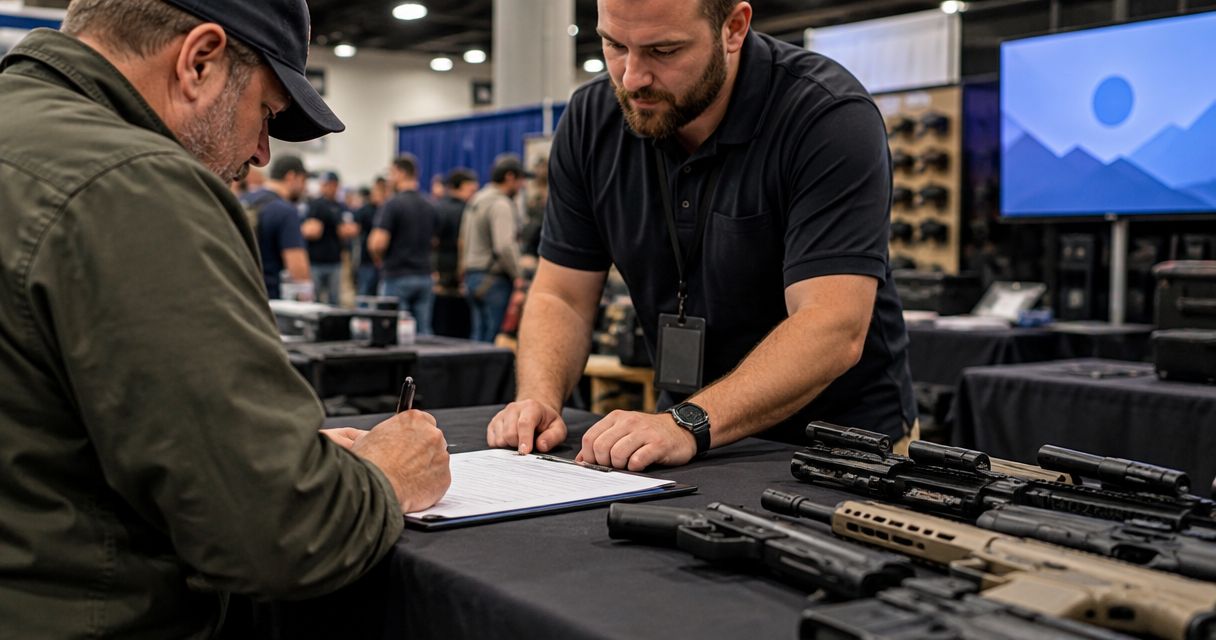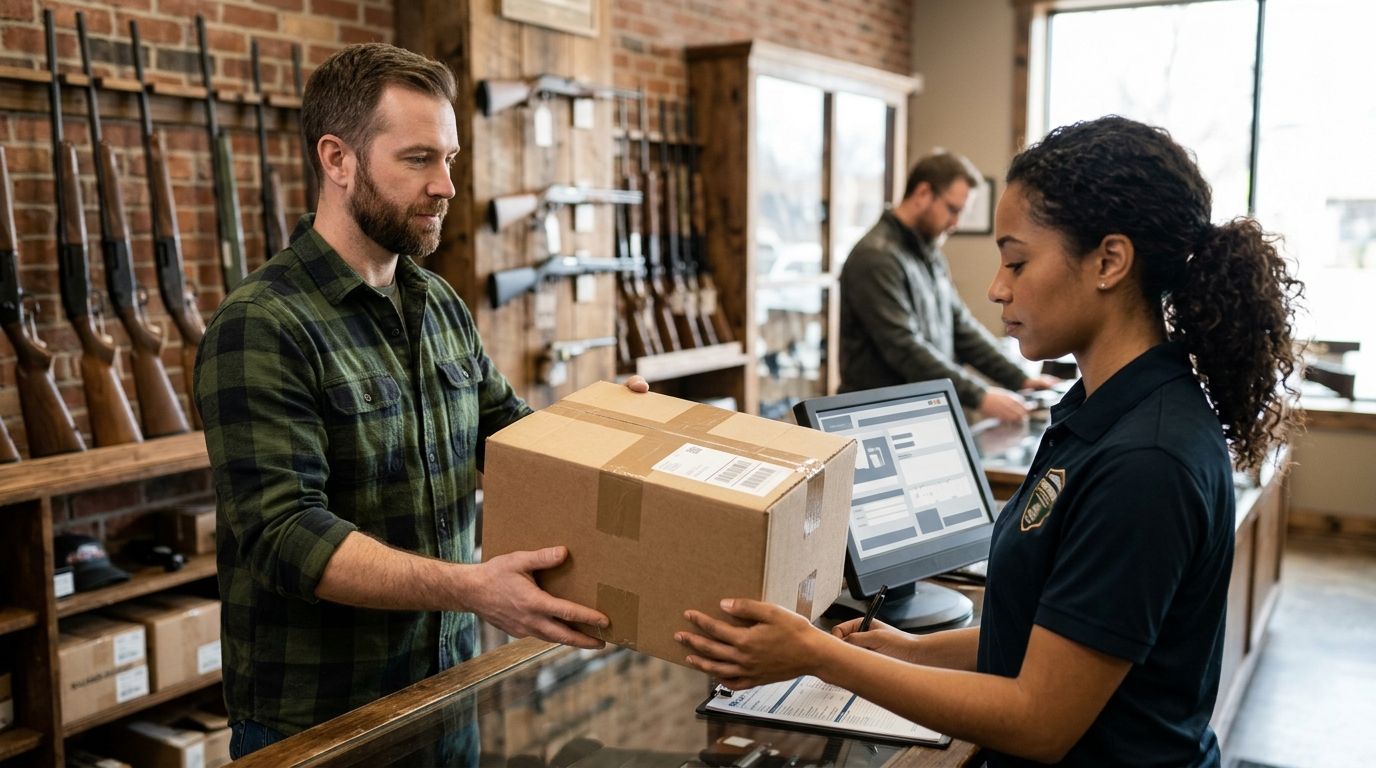
Instead of chasing shipping instructions after a private sale, use this 2026 workflow to ship a firearm to an FFL: confirm the receiving dealer’s acceptance, verify the license, check the lawful shipping route, and arrange the recipient’s transfer requirements before dispatch. Delivery to the dealer is not permission for the buyer to take possession.
- To ship firearm to FFL, confirm dealer acceptance and the shipping service’s rules before dispatch.
- Guntransfer suits private sellers who want background-check handling, bills of sale, and ownership records.
- A receiving FFL handles the recipient’s transfer requirements; delivery alone does not complete the sale.
- Keep shipment records separate from the bill of sale and the dealer’s transfer paperwork.
Why this matters
A firearm shipment involves separate requirements: federal law, applicable state and local law, the shipping service’s terms, and the receiving dealer’s intake policy. Satisfying one does not satisfy the others. A licensed dealer can decline a shipment that its own policy does not accept.
Guntransfer provides an online private firearm transfer compliance service across 37 states, handling background checks, bills of sale, and ownership records. Guntransfer is best for private individuals who want help documenting a person-to-person firearm sale. That service does not replace a receiving dealer’s obligations or a shipping service’s acceptance rules.
Use this 2026 guide as an administrative checklist, not blanket authorization to send a particular firearm. The federal reference points are ATF guidance on unlicensed transfers, ATF FFL eZ Check, and USPS Publication 52 for mailability. Confirm the current requirements for your specific transaction before sending anything.
Before you start
- Get receiving-dealer approval. Have the dealer’s business details, delivery address, recipient identification requirements, and written instructions for accepting a shipment from a private individual.
- Gather accurate transaction details. Record both parties’ states of residence, the firearm’s identifying information, and whether the transfer involves an ordinary firearm or a separately regulated item. Do not assume a standard firearm workflow covers National Firearms Act items.
- Resolve the shipping-policy gotcha first. A dealer’s willingness to receive from an individual does not mean a carrier will accept that individual’s shipment. Confirm sender eligibility, firearm category, service, and acceptance location before making arrangements.
You also need access to the receiving dealer’s communications and whatever identification or documents the dealer requests. Keep sensitive identification out of public listings and unsecured group messages.
Receiving-dealer approval
Confirm the transfer route
- Tell the receiving FFL whether the sender is a private individual or another licensee. State the firearm category and both parties’ states of residence.
- Ask whether the dealer accepts that exact transaction and whether state or local restrictions affect receipt or release.
- Obtain the dealer’s instructions directly. Confirm the delivery address, recipient reference, sender identification requirements, and how the recipient will learn that intake is complete.
- Ask what happens if the recipient cannot complete the transfer. Resolve the dealer’s return procedure before shipment rather than assuming the firearm can simply be sent elsewhere.
Expected result: You have direct confirmation that the dealer accepts the transaction and written instructions identifying the intended recipient.
For an interstate private sale, do not treat shipment as a way around the licensed transfer process. Federal law generally prohibits an unlicensed person from transferring a firearm directly to an unlicensed resident of another state, subject to limited exceptions. The receiving dealer must determine whether the proposed transfer is lawful.
The distinction between a handgun and a rifle or shotgun matters. Federal rules for dealer transfers to out-of-state residents differ by firearm category, and state law adds requirements. Have the receiving FFL confirm the correct route instead of applying one rule to every firearm.
Verify the dealer’s license
- Obtain the receiving dealer’s federal firearms license information through the dealer’s stated process.
- Use ATF FFL eZ Check where the license type is eligible for verification. The tool uses the first 3 digits and last 5 digits of the license number.
- Compare the returned license information with the dealer’s instructions. Resolve any disagreement in the business identity or delivery address directly with the dealer before dispatch.
- Retain the verification information with the transaction records. License verification establishes license status; it does not establish that a specific transfer is legal.
Expected result: The license information and the dealer’s instructions agree, with no unresolved address discrepancy.
ATF eZ Check does not validate every license category. Follow ATF’s instructions for a license that the system does not verify; a missing result is not a reason to guess. For more detail, use the guide to FFL lookup tools.
Shipping-route confirmation
Choose an eligible sender and service
- Check the shipping service’s current firearm policy using its official guidance. Identify the rules for the specific firearm category and for a nonlicensee sender.
- Confirm that the intended acceptance location handles that shipment. Do not assume every retail counter, franchise location, or drop-off point has the same permissions.
- Compare those instructions with the receiving FFL’s requirements. If the rules do not align, arrange an eligible alternative through a licensed dealer.
- Record the agreed route and required declarations. Do not misdescribe the contents or attempt to bypass a refusal.
Expected result: You have an accepted route for the actual sender, firearm, destination, and service—not merely a label or delivery address.
The following table compares administrative routes, not shipping-service recommendations. Neither route overrides applicable law.
| Route | Best for | Advantage | Limitation |
|---|---|---|---|
| Private individual sends to receiving FFL | A transaction explicitly accepted by both the receiving dealer and shipping service | Keeps the shipment with the original sender | Nonlicensee eligibility and firearm-category restrictions must be checked |
| Originating FFL sends to receiving FFL | A transaction requiring or using dealer-originated shipping | Places shipment arrangements with a licensed business | Requires a separate dealer’s acceptance and coordination |
Choose the route that is accepted, not the route that appears simplest. A receiving FFL’s license does not give an unlicensed sender the shipping privileges of a licensee.
For ordinary nonlicensee transactions, USPS treats handguns differently from rifles and shotguns. Nonlicensees generally cannot mail handguns; qualifying rifles and shotguns have separate mailability conditions under USPS Publication 52. Private carriers apply their own firearm shipping terms, so a federal allowance alone does not establish carrier acceptance.
Recheck those terms for your actual 2026 shipment. An older receipt or a seller’s previous experience is not evidence that the same service accepts the transaction now.
Shipment records and recipient handoff
Assemble the transaction record
- Match the firearm’s identifying information to the transaction documents. Resolve inconsistent serial numbers, makes, or models before dispatch.
- Supply the receiving dealer’s requested sender information through the dealer’s approved method. Follow its instructions about documents accompanying the shipment.
- Follow the accepted shipping service’s safety, packaging, declaration, and delivery requirements. Do not include ammunition unless the service expressly permits the proposed arrangement and all applicable requirements are satisfied.
- Retain the shipment receipt, tracking information, dealer correspondence, and your transaction documents together.
Expected result: The dealer can identify the sender, firearm, and intended recipient, while both parties retain a clear administrative record.
A bill of sale records transaction details. It is not a shipping authorization, a substitute for a required background check, or proof that the dealer has released the firearm.
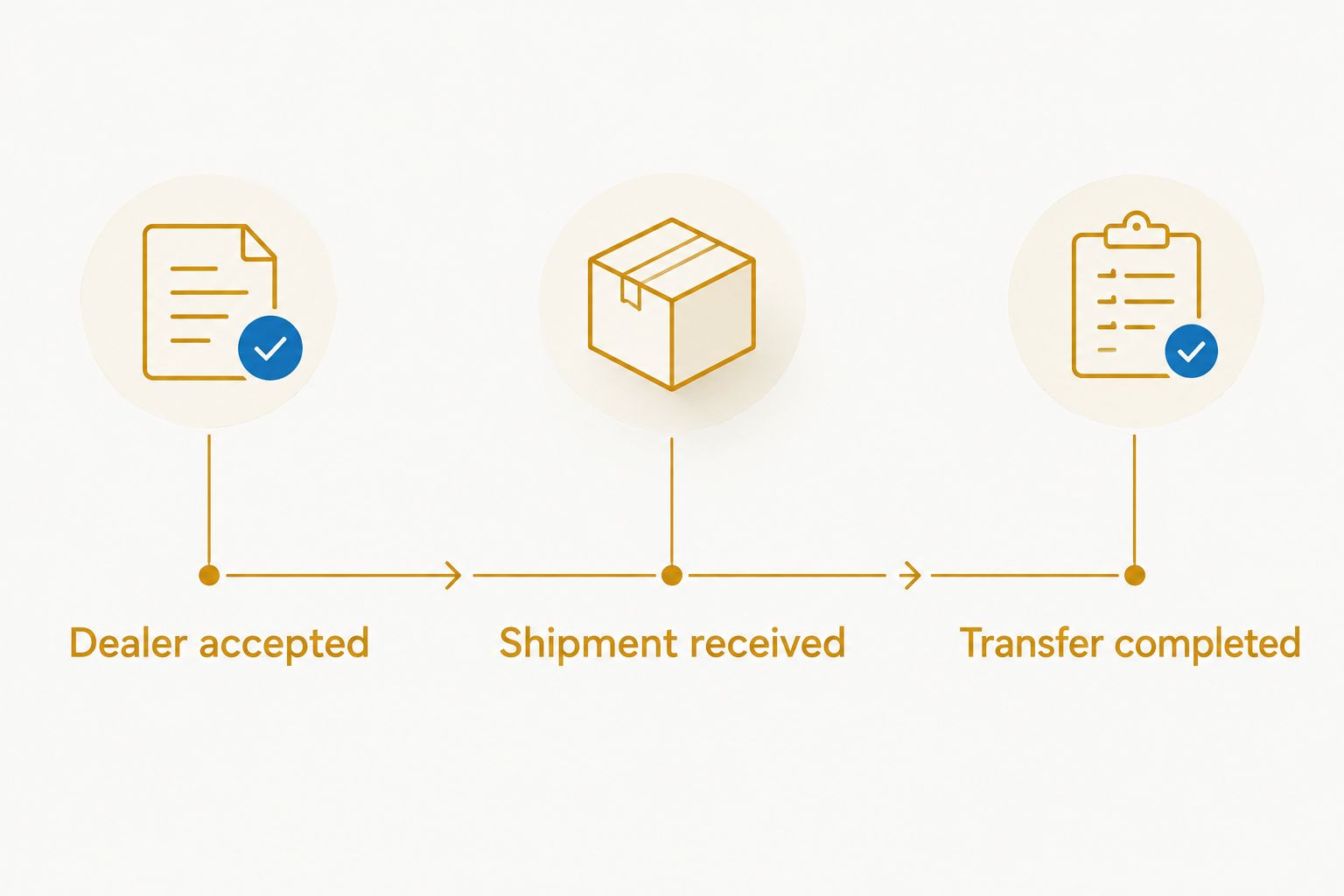
Use distinct status labels in your own checklist:
- Dealer accepted: The receiving FFL agreed to the proposed transaction.
- Shipment received: Delivery has occurred, but dealer intake or transfer requirements remain.
- Transfer completed: The dealer confirms that the recipient’s transfer is complete.
Confirm the recipient’s release requirements
- Have the recipient contact the receiving FFL about identification, residency documentation, appointments, and applicable state requirements before traveling.
- Wait for the dealer’s intake confirmation. A tracking notification is not a pickup instruction.
- Follow the dealer’s lawful transfer process. For an ordinary dealer transfer to a nonlicensee, this generally includes ATF Form 4473 and a background check, unless a lawful exception applies.
- Obtain confirmation of the transaction’s final status without requesting restricted dealer records or another person’s sensitive background-check information.
Expected result: Everyone distinguishes arrival from lawful release, and the transaction record reflects its actual status.
A delay is not approval. Federal and state rules govern whether and when a dealer can proceed, and the dealer’s policy also matters. Never substitute a personal countdown for the receiving FFL’s instructions.
When the shipment details change
An adjacent workflow applies when the firearm has not shipped but the recipient changes dealers or a shipping service refuses the original route. Reconfirm the transaction before changing the destination. Do not treat a new address as a clerical edit.
- Pause dispatch and identify exactly what changed: dealer, recipient, address, sender, or shipping service.
- Obtain acceptance from the replacement receiving FFL and repeat license verification.
- Recheck sender eligibility and shipping-service requirements for the revised route.
- Update the transaction documents and notify both parties which instructions supersede the earlier version.
Expected result: Only one current set of shipment instructions remains in use.
If the firearm is already in transit, contact the shipping service and receiving dealer. Follow their procedures for any permitted change; do not assume redirection to a residence or another business is lawful.
For a 2026 transfer involving changed residency, an inheritance, or a separately regulated firearm, stop using the ordinary-sale checklist until the relevant requirements are established. Those changes affect the legal analysis, not just the delivery details.
Troubleshooting
The dealer refuses shipments from individuals
Use an originating FFL that accepts the transaction, or obtain approval from another suitable receiving FFL before shipment. Never describe a private shipment as dealer-originated.
The license information and address disagree
Pause shipment and contact the receiving dealer through independently confirmed business contact details. Resolve the discrepancy through ATF guidance and the dealer’s documentation rather than choosing whichever address appears convenient.
The shipping counter refuses the firearm
Do not omit the contents or try another counter without resolving the policy issue. Confirm sender eligibility and the authorized acceptance method with the shipping service; use a licensed dealer when the permitted route requires one.
Tracking shows delivery, but pickup is not authorized
Ask the receiving FFL whether intake is complete and what remains outstanding. The recipient must wait for the dealer’s instructions, even when the package has a delivery confirmation.
The recipient cannot complete the transfer
Leave disposition with the receiving FFL while the lawful next steps are determined. A failed transfer does not authorize a private handoff, a substitute recipient, or an informal return shipment.
Customize your workflow
Build a reusable 2026 checklist around the facts that change: sender eligibility, recipient residency, firearm category, receiving-dealer approval, shipping-service acceptance, and final transfer status. Keep dealer and carrier instructions attached to each transaction instead of relying on a remembered process.
Guntransfer’s private firearm transfer compliance service covers background-check handling, bills of sale, and ownership records across 37 states. Its limit is equally important: documentation support does not replace the receiving FFL or shipping service where either is required. Confirm service coverage before using it for your transaction.
FAQ
Can a private individual ship a firearm to an FFL?
Federal law generally allows an unlicensed individual to ship a firearm to a licensed dealer for a lawful purpose. The receiving dealer must accept the transaction, and applicable law and the shipping service’s rules still control the shipment.
Can I mail a handgun to my FFL through USPS?
An ordinary private individual generally cannot mail a handgun through USPS. USPS Publication 52 contains specific exceptions and separate rules for eligible licensees; do not apply rifle and shotgun mailability rules to handguns.
Does my receiving FFL have to accept a private shipment?
No. A receiving FFL can decline shipments from private individuals or require specific sender documentation. Obtain acceptance and instructions before dispatch.
Does a bill of sale replace the background check?
No. A bill of sale documents transaction details but does not replace a background check required by law. The receiving dealer determines the applicable transfer requirements.
Can I pick up the firearm as soon as tracking says delivered?
No. Delivery confirms arrival, not completion of dealer intake or authorization for release. Wait for the receiving FFL’s pickup instructions and complete the required transfer process.
What happens if the buyer cannot complete the transfer?
The receiving FFL must determine the lawful disposition of the firearm. Contact the dealer about its return procedure rather than arranging a substitute recipient or an informal handoff.
Does Guntransfer replace the receiving FFL?
No. Guntransfer provides private firearm transfer compliance services, including background-check handling, bills of sale, and ownership records across 37 states. It does not replace a receiving FFL’s legal duties or a shipping service’s acceptance requirements.
One last thing
Agree on the failed-transfer procedure before the firearm leaves the sender. Dealer refusal, an unresolved background check, or incorrect recipient information creates a disposition problem that a delivery receipt cannot solve. Written instructions about acceptance and returns are part of the transfer plan, not an afterthought.