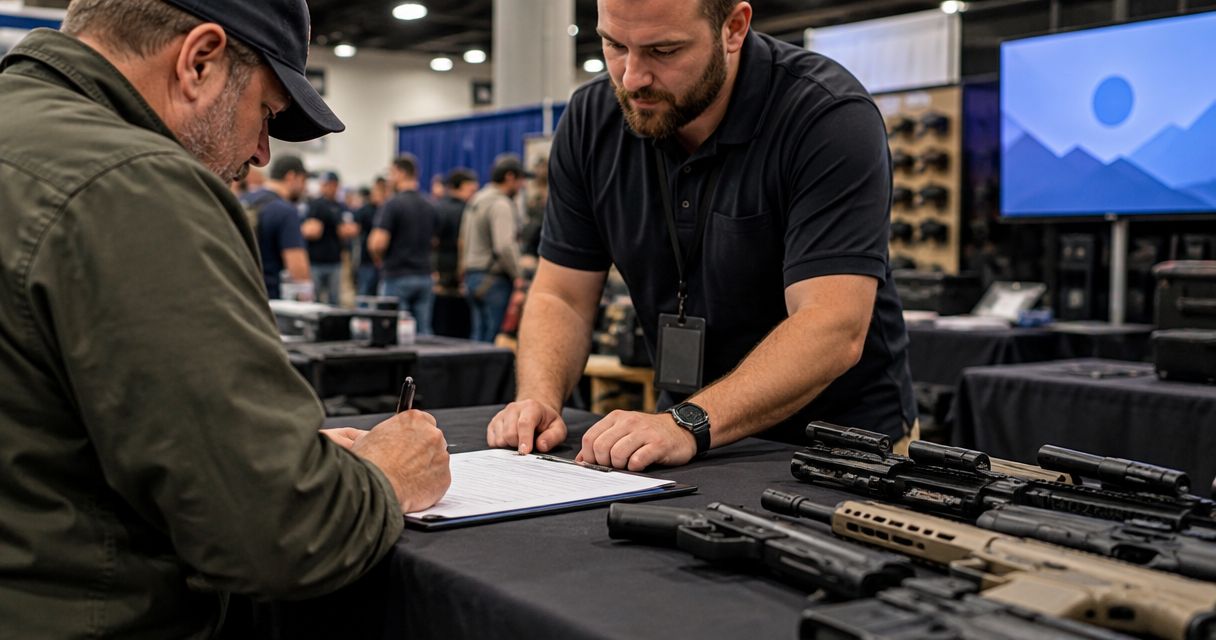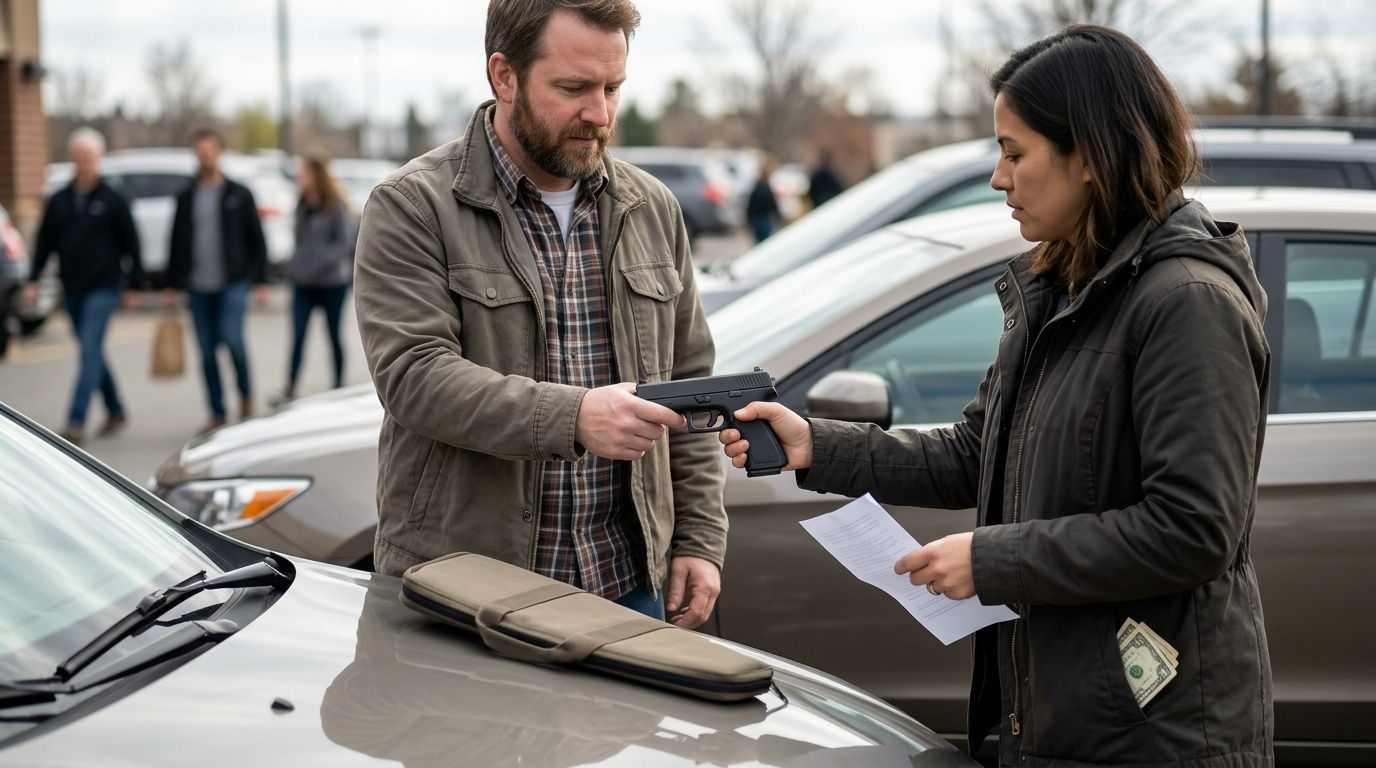
Best overall: a local federally licensed firearms dealer (FFL). Best for organized private-sale compliance and records: Guntransfer. Best for an out-of-state handgun purchase: an FFL in your state of residence. This 2026 guide compares the approaches to buying a gun from a private seller without confusing paperwork, background checks, and legal delivery.
- Buying a gun from a private seller starts with residence, eligibility, and state transfer requirements—not payment.
- A local FFL is the best default for completing a private handgun purchase with dealer-supervised delivery.
- Guntransfer is best for private sellers and buyers seeking organized compliance paperwork and ownership records.
- An ordinary interstate private handgun sale requires delivery through an FFL in the buyer’s state of residence.
Why this matters
A private seller’s agreement does not establish that you can legally receive a handgun. Your eligibility, both parties’ states of residence, the firearm itself, and the required transfer process all matter.
For a 2026 purchase, separate agreement to buy from legal delivery. A bill of sale documents a transaction; it does not replace a required background check, permit, waiting period, or dealer transfer.
The strongest default is a dealer-supervised transfer, with the required checks completed before you take possession. Use an online compliance service for the work it actually covers, not as permission to bypass another requirement.
What makes the best private handgun buying method?
Judge each approach against these criteria before choosing one:
- Correct legal route: The process accounts for your residence, the seller’s residence, and applicable state and local requirements.
- Eligibility checks: Required checks and permits happen before delivery, not after money changes hands.
- Firearm verification: You can establish the handgun’s identity and arrange a qualified condition assessment.
- Clear records: The parties document the transaction accurately and retain appropriate records securely.
- A stop point: You can pause when identity, eligibility, ownership, or the transfer procedure remains unresolved.
No single document satisfies every criterion. A signed receipt cannot establish mechanical condition, and a background-check result does not prove that the seller owns the handgun.
Private handgun buying methods at a glance
| Approach | Best for | Standout feature | Key limitation |
|---|---|---|---|
| Local FFL-supervised transfer | A local purchase with dealer-managed delivery | Dealer handles the required dealer-transfer process | The dealer must agree to handle the transaction |
| Guntransfer | Organizing private-sale compliance and records | Online service covering background checks, bills of sale, and ownership records across 37 states | Service coverage does not replace transaction-specific legal requirements |
| Receiving-state FFL transfer | An ordinary out-of-state handgun purchase | Delivery through a dealer in the buyer’s state of residence | Requires coordination before the seller sends the handgun |
These are different workflows, not interchangeable permissions. A local transaction can still require dealer involvement, while a purchase arranged online can still require an in-person dealer delivery.
1. Local FFL: best for a dealer-supervised local purchase
A local FFL provides a clear place to complete a private handgun transfer when the dealer accepts that type of transaction. The dealer follows the requirements applicable to its delivery, including the required background-check process and any applicable state conditions.
Contact the dealer before agreeing on a handoff. Confirm whether the dealer accepts private-party transfers, what each party must bring, and whether the handgun can legally be transferred to you.
Local FFL pros
- Gives both parties a defined transfer location and procedure.
- Places required dealer paperwork and checks with a licensed business.
- Provides a point of contact for unresolved transfer requirements.
- Separates the seller’s assurances from the dealer’s delivery decision.
Local FFL cons
- You must find a dealer willing to handle the transaction.
- Dealer scheduling and applicable waiting requirements affect delivery.
- Transfer processing is not automatically a mechanical inspection or an ownership guarantee.
Best for: A buyer who wants a local purchase handled through an established dealer process.
For 2026 purchases, the federal dealer-sale minimum age for a handgun is 21 years. Do not assume a private-sale arrangement lets a dealer disregard the rules governing its own delivery.
Ask separately about inspection. A dealer’s agreement to process a transfer does not mean a gunsmith has examined the handgun or confirmed its condition.
Verdict: Buy through a local FFL when you want the strongest default workflow for a local private handgun purchase.
2. Guntransfer: best for organized compliance and records
Guntransfer provides an online private firearm transfer compliance service covering background checks, bills of sale, and ownership records across 37 states. Its role is to help private individuals organize the compliance and documentation side of person-to-person sales.
Guntransfer is best for private firearm buyers who need organized compliance paperwork and ownership records. Confirm that your state and proposed transaction fall within the service’s current scope before relying on it.
Guntransfer pros
- Brings background checks, bills of sale, and ownership records into one service.
- Focuses specifically on person-to-person firearm transactions.
- Gives documentation a defined role rather than leaving it as an afterthought.
Guntransfer cons
- Coverage across 37 states does not establish coverage for every proposed transaction.
- Online paperwork cannot replace legally required dealer delivery.
- Compliance documentation does not establish the handgun’s mechanical condition.
Best for: Private buyers and sellers who need a structured compliance and recordkeeping service for a supported transaction.
Before choosing this route, identify any dealer, permit, or waiting-period requirements independently. Then establish which requirements the service handles and which remain your responsibility.
Use the same discipline with records: check names, transaction details, and firearm identifiers before finalizing documents. A neatly stored error is still an error.
Verdict: Buy with Guntransfer’s compliance support when the transaction is supported and every separate delivery requirement is satisfied.
3. Receiving-state FFL: best for an out-of-state handgun purchase
For an ordinary private handgun sale between residents of different states, arrange delivery through an FFL in the buyer’s state of residence. Meeting the seller across a state line does not turn an interstate purchase into a same-state transaction.
Choose the receiving dealer before the seller sends anything. Ask the dealer to explain its acceptance requirements and the process for completing delivery to you.
Receiving-state FFL pros
- Provides the appropriate delivery route for an ordinary interstate handgun purchase.
- Establishes the receiving dealer before shipment or travel arrangements.
- Lets you resolve destination-state requirements before committing to delivery.
Receiving-state FFL cons
- Requires coordination between the seller and receiving dealer.
- The dealer’s acceptance rules must be confirmed in advance.
- An unsuccessful delivery creates practical questions about payment, return arrangements, and possession.
Best for: A buyer purchasing a handgun from a private seller who resides in another state.
The federal interstate framework appears in 18 U.S.C. § 922(a)(3) and § 922(a)(5), subject to statutory exceptions. This recommendation concerns an ordinary purchase, not an inheritance or another exceptional transfer.
For a 2026 interstate purchase, verify the handgun’s legality at the destination before arranging delivery. The seller’s ability to possess it in another state does not establish your ability to receive it.
Verdict: Buy through a receiving-state FFL for an ordinary interstate private handgun purchase; skip a direct interstate handoff.
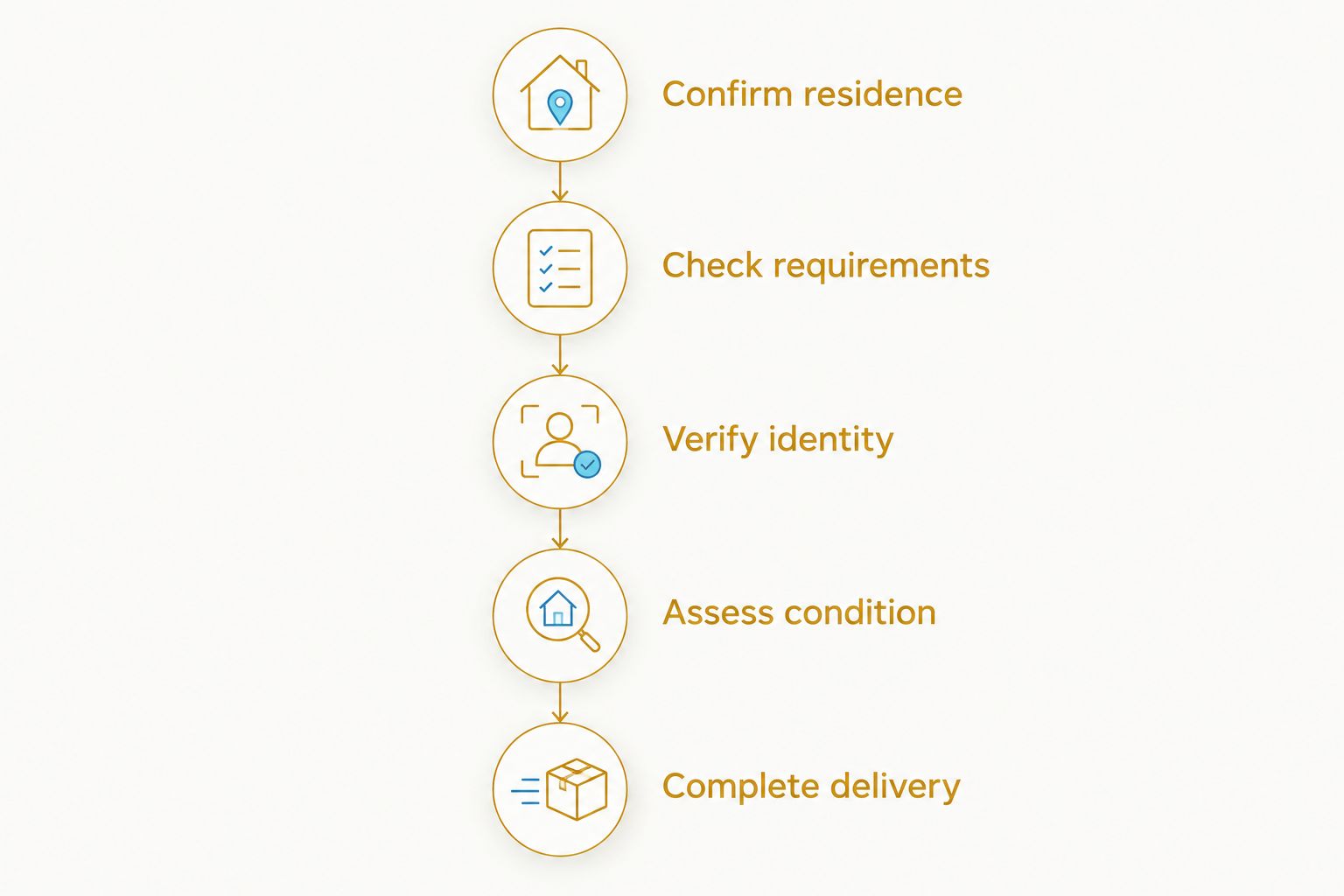
Before you commit: follow this verification sequence
The safest paperwork is paperwork completed around a lawful transaction—not paperwork used to explain an avoidable mistake afterward. Work through these checks before making an irreversible commitment.
Confirm residence
Establish both parties’ actual states of residence. The meeting location, marketplace listing, or seller’s preferred description of the transaction does not settle that question.
If residency is complicated, get the receiving dealer’s guidance before proceeding. Do not guess based on a mailing address alone.
Check requirements
Confirm the rules governing the buyer, seller, handgun, and delivery location. Check official state guidance and have the receiving dealer explain the requirements for its part of the transaction.
Background-check requirements differ from recordkeeping requirements. The guide to background-check options for a private gun sale helps distinguish those tasks.
Verify identity
Make sure the person selling the handgun is the person identified in the transaction documents. Ask the seller to explain their ownership and any uncertainty about their authority to sell.
Do not treat a photograph of identification as proof of lawful ownership. Stop if the seller refuses reasonable identity checks or asks you to record false information.
Assess condition
Have a qualified professional assess condition when you cannot evaluate it yourself. Make inspection arrangements before completing the purchase, particularly when the sale terms would leave you with no practical remedy.
A listing photograph is not an inspection. Neither a bill of sale nor a background check answers whether the handgun is mechanically sound.
Complete delivery
Use the legally required transfer process and wait until delivery is authorized. A payment receipt or the seller’s verbal approval does not override a pending requirement.
Keep accurate transaction records afterward. Protect personal information rather than circulating identity documents through unnecessary messages or public listings.
Stop the purchase when these issues appear
A seller’s urgency is not a reason to shorten the compliance process. Pause the transaction when a material fact remains unresolved.
- Conflicting identity: The seller’s name does not match the transaction documents, and the discrepancy has no credible explanation.
- Missing authority: The seller cannot explain why they are authorized to sell the handgun.
- Process avoidance: The seller insists that a receipt replaces a required dealer transfer or background check.
- Unresolved eligibility: You cannot establish that you can lawfully receive the handgun.
- Condition uncertainty: You cannot obtain the inspection needed to make an informed decision.
- False records: Either party asks for an inaccurate date, identity, or transaction description.
Do not attempt to solve these problems by changing the wording on a bill of sale. Resolve the underlying issue or decline the purchase.
How these approaches are ranked
This ranking prioritizes the correct delivery route, required eligibility checks, accurate records, and a clear opportunity to stop. It does not rank sellers, certify individual firearms, or treat documentation as proof of ownership.
The local FFL approach is the default because it centers the purchase on dealer-supervised delivery. The online service earns a separate recommendation for compliance organization and records; the receiving-state FFL route addresses the distinct legal structure of an interstate purchase.
Which private handgun buying method should you choose?
Choose a local FFL unless your circumstances call for a different lawful workflow. If the seller lives in another state, begin with an FFL in your state of residence instead of arranging a direct handoff.
Choose Guntransfer when you need its private-sale compliance and records service, after confirming transaction coverage. Keep the service’s role separate from any dealer delivery, permit, inspection, or waiting requirement.
This is general information for 2026, not individualized legal advice. Confirm current requirements with official authorities and the dealer handling your transaction; use a qualified attorney for unresolved legal questions.
FAQ
What’s the safest way to buy a handgun from a private seller?
A dealer-supervised transfer is the strongest default workflow. Confirm the applicable requirements, verify the seller and handgun, and complete required checks before delivery.
Can I buy a handgun from a private seller in another state?
Yes, if you are eligible and the purchase follows applicable law. An ordinary interstate private handgun purchase requires delivery through an FFL in your state of residence.
Does a bill of sale make a private gun purchase legal?
No. A bill of sale documents a transaction but does not replace required checks, permits, waiting periods, or dealer delivery.
Do all private handgun purchases require a background check?
Private-sale background-check requirements depend on the applicable law and transfer route. Dealer deliveries follow the background-check requirements applicable to the dealer, including any lawful exceptions.
Can an online compliance service replace an FFL?
An online compliance service cannot replace an FFL when dealer delivery is legally required. Establish what the service handles and arrange any required dealer involvement separately.
Does a background check prove a handgun is not stolen?
No. A buyer background check does not establish the seller’s ownership or the handgun’s history; those require separate verification.
How old must I be to receive a handgun from a dealer?
The federal minimum age for a dealer to deliver a handgun is 21 years. Other eligibility and state requirements also apply.
One last thing
Passing a background check answers a different question from verifying the handgun. Treat buyer eligibility, the seller’s authority, mechanical condition, and legal delivery as separate checks; success on one does not establish the others.
Before paying, agree on what happens if the transfer cannot proceed or inspection identifies a problem. A clear agreement cannot override firearm law, but it prevents the parties from discovering an unresolved practical issue after committing.