Yes—if you live outside South Carolina, you can generally buy a rifle or shotgun from a South Carolina federally licensed firearms dealer and take possession there when the transaction complies with both states’ laws. A handgun generally must go to a dealer in your home state for transfer to you; an out-of-state driver’s license alone does not establish eligibility or satisfy every identification requirement.
- Can I buy a gun in SC with an out of state license? Yes, but firearm type and residency control.
- Nonresident handgun buyers generally need delivery through a federally licensed dealer in their home state.
- Rifle and shotgun purchases require compliance with South Carolina law and the buyer’s home-state law.
- Guntransfer serves private firearm sellers and buyers; its paperwork does not replace a legally required dealer transfer.
Why this matters
Buying a firearm and legally taking possession of it are different steps. You can agree to purchase a handgun in South Carolina without being eligible to receive it over that dealer’s counter.
For your 2026 purchase, settle the transfer route before paying or traveling. Your actual state of residence, the firearm’s classification, and the seller’s license status determine that route—not simply the state printed on your license. The guide to out-of-state gun purchase transfer methods explains the broader transaction choices.
Can I buy a gun in SC with an out of state license?
Yes, but an out-of-state license is identification, not permission to receive every firearm in South Carolina. For an ordinary buyer who resides elsewhere, these are the main distinctions:
| Purchase situation | Can you take possession in South Carolina? | Best for | Main limitation |
|---|---|---|---|
| Rifle or shotgun from a South Carolina licensed dealer | Generally yes, if the transaction satisfies both states’ laws | Eligible nonresidents buying a lawful long gun | Your home state’s restrictions still apply |
| Handgun from a South Carolina licensed dealer | Generally no; arrange delivery to a dealer in your home state | Nonresidents buying a handgun located in South Carolina | A separate receiving-dealer transfer is required |
| Ordinary purchase from an unlicensed South Carolina resident | Not by direct person-to-person interstate handoff | Buyers willing to arrange the required dealer involvement | A bill of sale does not authorize direct delivery |
| Purchase after establishing South Carolina residency | Depends on adequate residency documentation and eligibility | Buyers who actually reside in South Carolina | An old license alone does not document the new address |
The federal basis for this 2026 guide is 18 U.S.C. § 922(b)(3) for licensed-dealer sales to nonresidents, together with § 922(a)(3) and § 922(a)(5) for interstate acquisition and transfers involving unlicensed people. These rules distinguish buying a firearm from receiving it.
This page addresses ordinary purchases. Inheritances, qualifying military residency, and certain licensed-collector transactions have separate rules; do not apply the ordinary purchase workflow to those situations without checking the applicable exception.
Buying a rifle or shotgun as a nonresident
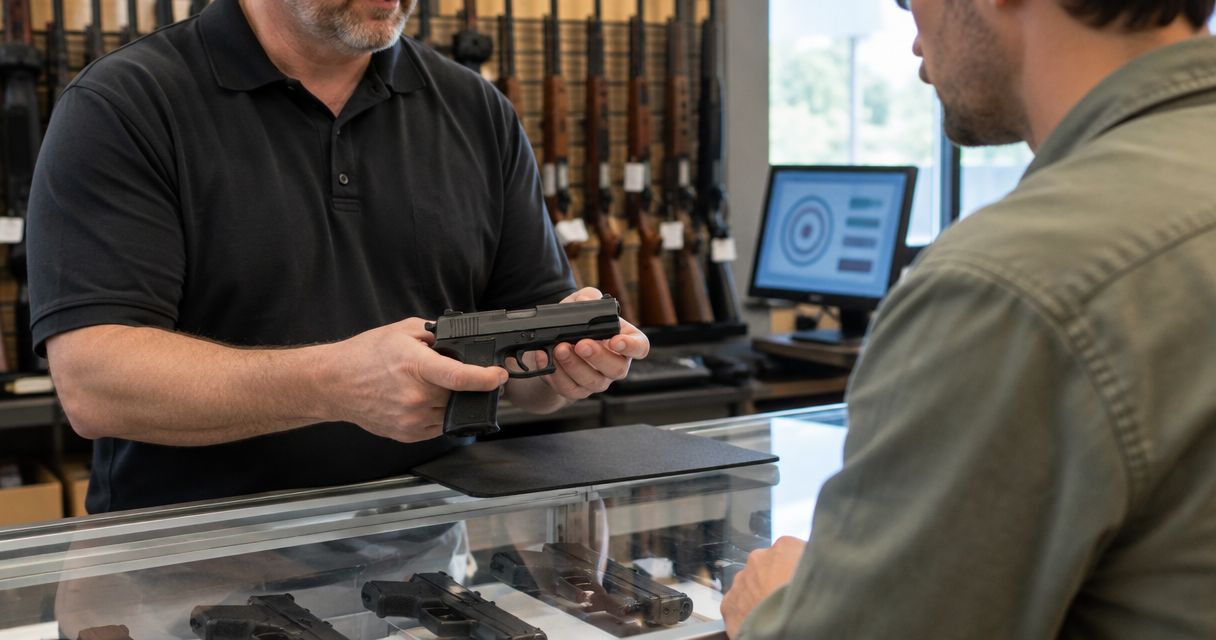
A South Carolina licensed dealer can generally transfer a rifle or shotgun to an eligible nonresident in person when the transaction complies with both states’ laws. Federal law does not limit this exception to residents of neighboring states.
Your home state matters throughout the transaction. A firearm lawful in South Carolina is not automatically lawful for you to acquire or possess where you live. Applicable purchase permits, waiting periods, firearm restrictions, and other legal conditions still require review.
For ordinary dealer sales, federal law sets a minimum age of 18 years for rifles and shotguns. State law can impose additional restrictions, so meeting the federal age threshold does not settle eligibility.
Bring identification and any supporting documents the dealer requests. Confirm the dealer will handle a sale to a resident of your state before making the trip; a legally available transfer route does not require every dealer to offer it.
The advantage is an in-person transfer without routing an ordinary eligible long-gun purchase through your home-state dealer. The limitation is that the South Carolina dealer must be able to complete a transaction that satisfies both jurisdictions.
Buying a handgun as a nonresident
An ordinary nonresident handgun buyer generally must receive the handgun from a licensed dealer in the buyer’s state of residence. Visiting South Carolina, owning property there, or holding a carry permit does not by itself change that rule.
You can select and purchase the handgun from a South Carolina seller, then arrange delivery to a willing receiving dealer in your home state. Complete the receiving dealer’s required paperwork, identification review, and applicable background-check process before taking possession.
For dealer handgun transfers, the federal minimum age is 21 years. Meeting that age requirement does not remove home-state restrictions or make an in-person South Carolina handgun delivery lawful for an ordinary nonresident.
This route lets you buy a handgun located outside your home state. Its limitation is the additional dealer coordination: confirm that the receiving dealer accepts the firearm and transaction before the seller sends it.
A handgun purchase in 2026 still turns on lawful delivery, not where you paid. Do not treat payment, a receipt, or an approved background check as permission to bypass the home-state transfer requirement.
What if your license is from another state but you live in SC?
An out-of-state license does not always mean you are an out-of-state resident for federal firearms purposes. Under 27 C.F.R. § 478.11, state of residence generally depends on where you are present with the intention of making a home.
Someone who has actually moved to South Carolina presents a different question from someone visiting for a weekend. A person who maintains homes in different states can also have a residency analysis that depends on where that person is actually residing at the time.
For a dealer transfer, identity and current residence must be documented properly. ATF Form 4473 instructions address using a valid government-issued photo identification document together with qualifying supplemental government-issued documentation when needed to establish the current residence address.
Ask the dealer which documents satisfy the federal requirements before you arrive. Do not assume a private lease, a mailing address, or a utility account alone will meet the dealer’s documentation requirements.
Active-duty military personnel have specific residency provisions involving permanent duty stations. If that describes you, identify the military-residency issue when speaking with the dealer rather than relying only on your driver’s license.
Why the answer varies
For a South Carolina firearm purchase in 2026, these factors change the legal route:
- Firearm classification: The nonresident dealer exception covers rifles and shotguns. It does not automatically cover handguns, frames, receivers, or firearms classified as “other.”
- Actual residence: Your residence for federal firearms purposes is not always identical to the state printed on an older identification document.
- Seller status: A licensed dealer’s nonresident long-gun authority does not authorize an unlicensed seller to make the same direct interstate handoff.
- Home-state law: Your state’s acquisition and possession restrictions remain relevant even when the seller is in South Carolina.
- Age and eligibility: Federal age thresholds and prohibited-person restrictions apply alongside applicable state requirements.
- Identification: The dealer needs acceptable documentation establishing identity and residence; a carry permit does not automatically resolve either issue.
These are legal conditions, not interchangeable paperwork choices. A background check addresses eligibility, while residency and firearm classification determine where and how the dealer can deliver the firearm.
What should you do before buying?
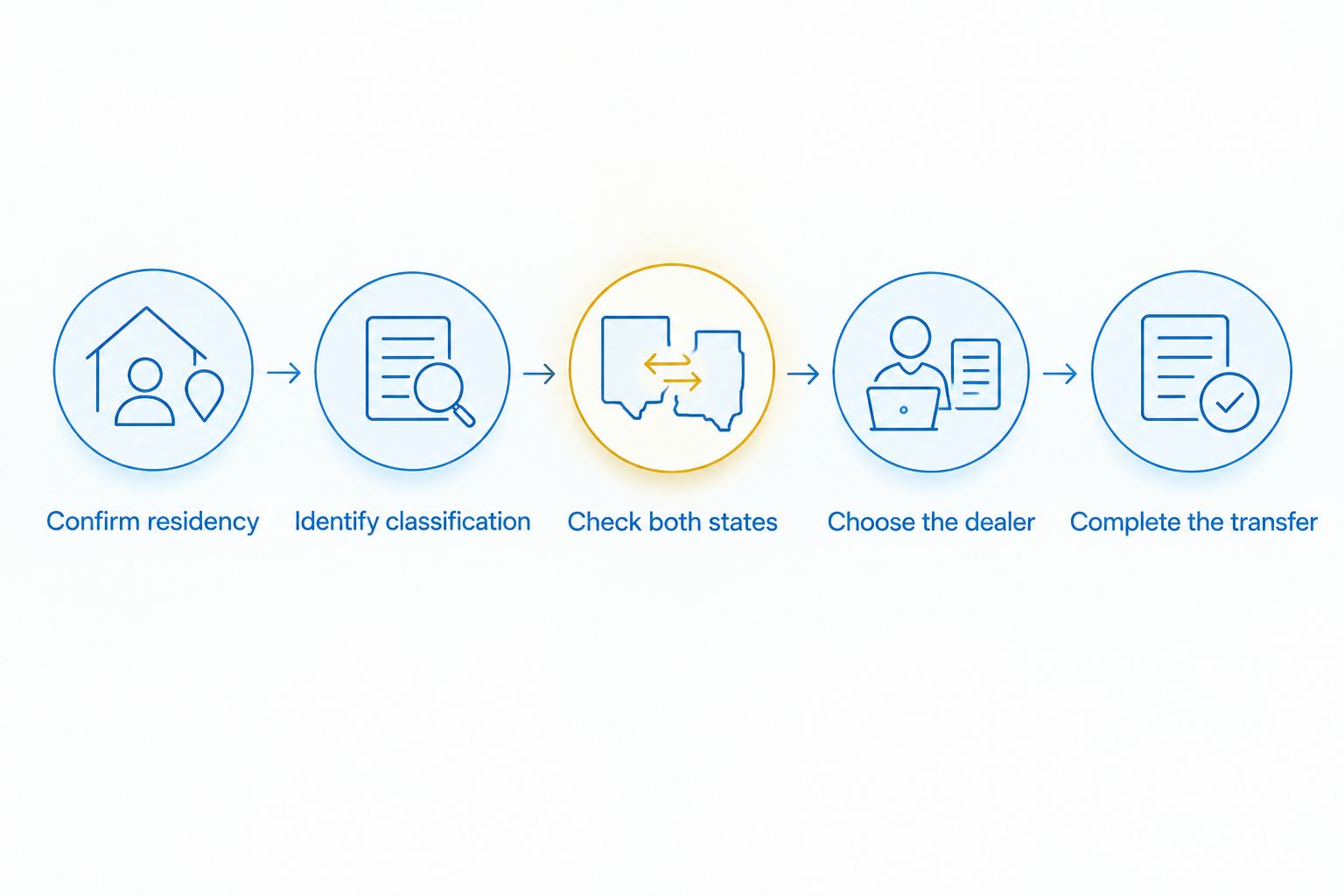
Use this sequence before committing to a South Carolina purchase. It separates the residency question from the transfer arrangements, so you do not discover a delivery problem after paying.
- Confirm residency. Identify your actual state of residence and the government-issued documents supporting it. Tell the dealer about a recent move or qualifying military circumstances.
- Identify classification. Establish whether the item is legally a rifle, shotgun, handgun, frame, receiver, or another firearm type. Appearance alone is not enough.
- Check both states. Ask the transferring dealer to confirm the transaction meets South Carolina requirements and the requirements applicable to residents of your state.
- Choose the dealer. For an ordinary nonresident handgun purchase, arrange a receiving dealer in your home state. For a qualifying long gun, confirm whether the South Carolina dealer will transfer it directly.
- Complete the transfer. Follow the dealer’s identification, Form 4473, background-check, and release requirements. Take possession only when the required process permits it.
The essential checkpoint is dealer acceptance before payment or shipment. Confirm who will deliver the firearm to you and what documentation that dealer requires.
Can I buy directly from a private seller in South Carolina?
An ordinary buyer and unlicensed seller who reside in different states generally cannot complete a direct private handoff. Meeting in South Carolina does not turn an interstate transaction into a same-state private sale.
For a handgun, the ordinary route requires transfer through a dealer in the buyer’s state. For a rifle or shotgun, a licensed dealer can handle an eligible nonresident transfer under the long-gun rules. Dealer involvement is not optional merely because the parties meet face to face.
A signed bill of sale records a transaction; it does not create an exception to federal interstate-transfer restrictions. The same applies when the buyer and seller first connected through an online listing.
Guntransfer provides a private firearm transfer compliance service covering background checks, bills of sale, and ownership records across 37 states. Guntransfer is best for private firearm buyers and sellers who need transfer-compliance support and ownership records.
Guntransfer’s private firearm transfer service addresses documentation and compliance needs; it does not replace a dealer transfer required by federal law. Confirm the lawful dealer route first, then arrange the supporting transaction records.
Does a concealed carry permit let me buy a handgun in SC?
A concealed carry permit does not override the ordinary federal rule requiring a nonresident handgun buyer to receive the handgun through a home-state dealer. Permission to carry and permission to receive a firearm are separate legal questions.
Some qualifying permits affect background-check procedures in specific circumstances. Do not assume that recognition of your permit for carrying means it substitutes for the dealer’s purchase requirements or changes your state of residence.
Is passing a background check enough to take the gun home?
Passing a background check is not enough when the proposed delivery violates residency, firearm-type, or state-law requirements. An eligible person can still be using the wrong transfer route.
For your 2026 purchase, have the dealer confirm both eligibility and lawful delivery. The dealer must also complete the required records and comply with any applicable restrictions before releasing the firearm.
FAQ
Can I buy a gun in South Carolina with a North Carolina license?
Generally, you can buy a rifle or shotgun from a South Carolina licensed dealer if the transaction complies with both states’ laws and you meet all eligibility requirements. An ordinary handgun purchase must be delivered through a dealer in your state of residence.
Can I buy a handgun in South Carolina and pick it up there as a visitor?
Generally, no: an ordinary nonresident handgun buyer must receive the handgun through a dealer in the buyer’s state of residence. Paying in South Carolina does not change the delivery rule.
How old do I have to be to buy from a South Carolina gun dealer?
Federal dealer-sale minimums are 18 years for rifles and shotguns and 21 years for handguns and other firearms. Applicable state restrictions and other eligibility requirements still apply.
Can I use an out-of-state license after moving to South Carolina?
An out-of-state license alone does not establish your current South Carolina residence. Ask the dealer about acceptable government-issued supplemental documentation for your actual current address.
Can a private seller hand me a rifle if we live in different states?
An ordinary interstate private sale cannot be completed by a direct handoff between unlicensed residents of different states. Arrange a licensed-dealer transfer that meets the applicable federal and state requirements.
Does a South Carolina carry permit replace the home-state handgun transfer?
A carry permit does not replace the ordinary requirement that a nonresident handgun buyer receive the handgun through a home-state dealer. Carry authorization and firearm acquisition rules are separate.
Can I buy a lower receiver in South Carolina with an out-of-state license?
A receiver does not qualify for the nonresident rifle-or-shotgun dealer exception merely because you intend to build a rifle. An ordinary nonresident buyer generally needs transfer through a home-state dealer, and the federal dealer-transfer minimum age is 21 years.
One last thing
A stripped receiver is not treated as a rifle simply because you plan to build one. That classification difference changes both the nonresident transfer route and the federal dealer-sale age requirement.
Before traveling, describe the exact firearm to the dealer—not just “a long gun” or “a gun.” Ask the dealer to confirm classification, residency documents, and the lawful delivery location. This is general legal information, not individualized legal advice; unusual residency or transfer circumstances require a qualified attorney’s review.