Yes, you can carry a gun that belongs to someone else only when your possession, the loan or transfer, and the way you carry it are all lawful. The owner's permission does not replace a required background check, carry permit, firearm registration, or other state requirement. In 2026, check the rules where you will possess and carry the firearm—not just where its owner lives.
- Can you carry a gun thats registered to someone else? Only if possession, transfer, and carry requirements are satisfied.
- ATF Form 4473 records a dealer transaction; it is not a carry permit or nationwide ownership registration.
- An owner's permission does not override state lending restrictions, prohibited-person rules, or carry requirements.
- Check interstate transfer rules separately; a temporary sporting loan exception is not general permission for defensive carry.
Why this matters
Borrowing a firearm raises separate legal questions: whether you can receive it, whether you can possess it, and whether you can carry it in a particular place. A lawful answer to one does not settle the others. If travel is involved, check concealed carry reciprocity by state before assuming your permit works at your destination.
For a 2026 carry decision, start with your circumstances rather than the name on a receipt. Your residence, the owner's residence, the firearm category, and your intended use determine which rules need checking.
Can you carry a gun that's registered to someone else?
Sometimes—but the registration name alone does not determine legality. You need lawful possession of that particular firearm, a lawful way to receive it, and legal authority to carry it where you intend to go.
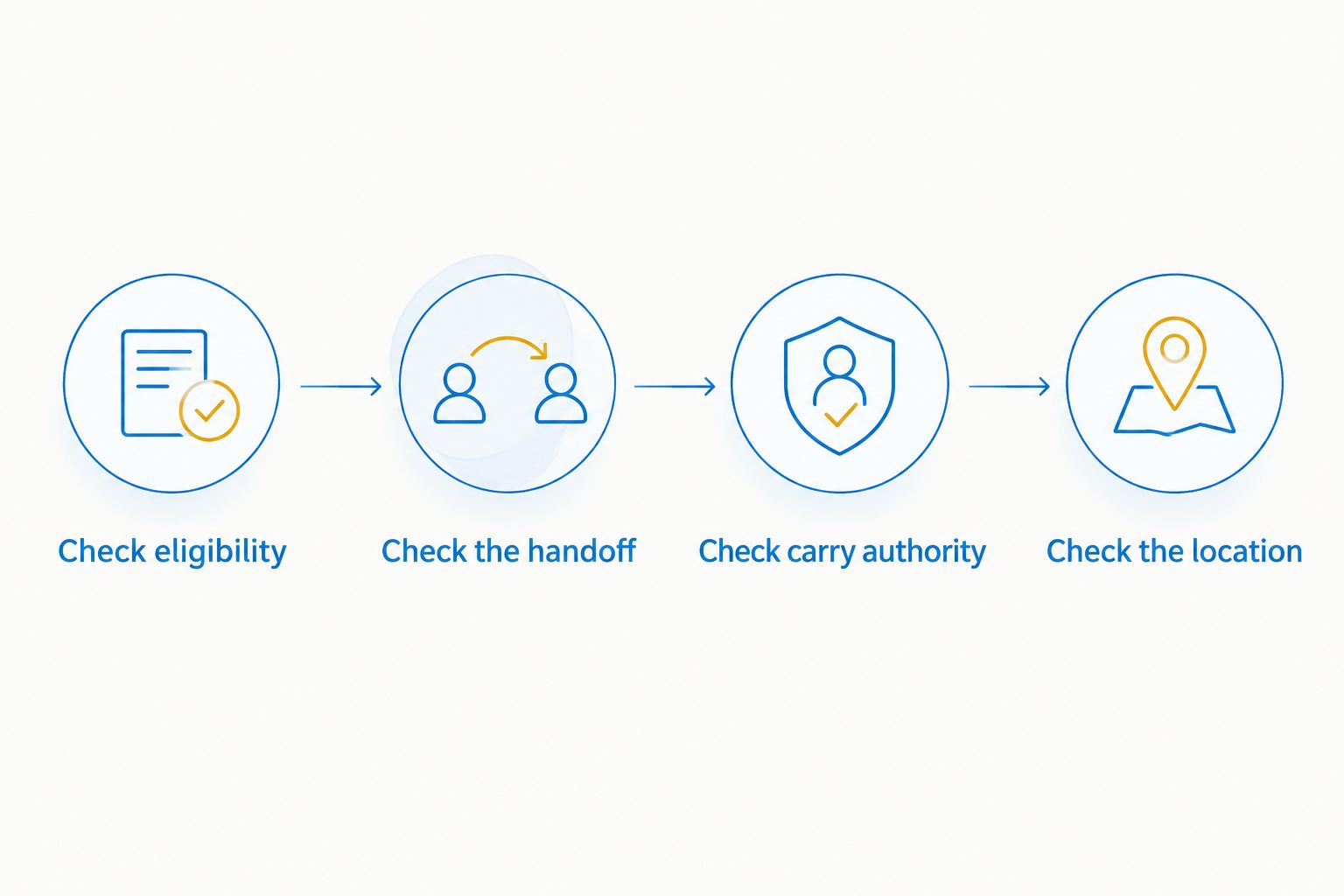
Use these checks in order. If a required condition is unresolved, do not carry the borrowed firearm until you confirm the applicable rule.
- Check eligibility. Confirm that federal and state law allow you to possess the firearm. The owner's permission cannot make possession lawful for a prohibited person.
- Check the handoff. Determine whether the loan, gift, or sale requires a dealer, background check, permit, registration, or exemption. Calling it borrowing does not automatically remove transfer requirements.
- Check carry authority. Determine whether your intended concealed, open, or vehicle carry is lawful. A firearm owner's permit does not extend to another person.
- Check the location. Review restrictions for the property, vehicle, destination, and any jurisdictions along your route. General carry authority does not authorize carry everywhere.
These checks apply independently. For example, a lawful loan does not excuse carrying in a prohibited place, and a valid carry permit does not cure an unlawful transfer.
What does registered to someone else actually mean?
People often use registered to describe several different documents. Those documents do not all establish the same thing, and none automatically gives a borrower permission to carry.
| Record or document | What it establishes or records | What it does not establish |
|---|---|---|
| Dealer's ATF Form 4473 | Information about a firearm transaction and the transferee | A nationwide firearm registration or carry authorization |
| Bill of sale | Written details of a transaction between parties | Completion of every required legal transfer step |
| State or local registration | Registration under the jurisdiction's specific system | Permission for anyone else to possess or carry the firearm |
| Carry permit | Carry authority subject to the issuing law and recognition elsewhere | Automatic authority to receive another person's firearm |
Federal law does not require a general ownership registry for ordinary firearms. State and local requirements differ, and firearms regulated under the National Firearms Act have separate federal requirements.
Ask the owner what document they mean. A store receipt in a spouse's name creates a different question from a firearm subject to an actual registration requirement. Do not treat either situation as resolved without checking the applicable possession and lending rules.
Borrowing a firearm from someone in your state
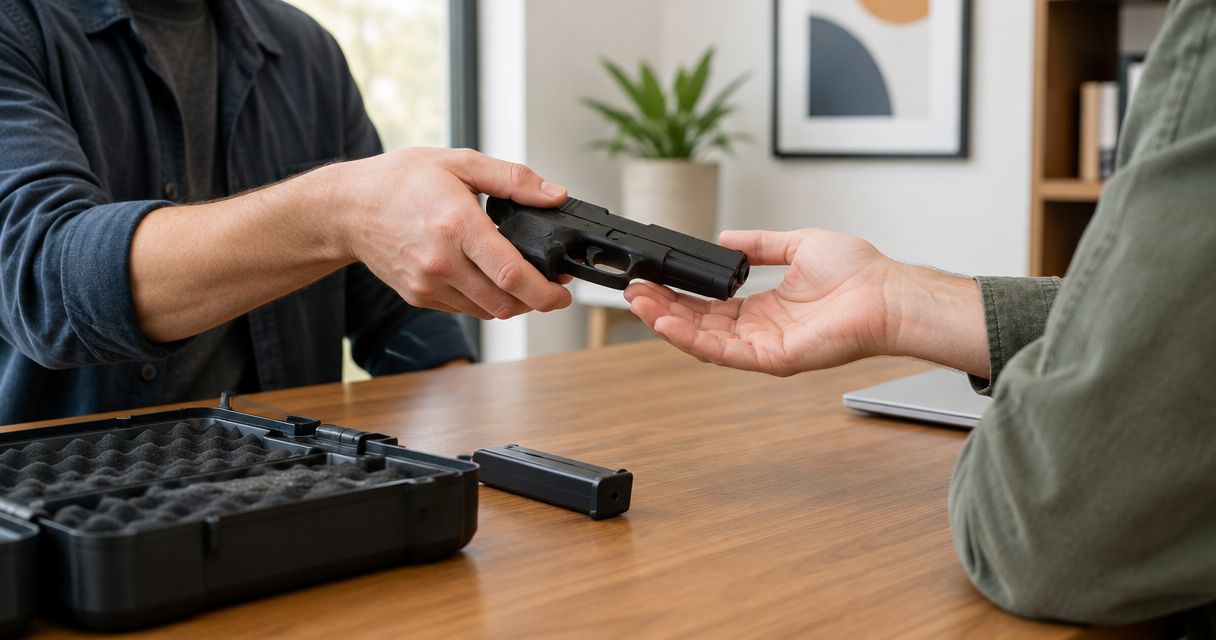
A same-state loan still requires a state-law check. Some jurisdictions regulate temporary transfers, while others recognize particular lending exceptions. Those exceptions can depend on the relationship, purpose, location, supervision, or duration of the loan.
Best for a temporary need: confirm the specific lending rule before accepting possession. The benefit is that a lawful loan need not be treated as a permanent change of ownership; the limitation is that an exception for one activity does not necessarily cover another.
For example, permission to use a firearm under supervision at a range is not proof that you can take it home or carry it for personal protection. Read the conditions of the exception rather than relying on its label.
If the arrangement is actually a sale or permanent gift, use the required transfer process. Documenting a transaction accurately is more useful than describing a permanent handoff as a loan.
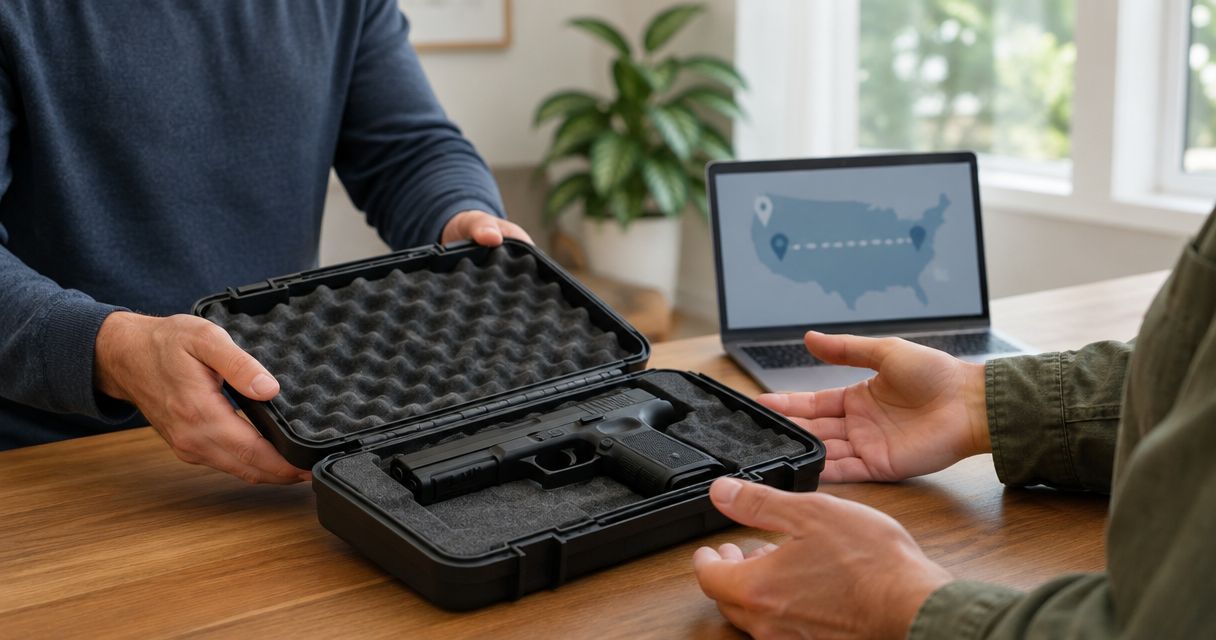
Borrowing a firearm from someone in another state
An interstate handoff adds federal transfer restrictions. Under 18 U.S.C. § 922(a)(5), an unlicensed person generally cannot transfer a firearm directly to another unlicensed person whom they know or have reasonable cause to believe resides in another state, subject to statutory exceptions.
One exception concerns a temporary loan or rental for lawful sporting purposes. That exception is not general authorization to borrow an out-of-state friend's handgun for defensive carry. Other federal receipt and transport provisions also matter.
Best for an interstate ownership transfer: confirm the required dealer process before arranging the handoff. A federally licensed firearms dealer can address the transaction requirements that apply to the firearm and the parties. Dealer involvement does not, by itself, establish your carry authority afterward.
For a 2026 interstate transaction, distinguish residence from the meeting location. Meeting inside your state does not necessarily turn a transfer involving an out-of-state resident into a same-state transaction.
Why the answer varies
The answer changes because several independent rules apply to the same firearm. Check these factors rather than looking for a nationwide yes-or-no rule:
- Your eligibility: Federal prohibited-person rules under 18 U.S.C. § 922(g), state restrictions, and applicable age rules affect possession.
- Both parties' residence: Interstate transfers raise federal requirements that do not disappear because the parties know each other.
- The firearm category: Handguns, long guns, and National Firearms Act firearms do not share every transfer or possession rule.
- The handoff's purpose: A supervised sporting loan, an unsupervised loan, a sale, and a gift can receive different legal treatment.
- The carry method: Concealed carry, open carry, and vehicle possession can involve different requirements.
- The location: State boundaries, restricted premises, and private-property rules can change what is allowed.
For 2026 planning, verify the current official requirements for each relevant jurisdiction. An old permit summary or a friend's previous experience is not enough to establish today's rule.
Can I carry my spouse's gun?
Marriage alone does not establish permission to carry a spouse's firearm. You still need lawful possession, a lawful handoff, and any required carry authorization. A family-transfer exception, where one exists, applies only within its stated conditions.
Separate household access from carrying away from home. State law can treat access inside a shared residence differently from taking the firearm into public, and a spouse's carry permit does not cover you.
If ownership is changing permanently, handle it as a transfer rather than relying on the marriage relationship. Guntransfer is for private individuals arranging person-to-person firearm sales and their compliance records. Its service is not a substitute for checking the borrower's carry authority.
Can I carry a borrowed gun with my concealed carry permit?
A concealed carry permit does not automatically authorize every borrowed firearm. You must also satisfy the lending or transfer rules and any firearm-specific conditions attached to the relevant permit or registration system.
Check whether the jurisdiction ties carry authority to particular firearms. Then check restrictions on the firearm itself, including any applicable magazine or firearm-type restrictions.
Permitless carry does not eliminate these checks. A rule allowing eligible people to carry without a permit does not authorize an otherwise unlawful transfer or possession.
Can I keep someone else's gun in my car?
Keeping someone else's gun in your car requires its own possession and vehicle-law check. A firearm that is lawful to possess at home is not automatically lawful to keep loaded, accessible, concealed, or unattended in a vehicle.
Determine whether your situation is carry, transport, or storage under the applicable law. Do not assume that placing a firearm in a vehicle converts it into lawful transport.
Federal interstate transport protection under 18 U.S.C. § 926A has specific conditions, including lawful possession and carry at the origin and destination, unloading, and accessibility restrictions. It is not a general permission to carry a borrowed firearm during travel.
When paperwork helps—and when it does not
Written permission can document that the owner authorized a loan. A bill of sale can document a sale. Neither document overrides a legal requirement or proves that every condition for lawful possession and carry has been satisfied.
For a loan, describe the arrangement accurately and retain relevant records. For a permanent transaction, complete the required process and preserve its documentation. Avoid creating paperwork that says loan when both parties intend a sale.
Guntransfer's private firearm transfer compliance service handles background checks, bills of sale, and ownership records for person-to-person sales across 37 states. Its scope is the transaction; carry permission remains a separate legal question.
For a sale, Guntransfer provides an online service for the compliance process. The practical limit is important: a transfer record does not establish that the recipient can carry the firearm in every state or location.
FAQ
Can you carry a gun that's registered to someone else in 2026?
You can carry someone else's firearm only if your possession, the loan or transfer, and your method and location of carry are lawful. Registration in another person's name does not provide a nationwide yes-or-no answer.
Do I need the owner's permission to carry their gun?
Obtain the owner's permission before taking their firearm, but permission alone does not establish lawful possession or carry. Check any required transfer process, registration condition, and carry authorization separately.
Does a bill of sale make it legal to carry a gun?
No, a bill of sale does not establish carry authority. It documents a transaction but does not replace a required background check, dealer transfer, permit, or registration.
Can my spouse lend me a handgun for concealed carry?
A spouse can lend you a handgun only when the applicable lending and possession rules allow it; concealed carry must also be lawful independently. Marriage does not extend one spouse's carry permit to the other.
Does Form 4473 register a gun to the buyer?
ATF Form 4473 is a dealer transaction record, not a nationwide firearm ownership registration. State or local registration requirements are separate, and the form does not authorize carrying a firearm.
Can an out-of-state friend lend me a gun for protection?
Do not assume an out-of-state friend can directly lend you a firearm for protection. Federal law includes a temporary sporting-loan exception, but that exception is not general permission for a defensive-carry loan.
Are NFA firearms covered by the same borrowing rules?
Do not apply ordinary firearm borrowing guidance to National Firearms Act firearms. Federal registration and transfer requirements require separate review, and permission from an individual owner does not itself establish lawful possession by someone else.
One last thing
The most useful question is not whose name appears on the paperwork. It is whether this person can lawfully receive, possess, and carry this firearm here. That distinction prevents a receipt, permission note, or completed transaction from being mistaken for carry authority.
Before carrying in 2026, identify the actual registration or transaction document, confirm the handoff rules, and verify the carry rules at your destination. If any requirement remains unclear, keep the firearm with its lawful possessor while you obtain guidance from the relevant authority or a qualified firearms attorney. This article provides general information, not individualized legal advice.