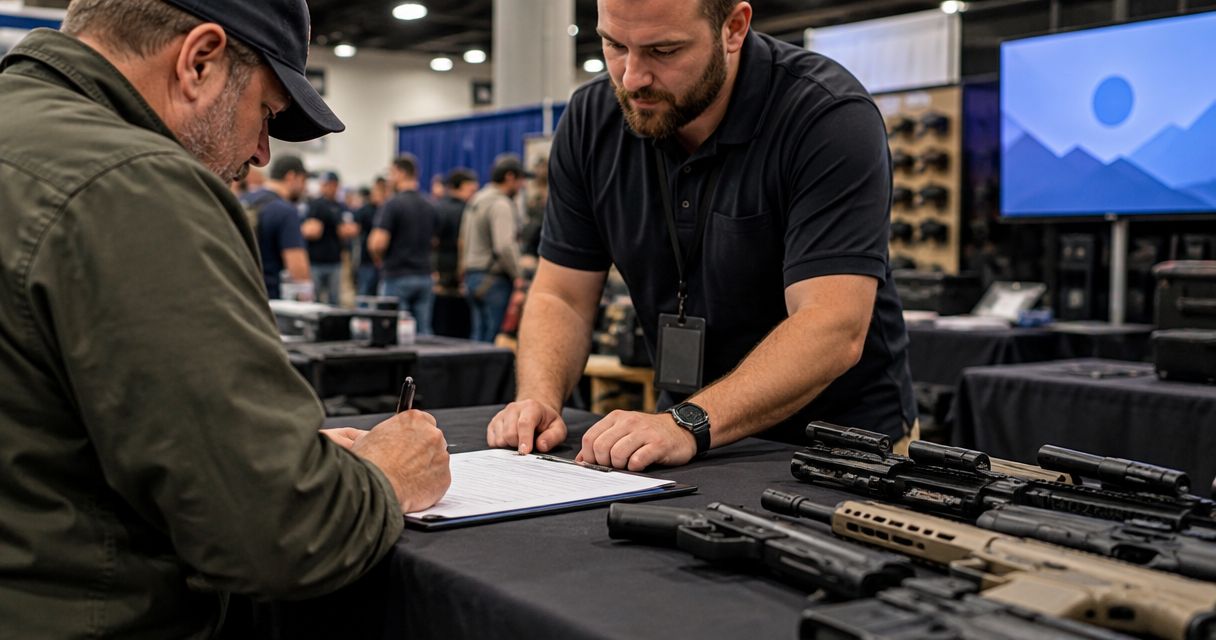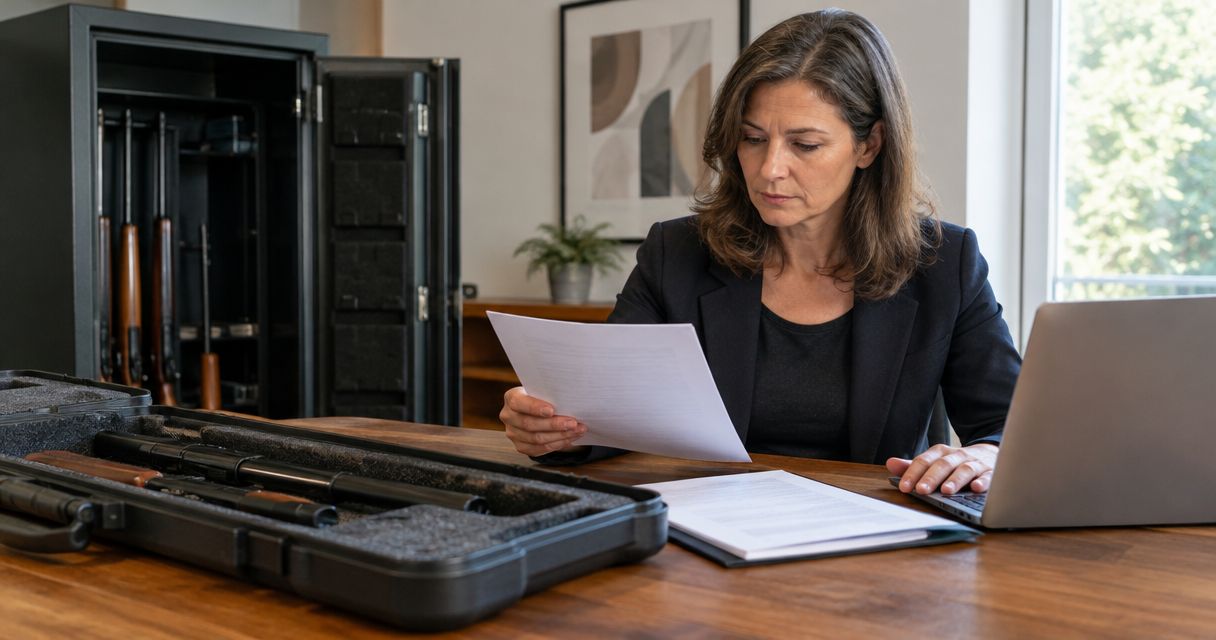
Instead of treating county clerk firearm bill of sale filing as permission to hand over a firearm, first confirm the required transfer process, complete any required checks, and file documents only with the office that actually accepts them. A bill of sale records the transaction; it does not replace federal or state transfer requirements.
- County clerk firearm bill of sale filing is not a universal requirement or a substitute for background checks.
- Guntransfer serves private sellers who need firearm transfer compliance support across its stated 37-state service area.
- Confirm residency, required dealer involvement, and filing instructions before exchanging possession.
- Keep the bill of sale, required transfer records, and any filing acknowledgment together.
Why this matters
A signed document and a lawful transfer answer different questions. The document records what the parties agreed to; the transfer process determines whether, when, and through whom possession can change.
Guntransfer is best for private individuals seeking a firearm transfer compliance service within its stated 37-state coverage. Guntransfer handles background checks, bills of sale, and ownership records. Confirm that the service covers your transaction rather than treating its coverage statement as a determination of your legal requirements.
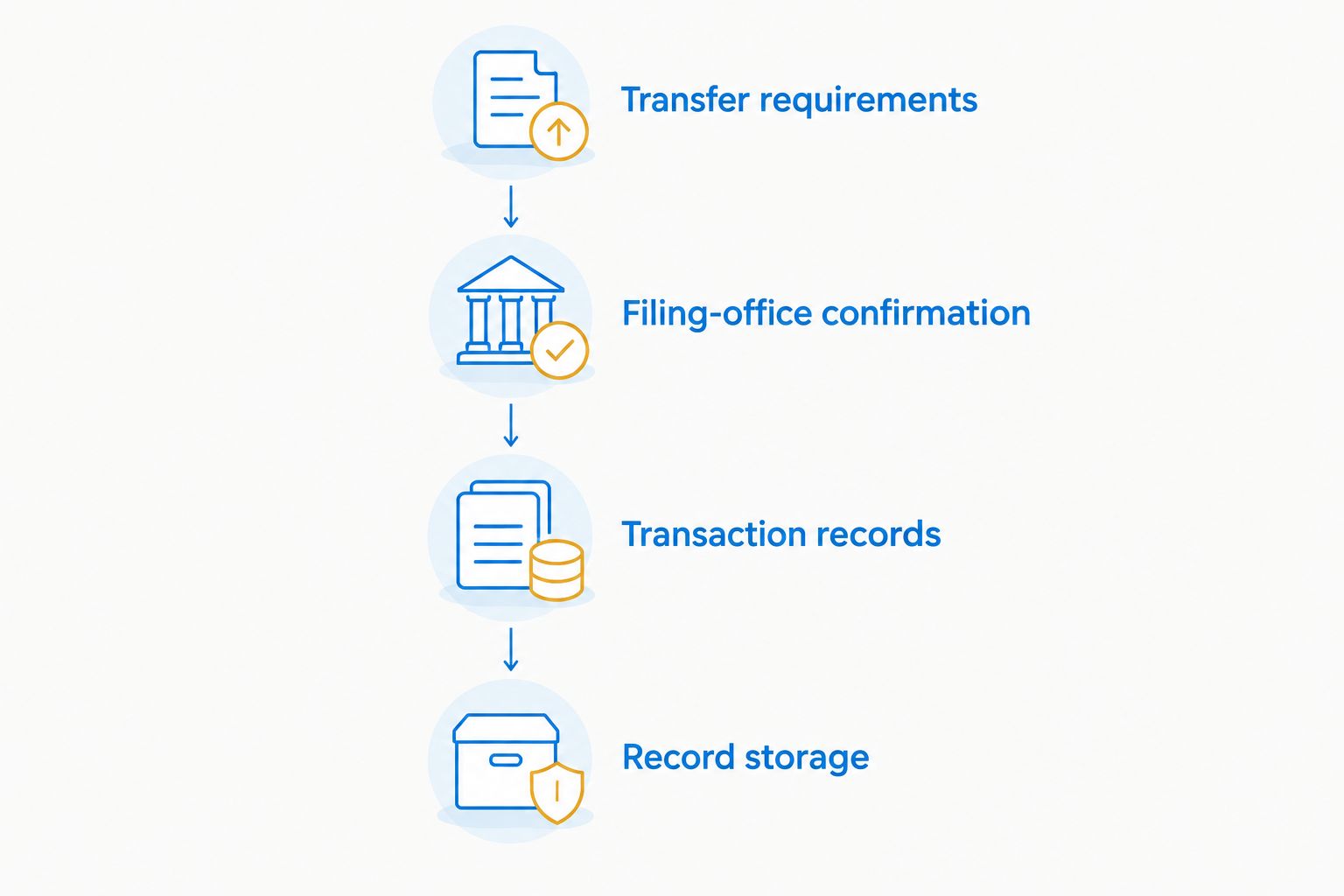
For your 2026 transaction, separate the work into 3 categories: transfer requirements, transaction documentation, and any required government submission. Completing one category does not automatically complete the others.
Before you start
- Identify the transaction. Establish the buyer's and seller's states of residence, the firearm type, and whether this is a sale, gift, or inheritance. Different circumstances require different legal treatment.
- Gather the necessary materials. Have the parties' identification, accurate firearm identifying information, and access to the relevant state agency's instructions. If a dealer must handle the transfer, obtain that dealer's instructions before preparing the handoff.
- Resolve the filing-office gotcha. A county clerk is not automatically the correct recipient for firearm paperwork. Confirm whether any submission is required, which office receives it, and whether it requires an official form rather than a privately drafted bill of sale.
Do not upload identification or firearm details to a portal merely because its name sounds official. Verify the office and submission method through the responsible government's published instructions.
Transfer requirements
- Establish residency. Ask where each party legally resides. The location of the meeting does not turn an interstate transaction into an intrastate transaction.
- Classify the transfer. Distinguish a private sale from a gift, estate distribution, or dealer sale. Do not assume a family relationship removes every transfer requirement.
- Check federal restrictions. Federal law restricts transfers to prohibited persons and generally restricts direct transfers between unlicensed residents of different states. Relevant federal provisions include 18 U.S.C. § 922(a)(5) and § 922(d); exceptions require separate review.
- Confirm state requirements. Determine whether the transaction requires a licensed dealer, background check, permit, waiting period, official form, or reporting step. Ask the responsible authority about unresolved requirements before possession changes.
Expected result: You have a written list of the conditions that must be satisfied before handoff, including who must perform each required action.
For this 2026 workflow, federal law is the starting point, not the complete answer. A county office accepting a document does not establish that every federal or state condition has been satisfied.
Filing-office confirmation
- Identify the receiving authority. Consult the state agency responsible for firearm transfer instructions. Contact the county clerk only when those instructions direct you there or when you need confirmation of the clerk's actual role.
- Ask a precise question. Describe the transaction type and ask whether that office requires or accepts a firearm bill of sale. Separately ask whether an official transfer report is required.
- Confirm document requirements. Establish the required form, signatures, supporting documents, submission method, and deadline, if applicable. Ask about notarization rather than assuming it is necessary.
- Record the answer. Save the published instructions or note the office, contact date, and guidance received. Request written clarification when an answer conflicts with another authority's instructions.
Expected result: You know whether filing is required, optional, handled elsewhere, or outside that office's responsibilities.
Do not confuse notarization with acceptance or approval. A notary's role concerns the notarial act performed; notarization does not certify that a firearm transfer meets all applicable laws.
Transaction records
- Use the required form first. If the responsible authority specifies an official document, complete that document. Treat a separate bill of sale as supplemental unless the instructions say otherwise.
- Check identifying details. Confirm the parties' information and the firearm's identifying details against the underlying documents and firearm markings. Resolve discrepancies before signing.
- Describe the transaction accurately. Record the transaction date and agreed terms without presenting an incomplete transfer as complete. Distinguish an agreement to sell from the actual transfer of possession.
- Review signature requirements. Follow the applicable form's instructions for signatures, witnesses, or notarization. Give each party the records they are entitled or required to retain.
Expected result: The documents describe the same parties, firearm, and transaction without conflicting dates or unsupported statements.
Avoid blanket wording that claims a signature alone establishes eligibility. A seller must not transfer a firearm when federal law prohibits the transfer, regardless of what a buyer signs.
Keep identification information limited to what the applicable process requires. A bill of sale should not become an unnecessary collection of sensitive personal information.
Completion and record storage
- Complete required checks. Follow the authorized dealer's or responsible authority's process. Private individuals do not receive direct access to FBI NICS merely by preparing a bill of sale.
- Wait for lawful completion. Do not treat a submitted application, pending check, signed agreement, or filing receipt as permission to transfer possession.
- Submit required paperwork. Follow the receiving office's instructions and retain the acknowledgment. If no government filing applies, do not invent an extra filing step.
- Store the transaction packet. Keep the final bill of sale, required transfer documentation, and any submission acknowledgment together, with access restricted to authorized people.
Expected result: Required transfer conditions are satisfied, any required submission is documented, and the records accurately reflect completion.
Use the same sequence for your 2026 records whether the paperwork is electronic or on paper. The format changes storage and submission mechanics; it does not remove legal obligations.
Which office or service handles each part?
The county clerk, a licensed dealer, and an online compliance service perform different roles. Choose the role your transaction requires, not the one with the simplest-looking document.
| Office or service | Best for | Practical benefit | Limitation |
|---|---|---|---|
| County clerk | A filing specifically assigned to that office | Receives documents within its actual authority | Acceptance does not replace required transfer checks or dealer involvement |
| Federally licensed firearms dealer | A transfer that requires dealer involvement | Handles the dealer's legally required transfer process | A dealer transfer does not automatically satisfy a separate reporting obligation |
| Guntransfer firearm transfer compliance service | Private individuals needing support within its stated 37-state coverage | Handles background checks, bills of sale, and ownership records | Coverage does not establish that every transaction type or local filing is included |
Use official requirements to select the workflow, not a document template to infer the law. When a dealer is required, confirm the dealer's process before scheduling the transaction.
For a 2026 transfer, ask the selected provider what it handles and what remains your responsibility. Specifically distinguish background-check handling, document preparation, government submission, and record storage.
When transaction details change
An address correction and a change of buyer are not interchangeable updates. The first can be a record correction; the second changes a party whose eligibility and residency matter.
- Pause the unfinished transaction. Stop using documents that no longer describe the planned transfer.
- Identify what changed. Separate a spelling correction from a different buyer, firearm, residence, or transaction type.
- Recheck affected requirements. Ask the dealer or responsible authority whether the change requires a new form, check, submission, or other action. Do not reuse another person's background-check result.
- Preserve the correction history. Keep the original acknowledgment and the accepted correction together. Mark a superseded draft clearly so it cannot be mistaken for the final record.
Expected result: The final record matches the actual transaction, and any required correction follows the receiving authority's procedure.
If possession has already changed, do not backdate documents to create the appearance of earlier compliance. Obtain transaction-specific guidance from the responsible authority or a qualified attorney before attempting a corrective filing.
Troubleshooting
The county clerk refuses the bill of sale
Ask whether the office lacks authority to accept it, requires a different document, or identifies a specific defect. These are different problems. Follow the responsible agency's instructions rather than submitting the same document to unrelated offices.
The form asks for information you do not have
Stop before signing or submitting. Obtain the required information from the appropriate party or ask the receiving authority how to handle that field. Do not guess at an identifying detail or substitute an unrelated identifier.
A required background check is unresolved
Keep the transfer incomplete and follow the authorized provider's instructions. Do not use a bill of sale, county receipt, or buyer's assurance as a substitute for the applicable completion requirements.
The buyer turns out to live in another state
Reassess the transaction before handoff. Federal interstate-transfer restrictions generally require a different process from a same-state private sale. Review ways to transfer a firearm across state lines and confirm the receiving dealer's requirements.
The submitted record contains an error
Contact the receiving office for its correction procedure and retain the original submission acknowledgment. Do not silently replace your own copy and assume the government's record changed too. Correct each affected record through its actual custodian.
Customize your workflow
Create a separate transaction folder for each transfer rather than storing unrelated sales in one document. Within it, separate working drafts from signed records and government acknowledgments. This prevents an unsigned draft from becoming the document you later rely on.
Add a final review before possession changes: verify the parties, firearm, required checks, waiting requirements, and any remaining submission duties. Assign each unfinished action to a specific person. A shared assumption that the other party handled filing is not a completed filing.
For repeat transactions, use a checklist rather than copying a previous buyer's completed form. State requirements and transaction facts can differ, and old personal information does not belong in a new record.
For inherited firearms, do not start with an ordinary sale checklist. The transfer category matters; use the inheritance guide below before selecting paperwork. For uncertain legal questions, obtain advice specific to the transaction rather than relying on a generic form's instructions.
FAQ
Do I have to file a firearm bill of sale with the county clerk?
There is no universal federal requirement to file every private firearm bill of sale with a county clerk. State and local procedures determine whether a submission is required and which office receives it.
Does a filed bill of sale make a gun transfer legal?
A filed bill of sale does not by itself establish a lawful firearm transfer. Eligibility restrictions, required checks, dealer involvement, and other applicable conditions remain separate requirements.
Can I use Guntransfer instead of visiting the county clerk?
Guntransfer's service does not establish that a required county filing can be skipped. Confirm whether your transaction requires a filing and whether the service handles that specific submission.
Does a firearm bill of sale need to be notarized?
Notarization depends on the applicable document and jurisdiction's requirements. Follow the official instructions; notarization does not replace a background check or establish transfer eligibility.
Can a private seller run an FBI NICS check directly?
An ordinary private seller cannot directly access FBI NICS to check a buyer. Follow the authorized process required for the transaction, including dealer involvement when applicable.
What should I do if the buyer lives in another state?
Resolve the interstate-transfer requirements before transferring possession. Federal law generally restricts direct transfers between unlicensed residents of different states, with exceptions that require separate review.
Should I keep the bill of sale after filing paperwork?
Keep your final transaction records even when you submit documents to an office. Retain any filing acknowledgment with them and follow applicable record-retention and privacy requirements.
One last thing
A filing receipt proves receipt, not blanket legal compliance. Before closing your 2026 transaction folder, distinguish an accepted document from authorization to complete the transfer. Keep proof of each required step rather than expecting one stamped page to answer every question.