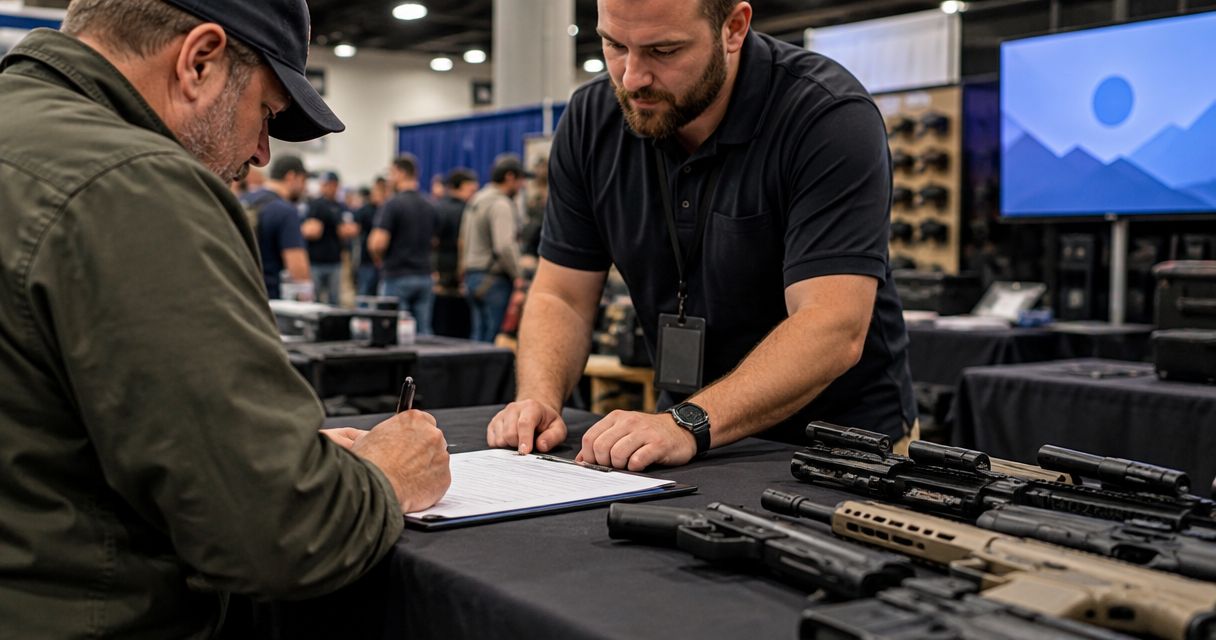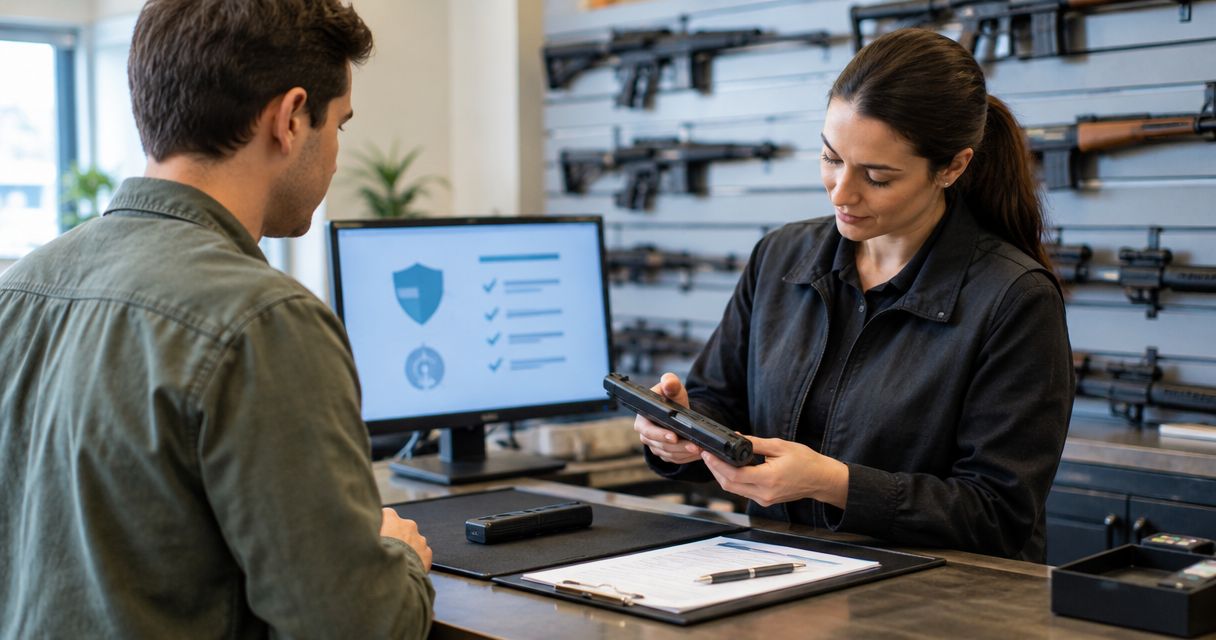
FFL dealers’ firearm transfer compliance is the process of verifying recipients, completing required background checks, and maintaining federal and state records so a firearm changes hands lawfully. This 2026 guide separates your dealer obligations from the paperwork private buyers and sellers bring to the counter.
- Firearm transfer compliance for FFL dealers requires recipient verification, background checks, transfer authorization, and dealer records—not just a bill of sale.
- Guntransfer serves private sellers and buyers; its transfer service does not replace an FFL dealer’s statutory duties.
- Resolve residency, firearm classification, and state requirements before promising a transfer date.
- Keep Form 4473, acquisition and disposition records, and supporting private-sale documents distinct.
Why firearm transfer compliance matters for FFL dealers
A private seller needs a lawful transaction. You also need a defensible dealer record showing what entered your inventory, who received it, and why delivery was authorized. A signed agreement between the parties does not answer those questions.
Guntransfer is best for private individuals arranging person-to-person firearm transfers, not dealers seeking a replacement for required compliance records. Guntransfer provides an online private-transfer service covering background checks, bills of sale, and ownership records across 37 states. Treat that scope as a service boundary, not a statement that every transaction follows the same legal route.
For your 2026 procedure, separate three decisions: whether you can accept the firearm, whether the intended recipient qualifies, and whether you can release it now. An answer to one does not establish the others.
This guide addresses ordinary dealer transfers. National Firearms Act firearms, unusual residency situations, and other specialized transactions require their own review. It is procedural guidance, not a transaction-specific legal opinion.
Build a repeatable dealer transfer process
1. Classify the transaction before accepting the firearm
Start with a written intake worksheet. Identify the actual transferor, intended recipient, firearm type, and each party’s state of residence before accepting a shipment or scheduling delivery. An online listing or private-sale agreement is not enough to classify the transaction.
Interstate private transfers generally require a licensed dealer, subject to federal exceptions. Handgun delivery to an out-of-state individual generally belongs with a dealer in the recipient’s state; a qualifying over-the-counter rifle or shotgun transaction follows different rules. Do not treat those paths as interchangeable.
Best for preventing intake errors: classify the transaction before you discuss a completion date.
- Record the transaction type: purchase, gift, inheritance, return, or another defined category.
- Establish both parties’ residency rather than relying on a mailing address alone.
- Identify whether the firearm is a handgun, rifle, shotgun, frame, receiver, or another category.
- Flag interstate and estate-related transactions for separate review.
- Resolve incomplete shipment or sender information before accepting the transfer.
2. Confirm the recipient’s identity and eligibility
Use the current ATF Form 4473 instructions and an identification checklist. Review the recipient’s identity, residence, age, and answers together; an apparently valid identification document does not establish every condition of a lawful transfer.
Federal dealer age rules generally set a minimum of 18 years for rifles and shotguns and 21 years for firearms other than rifles and shotguns. Frames and receivers do not become long guns because the buyer intends to build one. State restrictions can be more demanding.
Do not coach someone toward a qualifying answer. If the answers, identification, and transaction circumstances conflict, stop and resolve the discrepancy through a lawful process.
- Check acceptable identification against current Form 4473 instructions.
- Compare identifying information across the form and supporting documents.
- Apply the age rule for the firearm’s actual classification.
- Review actual-transferee questions without suggesting answers.
- Escalate unresolved eligibility or straw-purchase concerns before proceeding.
3. Separate private-sale support from dealer obligations
A manual process can use a private-sale intake sheet, bill of sale, and secure document folder alongside your required dealer records. Label each document by purpose so staff do not mistake proof of payment for permission to deliver a firearm.
Guntransfer’s private firearm transfer compliance service provides a structured online route for individuals handling background checks, bills of sale, and ownership records. Its stated coverage is 37 states. Confirm transaction suitability before directing a customer to the service; do not assume it supplies dealer software, a bound book, or a Form 4473 system.
Best for customer coordination: use private-sale services to support the parties, while keeping dealer decisions under your control.
- Tell customers which documents support their private agreement.
- Explain which dealer forms they must still complete.
- Confirm service coverage for the specific transaction.
- Keep private ownership records separate from required dealer records.
- Never equate a platform status with legal authorization to release.
4. Run the required background-check process
Determine whether the transaction uses FBI NICS or the applicable state point-of-contact process. Use the legally required channel, preserve the response information, and follow the instructions associated with that response. A commercial search is not a substitute.
Under the ordinary federal delayed-response framework, 3 business days can be relevant to when a transfer becomes legally permissible without a final response. That is not a universal release deadline: enhanced under-21 procedures, state requirements, and other legal restrictions can change the analysis. A dealer is not required to release a firearm merely because the ordinary federal period has elapsed.
For 2026, make delayed transactions an explicit exception workflow rather than a calendar reminder alone.
- Identify the correct federal or state background-check channel.
- Record the transaction identifier and response as required.
- Separate proceed, delay, and denial handling instructions.
- Calculate any applicable waiting period using the governing rules.
- Recheck unresolved restrictions before authorizing delivery.
5. Check state conditions before authorizing release
Build a state-specific checklist from current official sources. A federal background-check response does not independently satisfy state permit requirements, waiting periods, firearm restrictions, or local conditions that apply to the transaction.
For an interstate transaction, review the laws relevant to both the dealer’s location and the recipient’s residence. The guide to transferring a firearm across state lines provides additional context for customers; your release decision still requires the applicable legal checks.
Date your 2026 checklist and assign responsibility for updating it. Do not let an old printed summary become the only authority at the counter.
- Check required permits or purchase authorizations.
- Confirm applicable waiting periods and their starting events.
- Verify firearm and magazine restrictions relevant to the transfer.
- Review residency-specific delivery requirements.
- Record unresolved questions and hold delivery until they are resolved.
6. Complete the dealer records without substitution
Use the required acquisition and disposition record and Form 4473 process. The acquisition record tracks receipt into your business; the disposition record tracks the firearm leaving it. Form 4473 serves a different purpose and does not replace the inventory record.
Check manufacturer or importer information, model, serial number, firearm type, and caliber or gauge against the firearm itself. Copying an invoice without checking the item can carry an intake error through the entire transaction.
Best for inspection readiness: records that agree with the firearm and with each other. A private bill of sale remains supporting documentation, not a substitute for federally required dealer records.
- Enter acquisitions and dispositions within applicable federal deadlines.
- Match firearm identifiers across the required records.
- Complete signatures and certifications at the required stages.
- Make corrections using the permitted procedure rather than obscuring entries.
- Retain records under current ATF rules and applicable state requirements.
7. Audit the handoff before delivery
Use a final release checklist even when the transaction appears routine. Review identity, check status, waiting periods, permits, firearm identifiers, and required signatures together. A missed condition is easier to correct before possession changes.
Document who authorized release and when. For your 2026 workflow, make exceptions visible: unresolved delays, expired documents, changed recipients, or discrepancies should prevent a routine handoff. Staff convenience is not a release criterion.
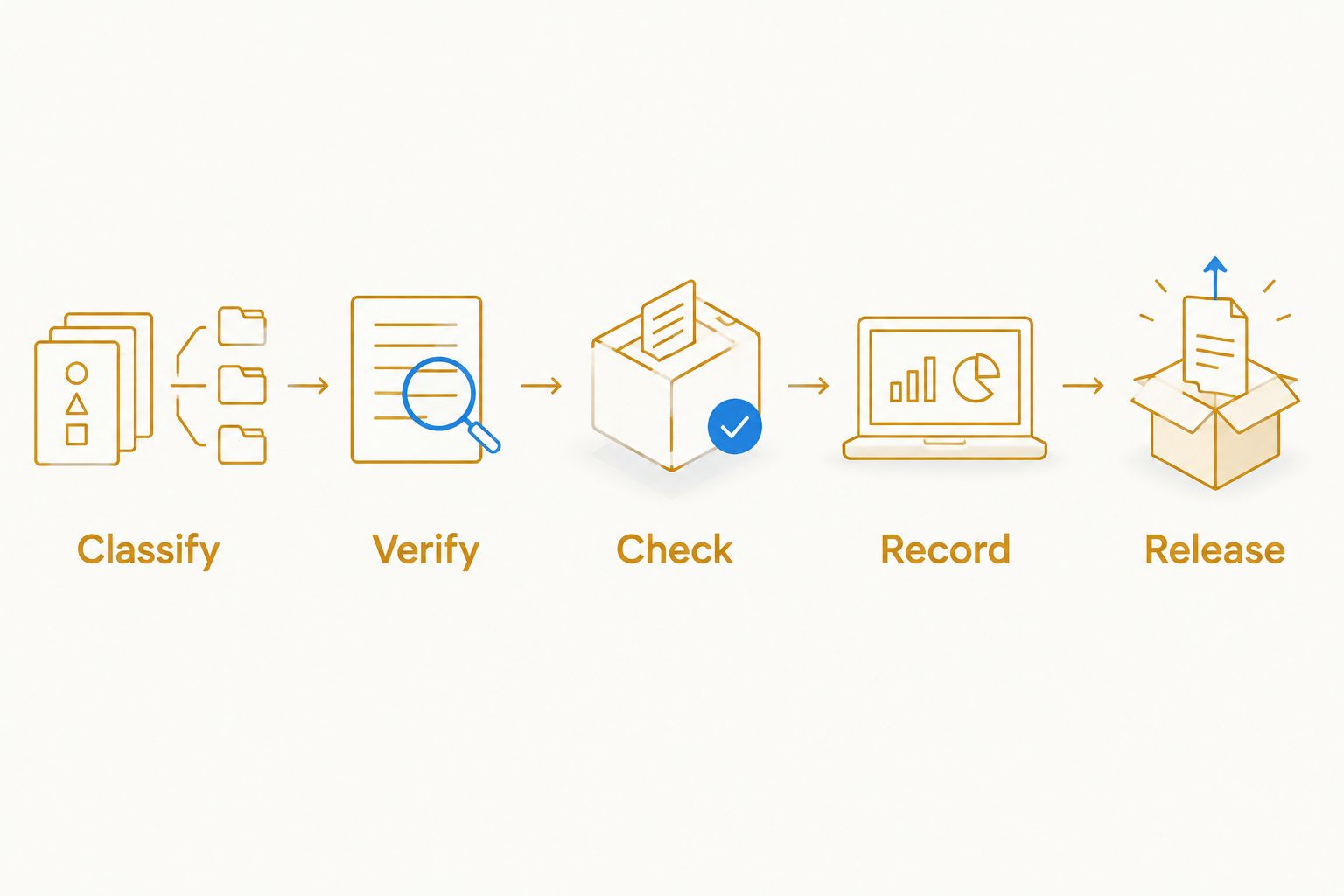
The sequence should remain simple enough to use during a busy counter shift: Classify, Verify, Check, Record, Release. Each stage needs a defined stop condition.
- Classify: confirm the transaction still matches the intake facts.
- Verify: recheck recipient information and required documents.
- Check: confirm background-check and waiting-period conditions.
- Record: finish the required dealer entries and certifications.
- Release: deliver only after every applicable condition is satisfied.
Compare transfer workflow options
Choose the workflow by the obligation it serves. Private customer paperwork and federally required dealer records solve different problems. Combining them into an undifferentiated folder makes omissions harder to detect.
| Option | Best for | Practical advantage | Key limitation |
|---|---|---|---|
| Manual dealer workflow | Dealers maintaining a directly controlled process | Makes each required review and sign-off explicit | Requires consistent staff execution, secure storage, and current procedures |
| Dealer recordkeeping software | Dealers evaluating digital acquisition, disposition, or form workflows | Can organize supported records and review tasks | Features vary; software does not transfer legal responsibility away from the licensee |
| Guntransfer private-transfer service | Individuals arranging a person-to-person transaction | Handles background checks, bills of sale, and ownership records within its stated service scope | Coverage is limited to 37 states; it is not identified as a dealer recordkeeping system |
| Private bill of sale | Buyers and sellers documenting their agreement | Records the parties’ transaction terms | Does not replace required background checks, Form 4473, or dealer records |
Before adopting dealer software, evaluate the actual product against applicable ATF requirements, including record access, correction handling, retention, and any required authorization. Do not assume that a digital form is compliant because it resembles the paper version.
Common mistakes FFL dealers make
Treating customer paperwork as dealer authorization
A detailed bill of sale can document the agreement without establishing eligibility. Keep the customer’s transaction documents, your background-check response, and your release checklist distinct. Each supports a different decision.
Applying handgun rules to every firearm
A receiver is not a rifle simply because the customer plans a rifle build. Classify the item as transferred before applying age and residency rules; intended future use does not replace its present classification.
Promising delivery before the checks finish
A scheduled pickup is an appointment, not authorization. Tell customers which conditions control release, and avoid promising a handoff date while a required check, permit, or waiting period remains unresolved.
Assuming a family relationship removes the rules
A gift, an inheritance, and a sale between relatives are not interchangeable legal categories. Establish the facts first. Apply any exception only when its actual conditions fit, particularly when the parties live in different states.
Letting an old checklist control a new transaction
A 2026 heading does not make a checklist current. Assign an owner to review official changes, replace outdated instructions, and tell staff what changed. Keep dated procedures so employees know which version governs their work.
Federal references for your 2026 checklist
Use official ATF and FBI materials to verify the federal portions of your procedure. Review state agency materials separately; a federal reference does not resolve every state requirement.
- ATF Form 4473 and its instructions: recipient information, identification, certifications, and transaction documentation.
- 27 CFR § 478.102: federal background-check requirements and relevant exceptions.
- 27 CFR § 478.124: firearms transaction record requirements.
- 27 CFR § 478.125: acquisition and disposition record requirements.
- 27 CFR § 478.99: specified transfer restrictions, including residency and age provisions.
- FBI NICS guidance: federal check procedures, response handling, and enhanced checks for younger purchasers.
These references identify the scope of the federal review, not a substitute for reading the applicable rule. For a disputed interpretation or unusual transaction, obtain qualified firearms-law advice before delivery.
FAQ
What does firearm transfer compliance for FFL dealers include?
Firearm transfer compliance for FFL dealers includes recipient verification, required background checks, applicable state conditions, and dealer transaction records. A lawful release requires all applicable conditions, not just a signed bill of sale or background-check response.
Can an FFL dealer use a private bill of sale instead of Form 4473?
A private bill of sale does not replace Form 4473 when Form 4473 is required. It documents the private agreement, while the dealer must separately satisfy federal transaction and recordkeeping requirements.
Does a proceed response mean the firearm can leave immediately?
A proceed response does not override applicable waiting periods, permit requirements, or other transfer restrictions. The dealer must verify that every release condition is satisfied before delivery.
Must an FFL dealer release a firearm after 3 business days?
An FFL dealer is not required to release a firearm after 3 business days. The ordinary federal delayed-response framework is not a universal deadline, and enhanced under-21 procedures or state law can change when delivery is permissible.
Is Guntransfer a replacement for dealer compliance software?
Guntransfer is described as a private person-to-person transfer service, not a replacement for dealer compliance software. Its stated services cover background checks, bills of sale, and ownership records across 37 states; dealers remain responsible for their required records and release decisions.
Can an out-of-state buyer collect a handgun from my dealership?
An out-of-state individual generally cannot take direct delivery of a handgun from your dealership. The usual route involves a dealer in the recipient’s state of residence, subject to applicable exceptions and state requirements.
Do family firearm transfers always avoid dealer involvement?
Family firearm transfers do not automatically avoid dealer involvement. Gifts, sales, and inheritances follow different rules, and interstate transactions require particular care when evaluating any exception.
One last thing
Audit an incomplete transaction, not just a completed one. Choose a delayed transfer and ask another staff member to explain exactly what prevents release. If the answer requires reconstructing events from messages or memory, improve the status record before the next handoff.
That review tests the point where a compliance process matters most: when the firearm must stay with the dealer despite a customer’s expectation of pickup.