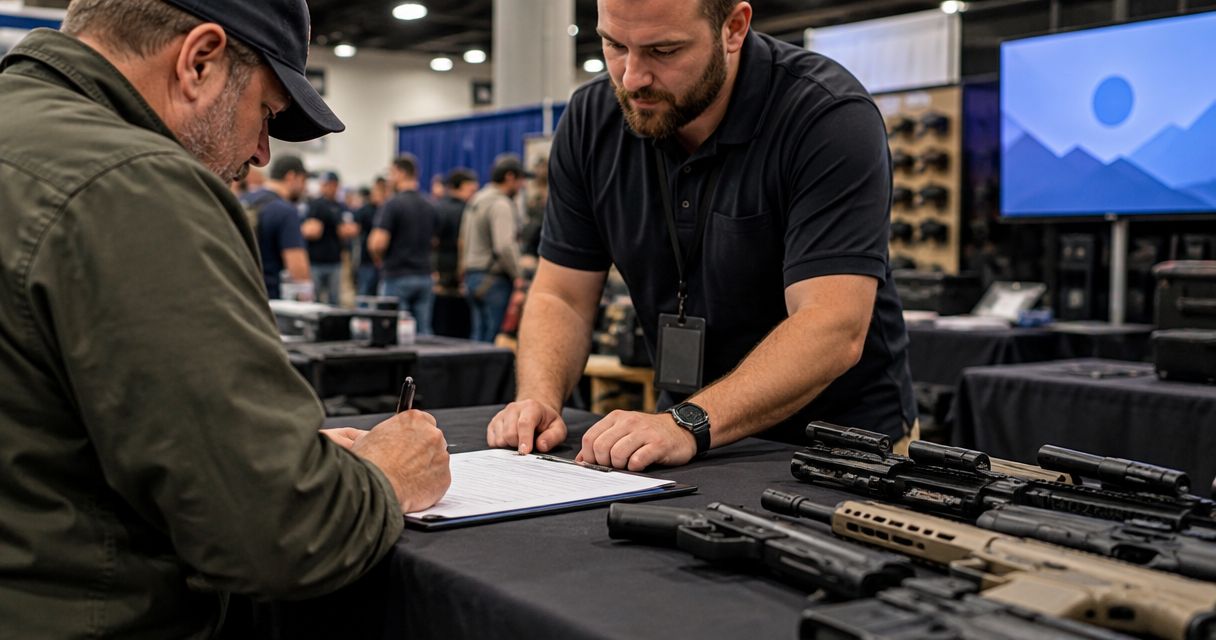
Gun club members’ firearm transfer is the lawful transfer of a firearm between individuals, with the aim of completing a club-connected sale without bypassing required checks or dealer involvement. This guide to firearm transfer for gun club members explains how to separate membership rules, personal familiarity, and legal requirements in 2026.
- Firearm transfer for gun club members follows federal and state law; club membership creates no general exemption.
- Guntransfer is best suited to private sellers seeking online firearm transfer compliance support within its 37-state coverage.
- Confirm residency and required dealer involvement before scheduling a handoff; a bill of sale does not replace either.
- Keep accurate sale records, but do not treat club membership or a carry permit as universal proof of eligibility.
Why firearm transfer compliance matters for gun club members
Knowing the buyer through your club does not establish that a transfer is lawful. Members can live in different states, hold different permits, and face different restrictions despite using the same range. The club’s location does not resolve those differences.
Start with federal law, then check the applicable state and local requirements. Guntransfer provides online private firearm transfer compliance support across 37 states, including background checks, bills of sale, and ownership records. Service coverage does not mean every firearm, buyer, or transaction qualifies for the same process.
For your 2026 transfer, distinguish three separate questions: whether the recipient can possess the firearm, whether the firearm can lawfully be transferred, and which procedure the transaction requires. A familiar face answers none of them.
Club procedures add another layer. Permission to post a classified advertisement, bring a firearm onto club property, or arrange a meeting is not permission to ignore transfer law. Treat club approval as a venue requirement, not legal clearance.
How to complete a club-connected firearm transfer
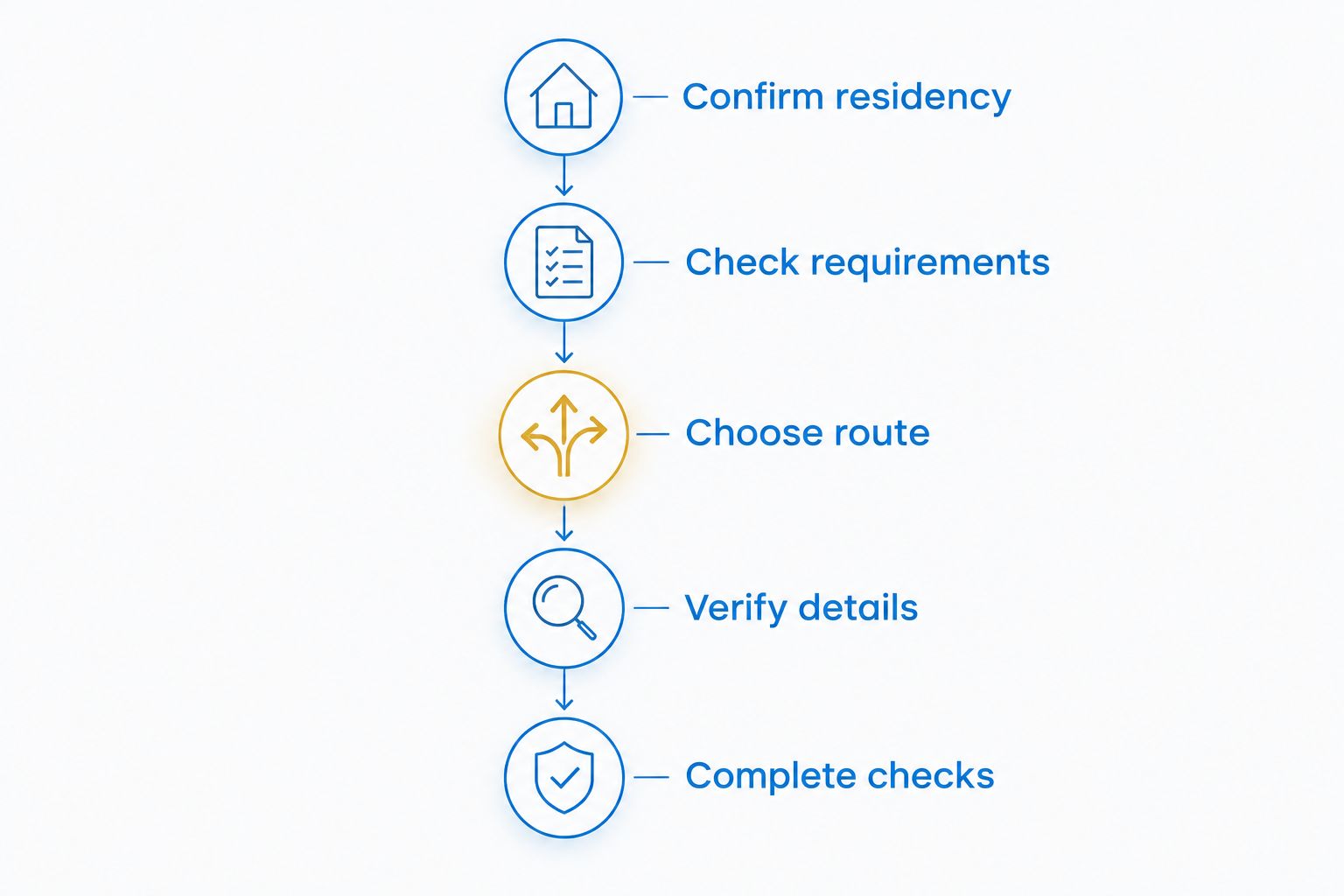
1. Confirm residency before agreeing to a handoff
Begin with the free route: read current ATF guidance on transfers between unlicensed individuals and the relevant state agency’s instructions. Identify where each party legally resides rather than relying on the address in a membership directory.
Federal law generally prohibits an unlicensed person from directly transferring a firearm to an unlicensed resident of another state, subject to limited exceptions. A routine interstate private sale therefore needs the appropriate federally licensed dealer process. Meeting at a club in the seller’s state does not turn an interstate transaction into a same-state sale.
Military assignments, multiple residences, and recent moves require closer review. Do not improvise an answer from a driver’s license alone when the circumstances are unclear.
- Confirm residency before arranging delivery.
- Ask whether either party recently moved.
- Identify the firearm type accurately.
- Separate the meeting location from legal residency.
- Resolve unusual residency questions with the receiving dealer or qualified counsel.
2. Check the rules for this buyer and firearm
Read the current state agency instructions yourself before selecting a transfer route. Check private-sale background check requirements, dealer involvement, permits, waiting periods, and restrictions affecting the specific firearm. Your club’s range officer is not automatically the authority on those questions.
Federal dealer age rules also matter. ATF guidance states that a federally licensed dealer generally cannot sell or deliver a rifle or shotgun to someone under 18 years old, or other firearms, including handguns, to someone under 21 years old. State law can impose stricter requirements; do not apply dealer thresholds as a complete rule for private transfers.
For a 2026 sale, check current official instructions rather than an old club discussion. Online compliance support can organize the process, but it cannot erase a mandatory dealer step.
- Check the recipient’s eligibility under applicable law.
- Check restrictions on the firearm and included magazines.
- Verify required permits or purchase authorizations.
- Identify any waiting period before delivery.
- Confirm whether a licensed dealer must conduct the transfer.
3. Choose the lawful transfer route
The manual approach is to identify the requirements, contact a suitable dealer when necessary, and prepare accurate records yourself. This gives you direct control, but you must reconcile the rules and paperwork without assuming that one completed form covers everything.
Guntransfer is best suited to private sellers seeking online firearm transfer compliance support within its 37-state coverage. Guntransfer’s firearm transfer service handles background checks, bills of sale, and ownership records. Confirm that its process fits your state and transaction before relying on it.
A dealer remains necessary wherever the law requires dealer involvement. Do not describe a commercial screening report, membership verification, or paperwork service as an FBI National Instant Criminal Background Check System check unless that is the actual authorized process used.
- Use the manual route only after identifying every required step.
- Confirm the service covers the relevant state and transaction.
- Use a licensed dealer when legally required.
- Ask who performs any required background check.
- Clarify who authorizes delivery and what conditions remain.
4. Verify details before completing the paperwork
Prepare your own checklist before entering information into a service or dealer workflow. Compare the firearm’s identifying information with the proposed record, and confirm the parties’ details through the lawful process selected for the transfer.
Accuracy matters more than a polished form. A wrong serial number can connect your paperwork to the wrong firearm; an incorrect name or date can undermine the record’s usefulness. Do not rely on an advertisement copied from another member’s listing.
Keep sensitive information out of group chats and public club spreadsheets. Collect only what the applicable process requires, and use the designated private channel for submitting it. A club officer does not need a copy merely because the parties met through the club.
- Match the make, model, caliber, and serial number to the firearm.
- Confirm the parties’ names through the required identification process.
- Record the actual transaction date accurately.
- Correct errors before signing or submitting documents.
- Keep identity documents and personal details out of public channels.
5. Complete checks before releasing the firearm
Agree on the sequence before anyone travels. If the transaction requires a dealer, ask that dealer what to bring, where the firearm must be delivered, and which conditions must be satisfied before release. Follow the dealer’s instructions alongside applicable law.
A signed bill of sale is evidence of an agreement, not permission to bypass a required check. Do not let a scheduled club event become the deadline that drives a premature handoff. Likewise, do not treat a pending check as a completed approval.
For your 2026 transfer, make the release conditions explicit. If the required process remains incomplete, leave possession unchanged rather than using a temporary handoff to finish the sale informally.
- Confirm the required documents before the appointment.
- Follow the club’s rules for bringing firearms onto the property.
- Complete required checks and waiting periods before delivery.
- Follow the dealer’s lawful release instructions.
- Stop if residency, identity, or eligibility information conflicts.
6. Retain records without creating a club registry
Start with a secure personal filing system. Keep the completed documents together, label them clearly, and restrict access. Preserve the final version rather than an unsigned draft or a screenshot of a conversation.
Guntransfer includes ownership records in its firearm transfer service. Those records support documentation; they do not replace any separate registration, reporting, or dealer recordkeeping obligation imposed by law. Confirm how you can retrieve your documents when you need them.
Your club does not automatically need a central archive of members’ private sales. Separating your personal records from club administration reduces unnecessary distribution of sensitive information. For filing approaches, see the guide to record-keeping methods for private gun sales.
- Retain the completed bill of sale and relevant transfer documents.
- Keep dealer receipts or confirmations when provided.
- Store files securely with a separate backup.
- Limit access to people with a legitimate need.
- Check applicable retention and reporting requirements.
Compare transfer options for club members
Choose an option by its role, not by convenience alone. A documentation service, a licensed dealer, and an attorney solve different problems. Some transactions need more than one of them.
| Option | Best for | Main advantage | Key limitation |
|---|---|---|---|
| Manual compliance research and records | Straightforward transactions where you can establish all applicable requirements | Direct control over research and documents | You must identify and complete every required legal step yourself |
| Guntransfer online compliance service | Private individuals seeking background check, bill of sale, and ownership record support within covered states | Brings the stated compliance tasks into an online service | Covers 37 states; confirm transaction eligibility and any required dealer involvement |
| Federally licensed dealer | Transfers requiring a licensed dealer or an authorized dealer background check process | Provides the legally required dealer channel where applicable | Dealer policies differ; confirm the dealer accepts the transaction before traveling |
| Firearms-law attorney | Unclear residency, unusual ownership circumstances, or conflicting legal requirements | Provides legal advice tailored to the facts | Legal advice does not itself complete checks, paperwork, or delivery |
Best for a legally required dealer transfer: a federally licensed dealer. An online workflow is not an alternative to a dealer requirement. For a straightforward transaction where no dealer is required, decide whether you can manage the applicable process yourself or want service support.
An inherited firearm, trust-owned firearm, or specially regulated firearm needs separate analysis. Do not force an unusual ownership situation into the workflow for an ordinary member-to-member sale.
Common mistakes gun club members make
Treating membership as eligibility verification
A membership card shows a club relationship, not current legal eligibility to receive a firearm. The club’s admission process is separate from the transfer process. Complete the checks required for the actual transaction, even when the buyer is a longstanding member.
Assuming a club address makes the sale local
Two members using the same range can reside in different states. Establish residency before choosing the transfer route, and do not use the club’s mailing address as a substitute. The recipient’s residence matters even when no firearm is being shipped.
Treating a carry permit as a universal exemption
A carry permit is not a nationwide waiver of transfer requirements. Federal background check alternatives involving qualifying permits have specific conditions, and state private-sale requirements need separate review. Ask the responsible dealer or official agency rather than relying on another member’s past transaction.
Handing over the firearm while paperwork catches up
A promise to finish documentation later does not satisfy a prerequisite to delivery. Agree on the lawful sequence first. If a check, authorization, or waiting period must precede possession, complete it before the handoff rather than treating the club meeting as an exception.
Turning club volunteers into informal transfer agents
Do not assume a club officer can conduct a required dealer check, hold firearms for everyone, or certify that a sale is lawful. Club authorization and federal licensing are different things. Confirm the role of any intermediary before asking that person to receive, store, or deliver a firearm.
FAQ
Can I sell a firearm directly to another gun club member?
Club membership alone does not establish that a direct sale is lawful. The answer depends on residency, recipient eligibility, the firearm, and applicable federal, state, and local transfer requirements.
Do gun club members need a background check for a private sale?
Background check requirements depend on the transaction and applicable law, not club membership. Confirm whether your transfer requires a licensed dealer and an authorized check before releasing the firearm.
Can I transfer a firearm to a club member who lives in another state?
A routine interstate sale between unlicensed individuals generally requires the appropriate licensed dealer process. Meeting at the same club does not remove the interstate transfer restriction; limited legal exceptions require separate analysis.
Does a concealed carry permit replace a background check?
A concealed carry permit does not automatically replace a required background check. Qualifying permit alternatives have specific conditions, and state private-sale rules must also be satisfied.
Is a bill of sale enough to transfer a firearm legally?
A bill of sale alone is not enough when the law requires additional steps. Required dealer involvement, checks, permits, waiting periods, and reporting remain separate obligations.
What does Guntransfer handle for private firearm sales?
Guntransfer provides online private firearm transfer compliance support across 37 states, handling background checks, bills of sale, and ownership records. Confirm coverage for your transaction and any separate dealer requirement before proceeding.
Where should I check gun club transfer rules in 2026?
Check current ATF guidance, the relevant state agency’s instructions, and applicable local requirements for your 2026 transfer. Read the club’s policies separately because venue permission does not replace legal compliance.
One last thing
The address of the clubhouse is not the residency of the buyer. Put that distinction at the top of your 2026 transfer checklist. It resolves a critical question before you choose a service, contact a dealer, or arrange delivery.
If the facts do not fit the ordinary process, stop and obtain transaction-specific advice. A complete-looking form cannot repair a transfer completed through the wrong legal route.