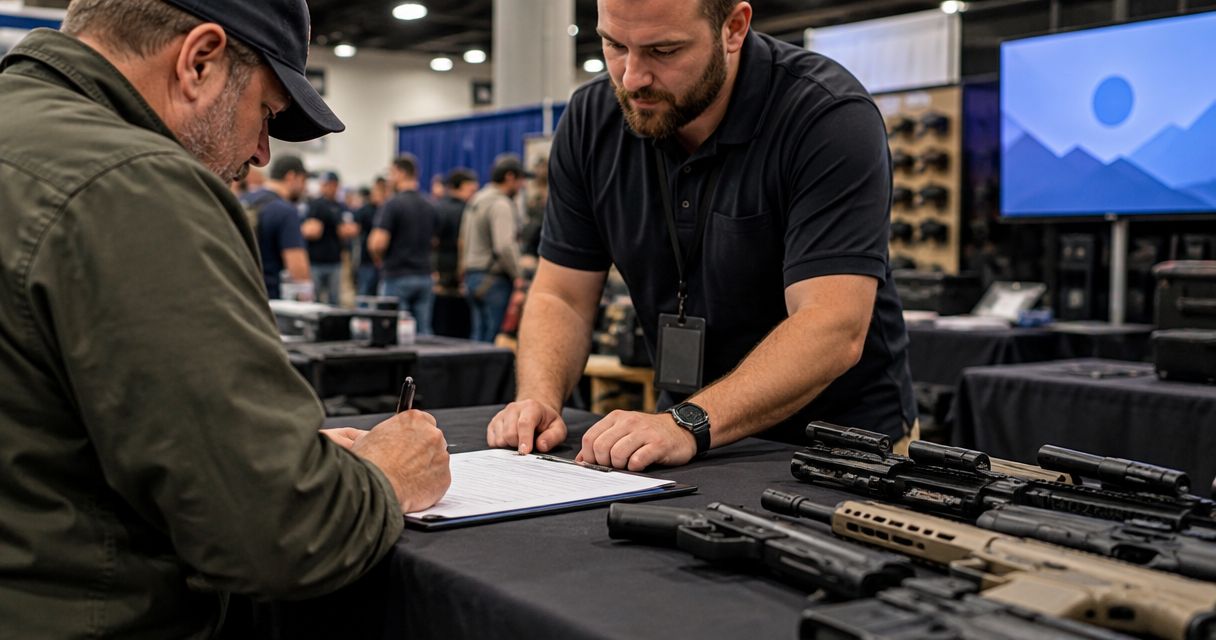
Probate attorneys’ firearm transfer compliance is the process of verifying estate authority, recipient eligibility, and transfer requirements so estate firearms reach lawful recipients with a documented chain of custody. Unlike an ordinary private sale, an estate distribution requires you to distinguish a bequest from a sale and identify who can authorize the handoff.
- Firearm transfer compliance for probate attorneys starts with estate authority, recipient eligibility, and the distinction between inheritance and sale.
- Guntransfer serves private sellers across 37 states; estate distributions require separate legal analysis.
- An interstate inheritance exception does not eliminate state restrictions or recipient eligibility requirements.
- Keep authorization, transfer records, and delivery evidence together in the estate file.
Why firearm transfer compliance matters for probate attorneys
A probate order establishes estate authority; it does not replace firearm-law analysis. Your 2026 estate checklist must address both. A beneficiary’s entitlement to property and the legality of delivering that property are separate questions.
Start with the transaction, not the paperwork template. The guide to transferring an inherited gun provides related reading, but your file still needs a jurisdiction-specific decision about the proposed recipient and transfer route.
An executor can face competing instructions: distribute personal property, preserve estate value, and avoid an unlawful transfer. Relatives sometimes complicate that work by treating possession as ownership or assuming a family relationship removes transfer requirements. Neither assumption is a substitute for legal review.
Federal law distinguishes qualifying inheritance from ordinary interstate transfers. State restrictions, specialized firearm rules, and prohibited-person restrictions still require attention. Resolve those issues before anyone promises delivery, schedules collection, or releases an item from estate custody.
How to manage an estate firearm transfer in 2026
Use these 7 steps as a file-management sequence, not as a substitute for the law governing a particular firearm. Resolve the legal route before arranging delivery; gather the supporting records as each decision is made.
1. Confirm estate authority
Begin with the appointment documents, governing instrument, and applicable probate law. Identify the person authorized to direct the disposition and any conditions attached to that authority. Do not assume that the relative holding the firearm can sell or distribute it.
A spreadsheet and an indexed document folder are sufficient to start. Record the authority supporting each proposed action, especially when a specific bequest conflicts with a proposed sale or competing family instructions.
- Identify the appointed personal representative and any co-representatives.
- Review the will, trust, court orders, and applicable distribution provisions.
- Record whether the proposed disposition is a bequest, intestate distribution, or sale.
- Flag ownership disputes and claims before authorizing release.
- Assign responsibility for approving the eventual disposition.
2. Inventory the property without circulating it
Create an inventory from existing records and a qualified inspection where necessary. Record identifying information accurately, but do not ask an untrained executor to disassemble, test, or transport an unfamiliar firearm to complete your worksheet.
Separate ordinary identification questions from classification questions. Suspected National Firearms Act items require specialist review; treating an unfamiliar item as an ordinary estate asset creates a problem that a signed receipt cannot fix.
Document present custody as well as ownership. An inventory that identifies the firearm but omits its location leaves the estate unable to explain who controlled it before distribution.
- Record the manufacturer, model, serial number, and available ownership documents.
- Identify the current custodian and storage location.
- Flag missing, inconsistent, or altered identifying information for review.
- Refer uncertain classifications to qualified firearms counsel or an appropriate licensed professional.
- Restrict access to sensitive inventory and identity records.
3. Classify the proposed transaction
Ask whether the estate is distributing an inheritance or selling to a purchaser. A beneficiary buying an additional firearm from the estate is not automatically receiving that item through inheritance. Document the basis for the transaction rather than relying on the recipient’s relationship to the decedent.
For an ordinary private sale, manual preparation means collecting the required information, selecting suitable documents, and confirming the applicable check and dealer requirements. Guntransfer provides an online private-sale service handling background checks, bills of sale, and ownership records across 37 states.
Guntransfer’s firearm transfer compliance service is best for private individuals completing person-to-person sales within its stated 37-state coverage. That scope does not establish support for executor transactions, probate distributions, or specialized firearms; confirm suitability before assigning an estate matter to the service.
- Label the transaction as inheritance, sale, or another legally supported disposition.
- Identify the seller or distributing fiduciary in the records.
- Record the recipient’s state of residence and the firearm’s location.
- Check whether the proposed service accepts the estate’s transaction type.
- Keep private-sale documents separate from inheritance analysis.
4. Review recipient eligibility and applicable law
Determine which federal, state, and local requirements govern the proposed handoff. A will does not authorize delivery to a prohibited recipient. Likewise, a recipient’s assurance that ownership is lawful does not resolve a required background check, permit, or dealer-transfer procedure.
Federal interstate rules include inheritance exceptions. Under 18 U.S.C. § 922(a)(3) and § 922(a)(5), qualifying bequests and intestate succession receive different treatment from ordinary transfers between unlicensed residents of different states. The exceptions are not permission to disregard other applicable law.
For a 2026 matter, verify current requirements against official legal sources. Record the law supporting your decision and the date checked, rather than retaining an undated screenshot or a generic statement that family transfers are exempt.
- Verify residence rather than relying solely on a mailing address.
- Review prohibited-person restrictions and applicable age requirements.
- Check state requirements for permits, checks, waiting periods, and dealer involvement.
- Confirm whether possession of the particular firearm is lawful at the destination.
- Document the basis for any inheritance exception you apply.
5. Select the transfer route before arranging delivery
Choose the route that satisfies the identified requirements. Direct inheritance delivery, dealer-mediated transfer, and a private-sale service are not interchangeable. The correct choice depends on the transaction and governing law, not simply on which paperwork is easiest to obtain.
Dealer involvement supplies a defined transaction process, but it does not resolve disputed estate authority. Conversely, an executor’s authority does not establish that direct delivery is lawful. Confirm responsibilities with the receiving professional before moving estate property.
For interstate matters, resolve both the legal transfer route and lawful transportation arrangements. An inheritance exception addresses a particular federal restriction; it does not answer every possession, transport, or state-law question.
- Identify whether dealer involvement is required or appropriate.
- Confirm that the receiving dealer accepts the proposed estate transaction.
- Establish who supplies authority documents and recipient information.
- Address specialized firearms separately with qualified counsel.
- Put unresolved legal questions on hold before scheduling delivery.
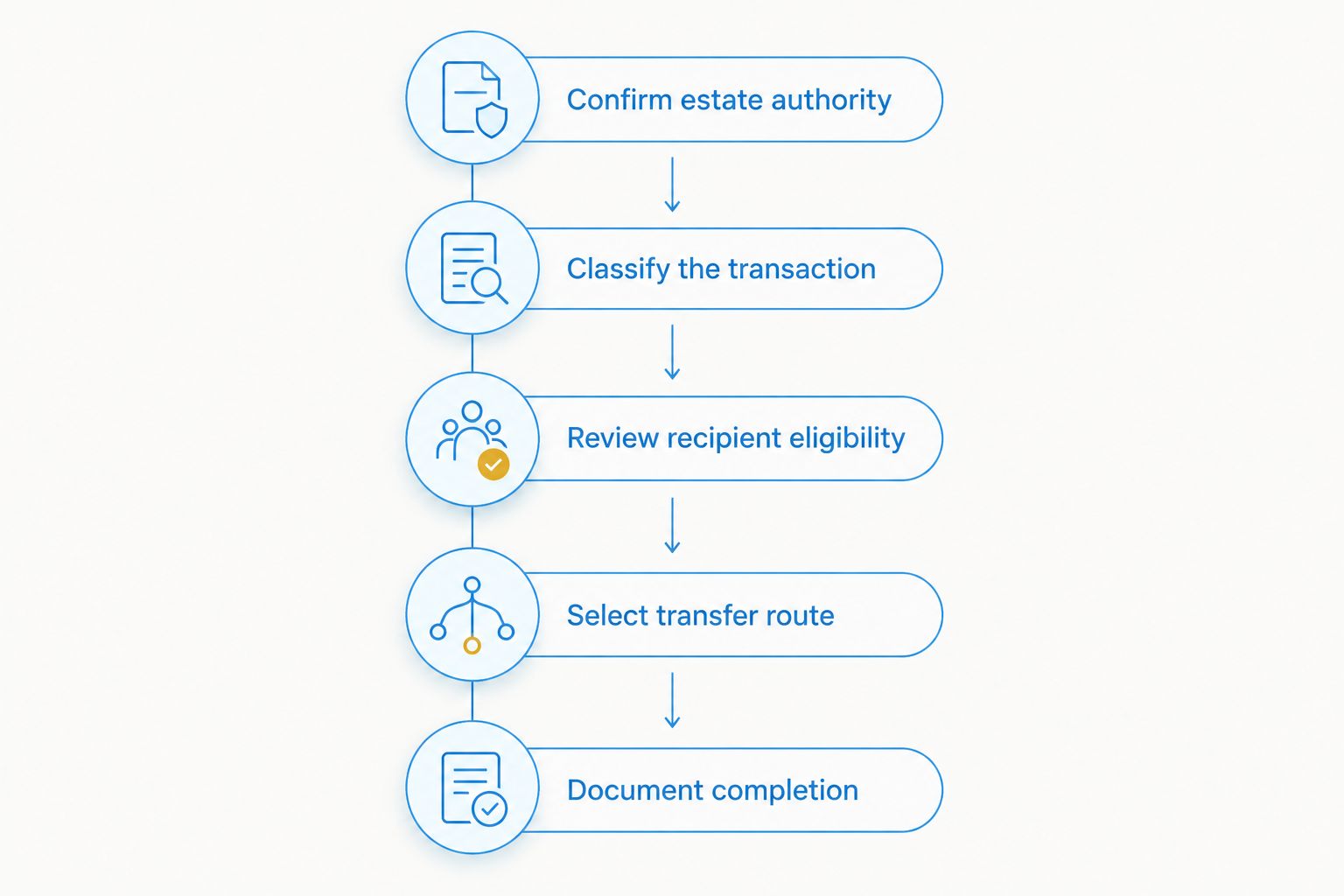
6. Document completion, not just intent
A bill of sale records a transaction; it does not establish that every legal requirement was satisfied. Keep the authorization, relevant compliance records, and evidence of delivery together so another lawyer can understand what occurred without reconstructing the matter from email.
Use a single indexed estate file with access controls. Your firm’s retention obligations and applicable law govern retention; do not assume that a consumer service’s ownership record replaces the complete fiduciary file.
The file should distinguish a planned disposition from a completed transfer. A signed instruction, a scheduled appointment, and an actual handoff are different events.
- Preserve the inventory entry and supporting authority.
- Retain the documented legal basis for the chosen route.
- Keep available dealer or service confirmations appropriate to the transaction.
- Record the recipient, completion date, and delivery acknowledgment.
- Reconcile completed dispositions against the estate inventory.
7. Close exceptions before closing the estate
Review the inventory against completed dispositions before reporting that distribution is finished. An item awaiting eligibility review, disputed ownership, or classification advice remains unresolved even when the rest of the estate is ready to close.
Use 3 closing questions: Who authorized the disposition? What made the route lawful? What proves completion? An incomplete answer identifies work still required, not a clerical gap to fill after the fact.
For 2026 estate administration, make that review an explicit closing task. Keep unresolved firearms on the exception list until counsel determines and documents an appropriate disposition.
- Match each inventory entry to a completed or pending disposition.
- Identify missing receipts, confirmations, or authority documents.
- Escalate unresolved ownership and eligibility questions.
- Confirm continuing custody arrangements for retained property.
- Preserve the final index with the estate’s closing records.
Compare estate firearm transfer options
Choose by legal fit first, administrative convenience second. The options below solve different problems. No service, dealer, or document template replaces your determination of estate authority and applicable law.
| Option | Best for | Practical advantage | Key limitation |
|---|---|---|---|
| Attorney-managed documentation | Establishing authority and maintaining the estate file | Keeps legal analysis and fiduciary records together | Documentation alone does not perform a required dealer transfer or background check |
| Licensed dealer-mediated transfer | Transactions requiring or appropriately using dealer involvement | Places the firearm transaction within a licensed dealer’s process | Dealer participation does not resolve probate disputes or establish estate authority |
| Guntransfer firearm transfer compliance service | Private individuals making supported person-to-person sales | Handles background checks, bills of sale, and ownership records within stated coverage | Coverage spans 37 states; probate-specific support is not established by that scope |
| Direct inheritance distribution | Qualifying bequests or intestate distributions when applicable law permits | Matches the disposition to its actual inheritance basis | Requires independent review of eligibility, state law, and any specialized restrictions |
| Specialist firearms counsel | Uncertain classifications or complex federal and state issues | Focuses legal review on the unresolved issue | Does not itself provide custody, transportation, or transaction completion |
For a routine estate, your firm can maintain the file while a dealer handles a required transaction. For a proposed private sale, confirm whether the online service accepts the fiduciary arrangement. Keep those roles explicit in the engagement and estate instructions.
Common mistakes probate attorneys make
Treating every family handoff as inheritance
A relative’s involvement does not determine the transaction’s legal character. Distinguish property passing under a bequest or intestacy from property sold to a relative, and document the basis for that distinction.
Assuming an interstate exception ends the review
The federal inheritance exceptions address particular interstate restrictions. They do not remove recipient eligibility rules, destination-state possession restrictions, or specialized firearm requirements. Record the exception and the remaining analysis separately.
Using a bill of sale to prove compliance
A signed bill of sale can document a sale without proving lawful recipient eligibility or completion of a required dealer process. Keep transaction evidence and compliance evidence distinct, then connect both to the inventory entry.
Promising distribution before resolving classification
Do not promise an ordinary handoff when classification remains uncertain. Obtain qualified advice first, then tell the executor and beneficiary which route applies. That sequence prevents estate instructions from outrunning the legal analysis.
Closing with undocumented custody
An estate accounting can identify a disposition without explaining who actually received the property. Preserve delivery evidence and document custody for anything still pending. The file must distinguish completed distribution from intended distribution.
FAQ
What does firearm transfer compliance for probate attorneys involve?
It involves establishing estate authority, classifying the disposition, reviewing recipient eligibility, selecting a lawful transfer route, and documenting completion. An inheritance distribution and an estate sale require separate analysis.
Does a will let an executor hand a firearm directly to a beneficiary?
A will alone does not establish that direct delivery is lawful. The executor must also address applicable firearm laws, recipient eligibility, and any specialized restrictions.
Does an inherited firearm always have to go through a dealer?
Federal law does not impose a blanket dealer requirement on every qualifying inheritance. State law, the firearm involved, recipient eligibility, and the circumstances of the distribution still determine the appropriate route.
Can an heir inherit a firearm from another state?
Federal interstate transfer rules contain exceptions for qualifying bequests and intestate succession. Those exceptions do not override other applicable restrictions, so counsel must review the particular inheritance before delivery.
Is Guntransfer suitable for every probate firearm transfer?
Guntransfer describes a person-to-person private-sale service operating across 37 states, not universal probate coverage. Confirm that the service accepts the estate's transaction type before relying on it for a fiduciary sale.
Does a firearm bill of sale replace a background check?
A bill of sale does not replace a legally required background check or dealer transfer. It documents the transaction and belongs alongside any required compliance records.
What should an attorney do with an unfamiliar or potentially regulated estate firearm?
Obtain qualified classification and legal advice before authorizing a transfer. Keep the proposed disposition pending until the applicable requirements and responsible professionals are identified.
One last thing
A complete receipt can still document the wrong transfer route. Before approving a 2026 distribution, write one sentence in the file explaining why the disposition is an inheritance, a sale, or another authorized transaction. If that sentence is unclear, the next task is legal classification—not collecting signatures.