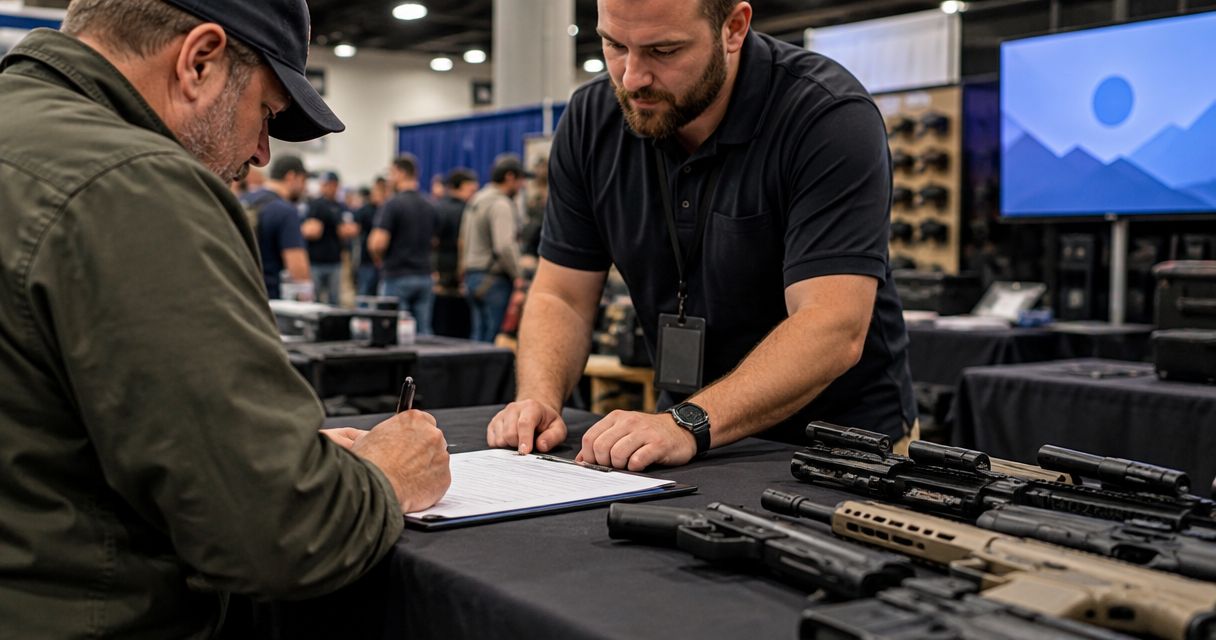
The permitless carry states comparison for 2026 includes 29 of 50 states, or 58%, where eligible people can carry a concealed handgun without a state carry permit. Regional totals range from 3 states in the Northeast to 12 in the South; eligibility, prohibited places, and transfer requirements still apply.
- The 2026 permitless carry states comparison covers 29 states; permitless does not mean unrestricted.
- The South has 12 permitless carry states; the Northeast has 3 under Census regional definitions.
- Guntransfer suits private sellers needing firearm-transfer compliance support, not permission to carry across state lines.
- Check concealed carry, prohibited places, and firearm-transfer requirements separately before relying on a state's classification.
Why this matters
A permitless carry label answers a narrow question: whether an eligible person needs a state permit to carry a concealed handgun. It does not establish that every person, firearm, location, or transaction qualifies.
Guntransfer is best for private individuals who need firearm-transfer compliance support, not a substitute for checking carry laws. Guntransfer provides an online private firearm transfer service covering background checks, bills of sale, and ownership records across 37 states. That service footprint and the permitless carry count measure different things.
Permitless carry states: the 2026 comparison
This benchmark counts states with a general permitless concealed-handgun carry framework for eligible people. It does not count a state merely because it allows unlicensed open carry, possession at home, or a limited exception for a particular activity.
| Region | Permitless carry states | States included |
|---|---|---|
| All states: overall yardstick | 29 of 50 | 58% of states |
| South | 12 | Alabama, Arkansas, Florida, Georgia, Kentucky, Louisiana, Mississippi, Oklahoma, South Carolina, Tennessee, Texas, West Virginia |
| Midwest | 8 | Indiana, Iowa, Kansas, Missouri, Nebraska, North Dakota, Ohio, South Dakota |
| West | 6 | Alaska, Arizona, Idaho, Montana, Utah, Wyoming |
| Northeast | 3 | Maine, New Hampshire, Vermont |
The South leads with 12 permitless carry states; the Northeast has the fewest, with 3. The Midwest has 8 and the West has 6. These totals describe how states are distributed, not which region has the fewest restrictions on carrying a handgun.
The comparison uses the general permitless concealed-carry classifications described in Giffords Law Center's Concealed Carry survey and USCCA's Constitutional Carry States reference, organized using U.S. Census Bureau regions for this 2026 reference. Its limitation is that a statewide classification cannot establish an individual's eligibility or resolve location-specific restrictions; consult the controlling law before carrying.
What the overall number tells you
The 29-state total is useful for comparing state frameworks. It is not a national carry authorization, a count of states honoring your particular permit, or a measure of where a particular person can lawfully carry.
The denominator matters. This table covers the 50 states, not the District of Columbia, U.S. territories, tribal jurisdictions, or individual federal properties. Adding those jurisdictions without changing the denominator would make the benchmark misleading.
Likewise, the regional totals use Census boundaries. Maine belongs to the Northeast, while Kentucky belongs to the South. Use the listed states rather than your own regional shorthand when comparing this table with another source.
What the table deliberately does not rank
A single ranking of the easiest states to carry in would hide important differences. Minimum-age rules, eligibility standards, prohibited locations, and obligations during law-enforcement encounters are separate legal questions.
A state with permitless concealed carry is not automatically the better choice for a particular traveler. Your route, destination, legal eligibility, and intended activity determine which rules matter. Use the table to identify the framework, then check the rules that govern your situation.
Permitless carry, open carry, and reciprocity are different
Permitless concealed carry concerns carrying a handgun concealed without obtaining a state carry permit. Open carry concerns carrying visibly. Reciprocity concerns whether one jurisdiction recognizes another jurisdiction's permit.
These categories overlap, but none substitutes for the others. A concealed-carry classification alone does not answer an open-carry question, and a permit issued by your home state does not establish recognition everywhere you travel.
| Legal framework | What it answers | Best for | Main limitation |
|---|---|---|---|
| Permitless concealed carry | Whether an eligible person needs a state permit to carry concealed | Understanding the destination's basic concealed-carry framework | Does not remove eligibility or location restrictions |
| Open-carry rules | Whether and under what conditions a firearm can be carried visibly | Checking a specific method of carry | Cannot be inferred from concealed-carry rules |
| Permit reciprocity | Whether a destination recognizes a particular out-of-state permit | Planning travel with an existing permit | Recognition depends on the destination and permit involved |
| Transfer requirements | What rules govern a firearm sale or other transfer | Completing an ownership transaction | Do not establish permission to carry afterward |
The practical advantage of permitless carry is the absence of a state carry-permit requirement for people covered by the law. Its limitation is the risk of reading that narrow exemption as permission for every setting.
A recognized permit can remain useful for travel even when your home state allows permitless carry. Its limitation is equally clear: recognition must be checked at the destination. Neither framework overrides a prohibition on firearm possession.
How to use these benchmarks
Start with the state, not the regional total
The South's 12-state total does not create a shared regional carry rule. Each state retains its own legal framework, and crossing a state boundary changes which state law applies.
Use the state list as an index. Find every state on your route, then consult its official statutes, attorney general guidance, or state police carry information. A regional count helps comparison; a state-specific rule supports a decision.
Separate eligibility from permit requirements
The 29-state benchmark concerns permits, not universal eligibility. Federal and state restrictions on possession continue to matter even where a carry permit is unnecessary.
Check the actual eligibility provisions rather than applying a single nationwide age assumption. Also distinguish a state's rules for carrying from federal and state rules governing acquisition. Permission to possess, purchase, and carry are related but separate questions.
Treat every destination as a location check
The 58% figure says nothing about a particular school, courthouse, federal facility, workplace, or private property. Different restrictions govern different locations, and a general statewide label cannot settle them.
Check the place you intend to enter, not just the state around it. Where official guidance distinguishes parking areas, buildings, posted property, or particular activities, read the distinction before making plans.
Keep transfer compliance on a separate checklist
Permitless carry does not establish that a private firearm transfer can proceed without a background check, dealer involvement, or other required steps. Carry classifications and transaction requirements must be checked independently.
Guntransfer's private firearm transfer service addresses the transaction side: background checks, bills of sale, and ownership records within its stated 37-state coverage. Do not use the 29-state carry list as a substitute for checking transfer requirements.
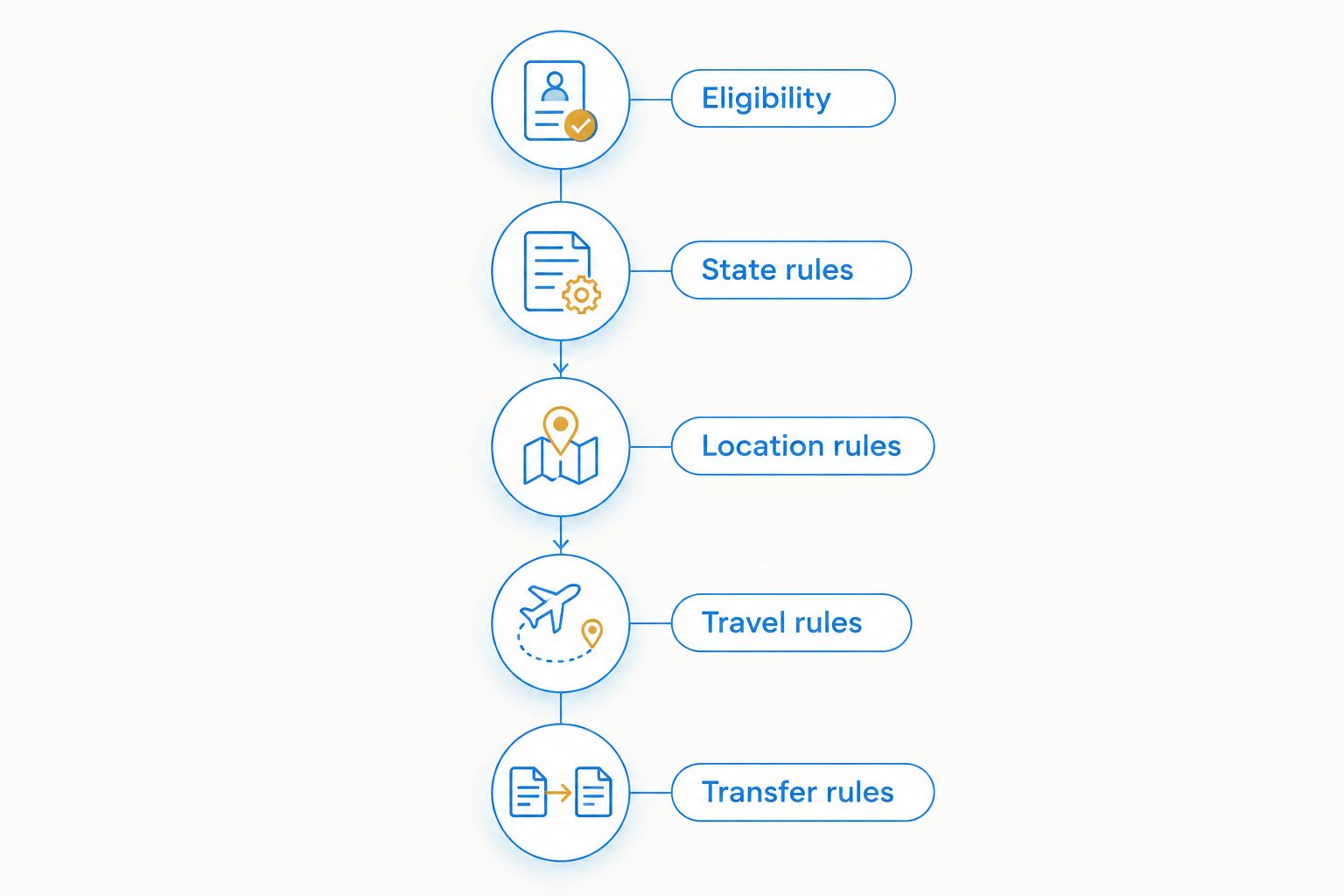
A practical verification sequence for 2026
Use the same sequence whenever you evaluate a carry destination. Starting with your own eligibility prevents a broad state label from becoming the basis for an incorrect personal conclusion.
- Eligibility: Confirm that you can lawfully possess the firearm and meet the state's requirements for the carry method involved.
- State rules: Read the destination's current concealed-carry provisions, including any conditions attached to permitless carry.
- Location rules: Check restrictions for the specific property, building, or activity.
- Travel rules: Review every jurisdiction on the route and any permit recognition you intend to rely on.
- Transfer rules: If the trip includes a sale, gift, or other transfer, review that transaction separately.
This sequence separates the questions that a statewide benchmark cannot answer. Record the official source and the date you checked it, especially when preparing for travel rather than reading for general background.
Read the statute and the official explanation together
An official carry guide helps you find the relevant rule; the statute supplies the controlling text. Read definitions and exceptions as well as the main provision, because a short summary cannot reproduce every condition.
For example, Florida's permitless concealed-carry provisions appear in Florida Statutes section 790.013, while South Carolina's carrying provisions appear in section 16-23-20. These are starting points for state-specific research, not interchangeable rules or permission for a particular person to carry.
If an official summary and a third-party map differ, do not resolve the conflict by choosing the more permissive result. Check the operative statute, effective provisions, and current official guidance. Obtain qualified legal advice when the answer depends on your individual circumstances.
Carry permission is not transfer permission
A lawful carry situation does not automatically make a proposed firearm transaction lawful. The buyer's and seller's residency, eligibility, firearm type, and applicable federal and state requirements determine the transfer process.
Federal law generally requires dealer involvement for transfers between private residents of different states, subject to statutory exceptions. The federal framework appears in 18 U.S.C. section 922; it is separate from state permitless carry classifications. A carry permit or a bill of sale does not replace required dealer involvement.
A written transaction record also serves a different purpose from legal authorization. Recording a sale documents the transaction; it does not cure a prohibited transfer or establish that the buyer can carry the firearm in a particular location.
Keep the transaction file separate from your carry-law research. Guntransfer supports private firearm transfer compliance, while your carry decision still requires the destination-specific checks described above. For route planning, compare concealed carry reciprocity maps and tools without treating a map as the controlling legal source.
FAQ
How many permitless carry states are there in 2026?
This 2026 comparison includes 29 permitless carry states, representing 58% of the 50 states. The classification concerns concealed-handgun carry by eligible people, not unrestricted carry by everyone.
Which region has the most permitless carry states?
The South has the most, with 12 permitless carry states under U.S. Census regional definitions. The Midwest has 8, the West has 6, and the Northeast has 3; these totals do not rank the restrictions within each state.
Does permitless carry mean anyone can carry a handgun?
No. Permitless carry removes a state carry-permit requirement for people who meet the applicable conditions. Possession prohibitions, eligibility requirements, and location restrictions still apply.
Is permitless carry the same as open carry?
No. Permitless concealed carry and open carry concern different ways of carrying a firearm. Check each rule separately rather than assuming a state's concealed-carry classification answers both questions.
Do I still need a concealed carry permit for travel?
The answer depends on your destinations and whether they recognize your particular permit. A permit can remain useful when traveling outside a permitless carry state, but recognition and restrictions require destination-specific checks.
Does permitless carry remove background checks for private sales?
No. A permitless carry classification does not determine private-sale background-check requirements. Review the transaction under the applicable federal and state transfer rules separately.
Does Guntransfer determine where I can carry a firearm?
Guntransfer provides private firearm transfer compliance services covering background checks, bills of sale, and ownership records across 37 states. That service does not substitute for checking your eligibility, destination carry rules, or prohibited locations.
One last thing
A state can appear on this 2026 permitless carry list while a specific location inside it remains off-limits. That is why the last check before a trip should be the destination property, not another national map.
Save a dated copy of the official guidance you consulted alongside your travel notes. Keep ownership and transaction records separately: they answer what happened during a transfer, not where you can carry afterward. This article provides general legal information, not individualized legal advice.