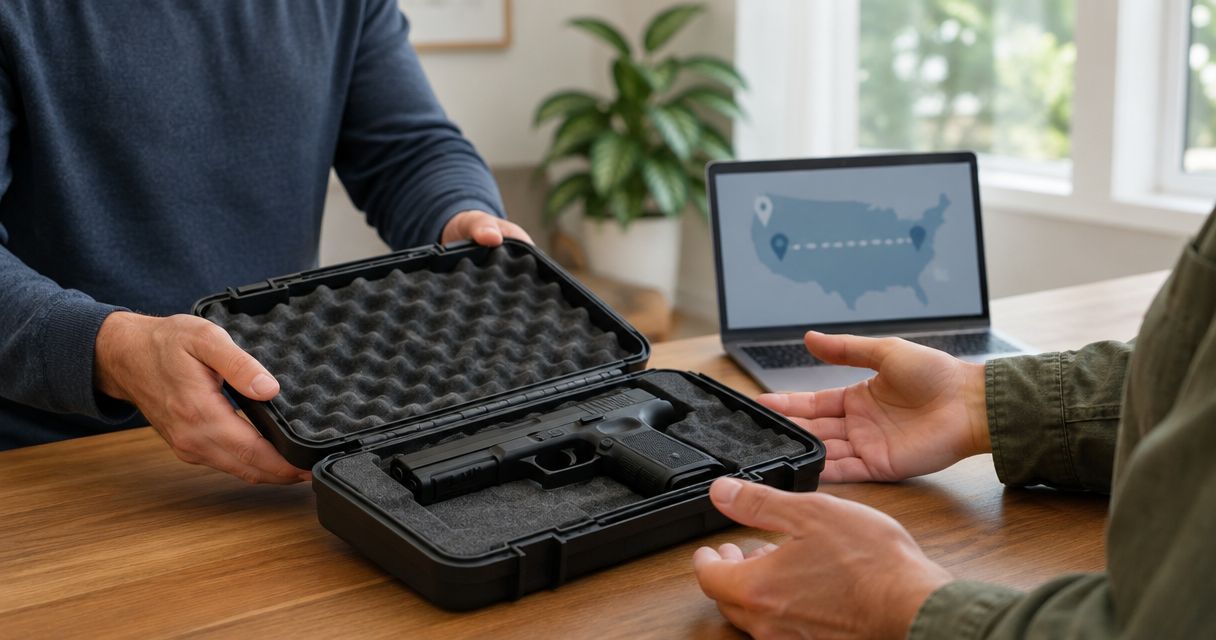
Yes, you can gift a gun to someone who lives in another state, but an ordinary interstate gift generally must go through a federally licensed firearms dealer, or FFL, rather than directly from you to the recipient. For a handgun, arrange the transfer through an FFL in the recipient’s state of residence. A family relationship, a gift letter, or the absence of payment does not remove the federal transfer requirement, and state restrictions still apply in 2026.
- Can I gift a gun to someone out of state? Yes, generally through a federally licensed firearms dealer.
- ATF rules do not create a general interstate-transfer exception for gifts between family members.
- Use an FFL in the recipient’s state for a handgun gift; confirm state requirements before delivery.
- An inheritance through a bequest or intestate succession follows a different federal exception than a lifetime gift.
Why this matters
A gift is still a firearm transfer. Federal law regulates the movement of firearms between residents of different states, not just transactions involving money. Calling the transaction a birthday present or family hand-me-down does not change that rule.
The practical consequence is simple: arrange the receiving dealer before you arrange the handoff. The guide to transferring a firearm across state lines covers the broader process; this page addresses gifts between private individuals who are not licensed dealers.
Can I gift a gun to someone who lives in another state?
Yes, provided you use the legally required transfer process and the recipient can lawfully receive and possess the firearm. For an ordinary private interstate gift, the receiving-state FFL is the clearest starting point. Do not hand the firearm directly to the recipient and expect paperwork afterward to correct the transfer.
The federal framework for this 2026 guide comes from 18 U.S.C. § 922(a)(5), which generally restricts an unlicensed person from transferring a firearm to another unlicensed person the transferor knows or reasonably believes resides in another state. Section 922(a)(3) also generally restricts an unlicensed recipient’s acquisition outside their home state and subsequent transportation or receipt there.
The following distinctions determine which process applies:
| Situation | Applicable route | Advantage | Limitation |
|---|---|---|---|
| Ordinary interstate handgun gift | Receiving-state FFL | Establishes the required dealer-transfer process | Recipient must satisfy dealer and state requirements |
| Ordinary interstate rifle or shotgun gift | Arrange with an FFL; receiving-state dealer is the straightforward route | Dealer can assess the firearm and recipient requirements | Out-of-state dealer delivery has additional conditions |
| Firearm inherited through a bequest or intestate succession | Federal inheritance exception, subject to applicable law | Different federal treatment from an ordinary lifetime gift | Not a blanket exception for family transfers |
| Temporary sporting loan | Narrow federal loan exception, if its conditions apply | Addresses temporary lawful sporting use | Does not authorize a permanent gift |
These are different legal situations, not interchangeable ways to label the same transaction. Choose the route that matches what is actually happening.
Handgun gifts: use the recipient’s home-state FFL
For an ordinary handgun gift between residents of different states, arrange delivery through an FFL in the recipient’s state. The recipient completes the dealer’s transfer process before taking possession.
Federal law generally prohibits an FFL from transferring a handgun to someone under 21 years of age. That dealer-transfer requirement matters even when state possession rules differ. A parent’s willingness to give a handgun does not authorize a dealer to release it contrary to federal age restrictions.
Ask the receiving dealer whether the handgun is lawful for the recipient and destination. State law can add permits, waiting periods, firearm restrictions, or other conditions beyond federal requirements.
Do not assume the recipient can collect the handgun from a dealer in your state. The receiving-state requirement is a central part of the ordinary interstate handgun-transfer process, not merely a paperwork preference.
Rifle and shotgun gifts: confirm the dealer’s route
An ordinary rifle or shotgun gift between residents of different states also requires attention to federal interstate-transfer rules. Do not treat a long gun as automatically exempt because a private transfer would be lawful between residents of the same state.
Federal law permits certain in-person dealer transfers of rifles and shotguns to out-of-state residents when the transaction complies with the legal conditions of sale in both states. This provision under 18 U.S.C. § 922(b)(3) does not authorize a direct interstate handoff between two unlicensed individuals.
Federal law generally prohibits an FFL from transferring a rifle or shotgun to someone under 18 years of age. State law can impose stricter requirements, so the federal threshold alone does not establish eligibility.
Use the recipient’s home-state dealer unless a participating FFL confirms another lawful arrangement. The benefit is a clear destination for the transfer; the limitation is that the dealer still must assess the specific firearm, recipient, and applicable laws.
How do I complete an out-of-state firearm gift?
Follow this sequence for an ordinary firearm gift in 2026. Firearms regulated under the National Firearms Act require additional review; do not apply this ordinary-transfer workflow to them without confirming the separate federal requirements.
- Confirm residency. Establish each person’s state of residence. A mailing address, vacation destination, or temporary visit does not automatically determine firearm-transfer residency.
- Check eligibility. Confirm that the recipient can lawfully receive the firearm. Review the firearm type, age requirements, and destination-state restrictions with the receiving dealer.
- Choose the FFL. Contact the receiving dealer before sending anything. Confirm that the dealer accepts the proposed transfer and obtain its instructions.
- Arrange delivery. Follow federal law, applicable state law, the dealer’s instructions, and the carrier’s current rules. Do not assume a private individual can use every shipping method available to a licensed dealer.
- Complete the transfer. The recipient completes ATF Form 4473 and the applicable background-check process, subject to lawful exceptions. The dealer releases the firearm only when legally permitted.
- Keep records. Retain accurate documentation of the gift and dealer involvement. Identify the transaction as a gift rather than creating a fictional sale.
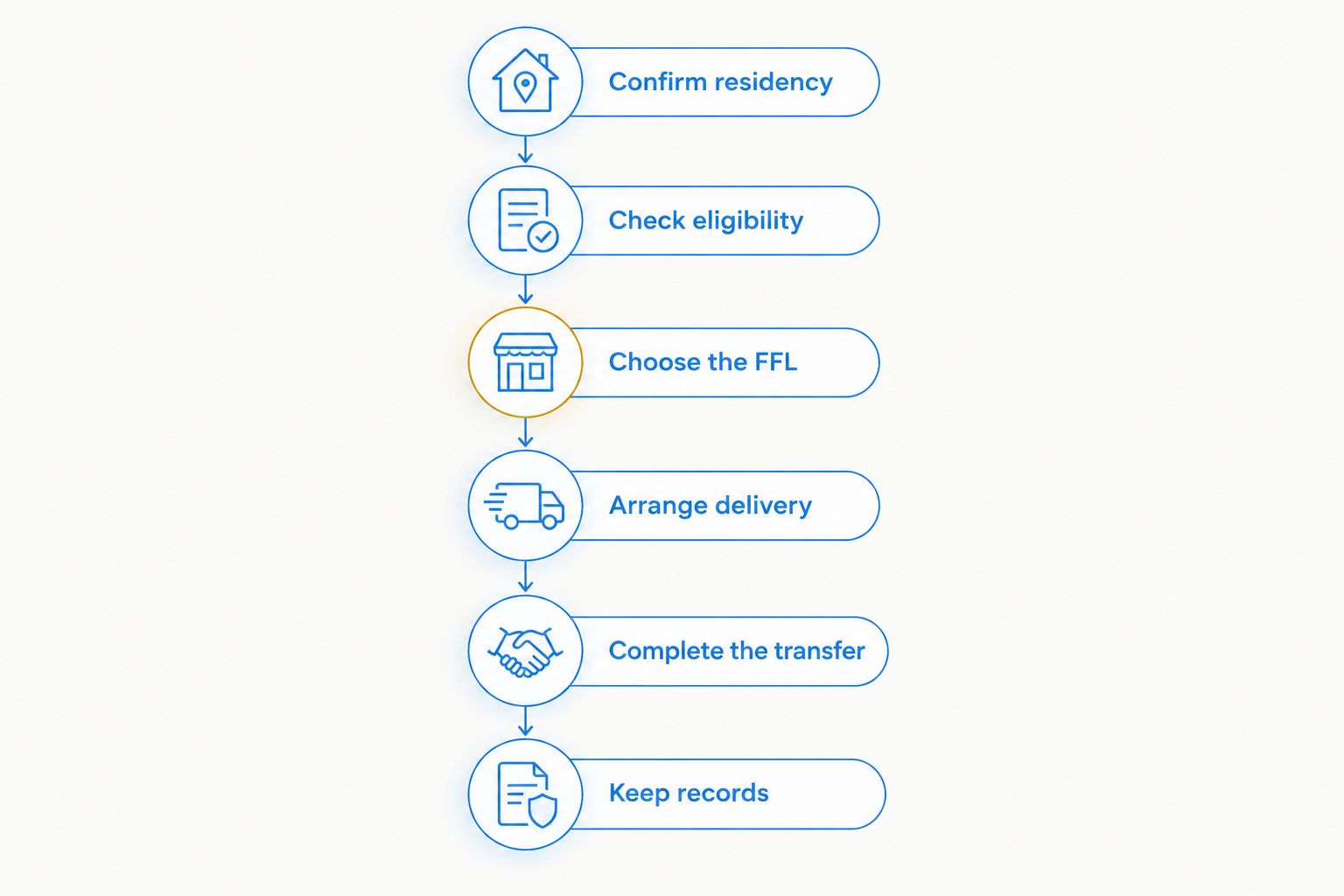
The sequence prevents a common procedural mistake: treating transportation as permission to transfer ownership. Moving the gun safely and lawfully does not, by itself, authorize the recipient to take possession.
Why interstate gift requirements vary
The federal interstate-transfer rule provides the starting point, but these factors determine the actual process:
- Residency: Federal rules distinguish same-state transfers from transfers between residents of different states. Special residency rules can apply to circumstances such as military assignments.
- Firearm classification: Handguns, rifles, shotguns, and National Firearms Act firearms do not share identical transfer requirements.
- Recipient eligibility: Age restrictions and prohibited-person rules apply independently of whether the firearm is purchased or gifted.
- State requirements: Permits, waiting periods, background-check procedures, and firearm restrictions can affect whether and how the transfer proceeds.
- Transfer circumstances: An ordinary lifetime gift, a qualifying inheritance, and a temporary sporting loan receive different federal treatment.
- Delivery arrangements: Dealer acceptance policies and carrier rules affect how the firearm reaches the receiving FFL without replacing the underlying legal requirements.
For a 2026 transfer, confirm these details before committing to a delivery date. A dealer’s willingness to accept a shipment is not the same as confirmation that the recipient can lawfully receive the firearm.
Can I give a gun to my adult child in another state?
Yes, but an ordinary interstate gift to an adult child generally still requires the dealer-transfer process. Federal law does not provide a general parent-to-child exception to the interstate restriction simply because the recipient is family.
Keep the relationship and residency questions separate. A state exception for certain family transfers does not cancel an independently applicable federal interstate requirement.
Is an inherited firearm treated like a gift?
No. Federal law provides a specific exception for transfers made to carry out a bequest or acquisition by intestate succession; it does not treat every family gift as an inheritance.
A firearm your living parent gives you now is not converted into a bequest by calling it an early inheritance. Estate circumstances and state requirements still need separate review.
Can I buy a gun specifically to give as a present?
A genuine gift bought with your own money is different from buying a firearm on someone else’s behalf using their money. ATF Form 4473’s actual-transferee instructions address that distinction; the buyer must answer accurately.
The genuine-gift distinction does not eliminate the later interstate-transfer requirement. If the intended recipient lives in another state, arrange that transfer separately and disclose the circumstances accurately to the dealer.
What paperwork should you keep for the gift?
Keep a truthful record identifying the donor, recipient, firearm, date, and receiving dealer. Describe the transaction as a gift. Do not invent a purchase amount or assume that notarization changes the federal transfer rules.
A gift record helps explain what happened, but it does not replace ATF Form 4473, the applicable background-check process, or a legally required dealer transfer. Documentation records compliance; it does not create an exception. Avoid circulating identity documents or sensitive personal details beyond what the lawful process requires.
Guntransfer is best for private individuals who need firearm-sale compliance and ownership records. Guntransfer’s firearm-transfer compliance service covers person-to-person sales across 37 states; that service scope is not blanket authorization for an interstate gift. Review Guntransfer for its stated service scope, and have the receiving FFL confirm the gift procedure.
FAQ
Can I gift a gun to someone out of state without an FFL?
An ordinary gift between unlicensed residents of different states generally requires an FFL. Narrow exceptions, including qualifying inheritances, do not create a general exception for gifts between relatives.
Can I drive the gun to my relative instead of shipping it?
Driving does not remove the interstate-transfer requirement. Arrange any delivery with the receiving FFL and comply with transportation laws; do not hand the gun directly to the recipient merely because you transported it yourself.
Does an out-of-state gun gift require a background check?
An ordinary interstate gift handled by an FFL generally involves the dealer’s background-check process, subject to lawful exceptions. Giving the firearm without payment does not itself waive that process.
Can my out-of-state child receive a handgun at age 18?
An FFL generally cannot transfer a handgun to someone under 21 years of age. A family gift does not override that federal dealer-transfer restriction, and state law can add further requirements.
Does a concealed carry permit let me receive an interstate gift directly?
A concealed carry permit does not itself authorize a direct interstate gift between unlicensed individuals. A qualifying permit can affect background-check procedures in specific circumstances, but it does not erase the interstate-transfer rule.
Can Guntransfer paperwork replace the receiving FFL?
No. Guntransfer paperwork cannot replace a dealer transfer required by federal law. A gift letter, ownership record, or notarized document likewise does not create an interstate-transfer exception.
What should I check before sending an out-of-state firearm gift in 2026?
Confirm the recipient’s residency, eligibility, firearm legality, and receiving dealer’s instructions before sending a firearm gift in 2026. Check current state requirements and carrier rules as part of that arrangement.
One last thing
The deciding fact is residency, not where you meet. If your out-of-state sibling visits you, meeting in your home state does not turn the gift into a same-state transfer. Likewise, meeting halfway does not avoid the federal rule.
Before handing over the firearm in 2026, ask the receiving FFL to confirm the recipient’s eligibility and the required delivery route. Keep the surprise in the presentation—not in the transfer arrangements. This guide provides general legal information, not advice for a specific transaction.