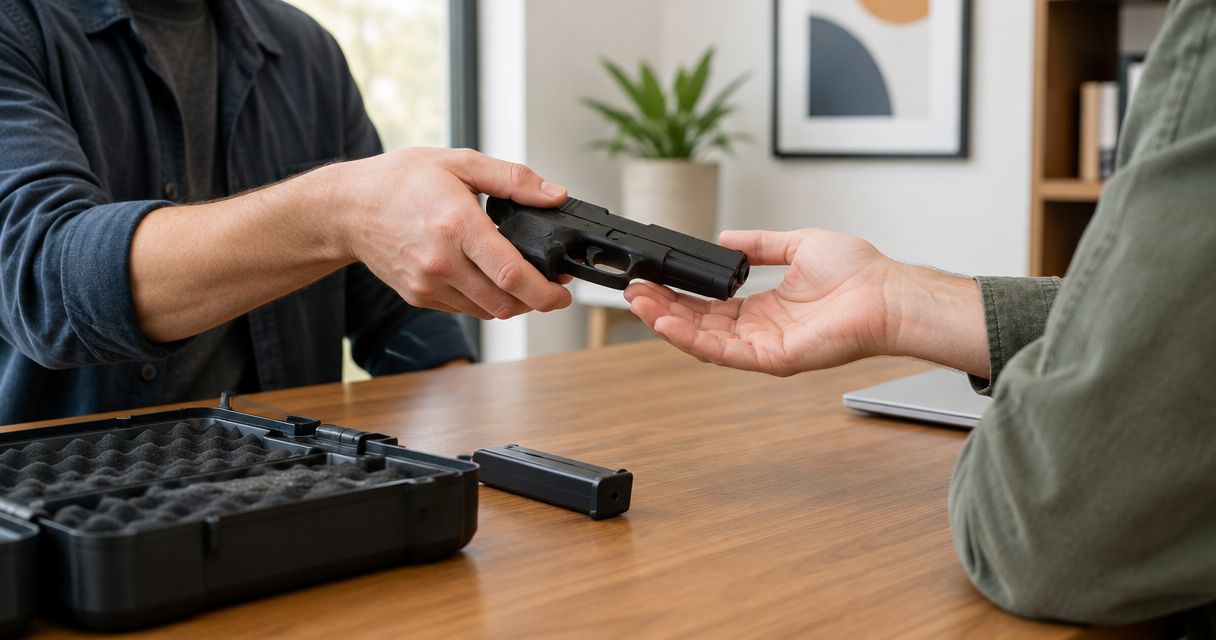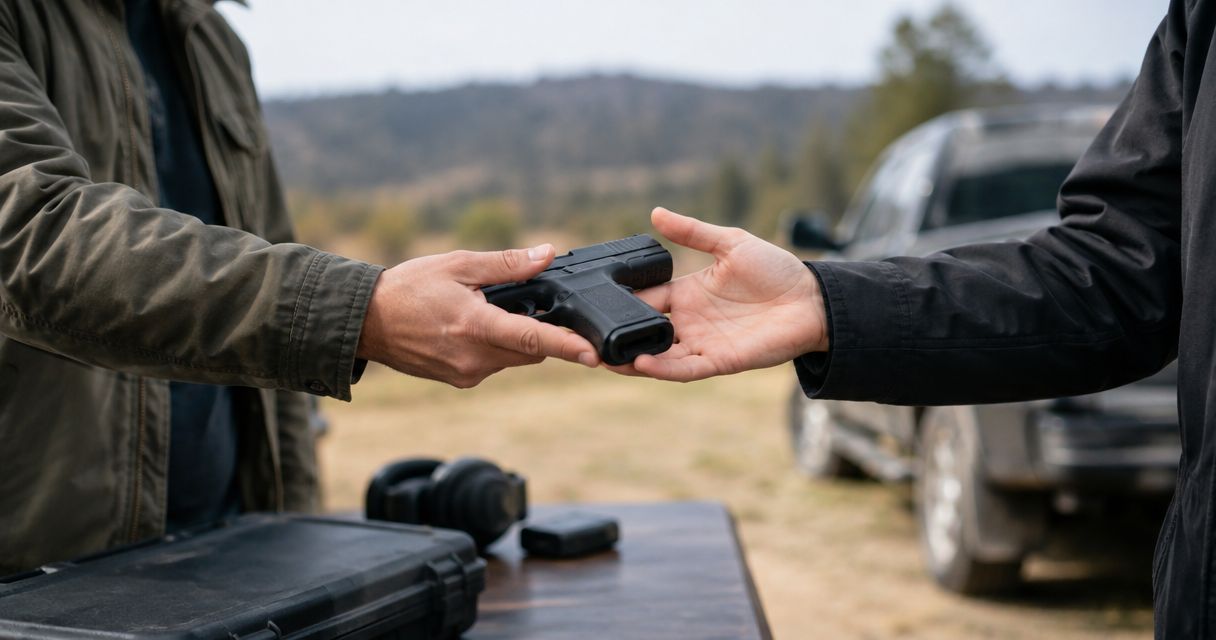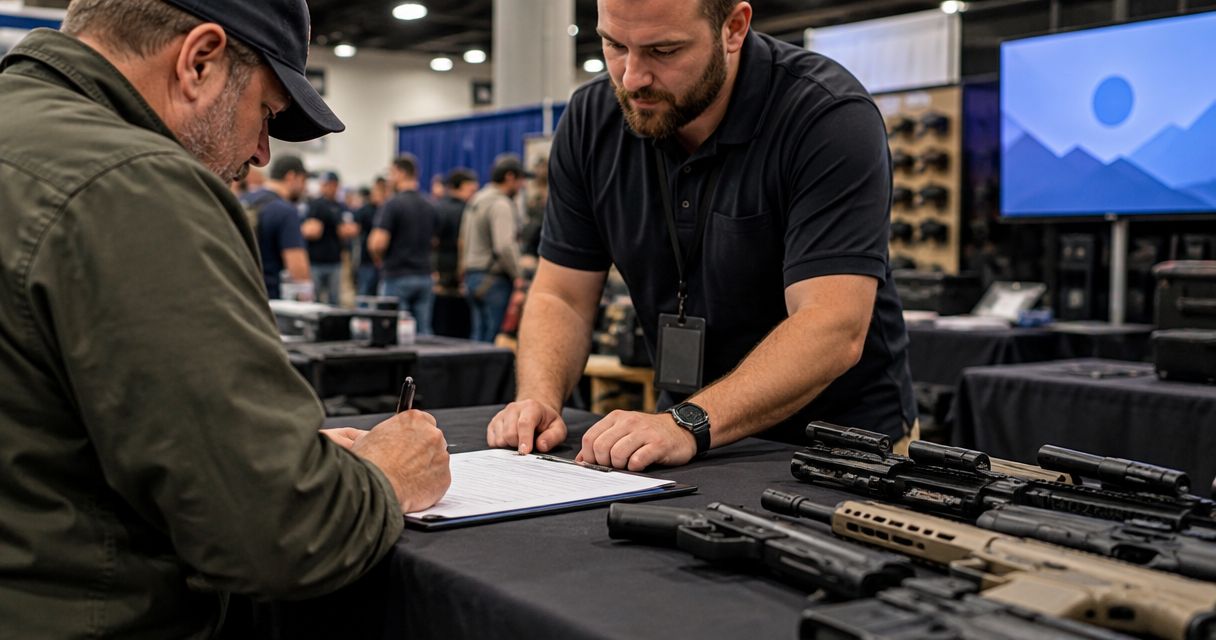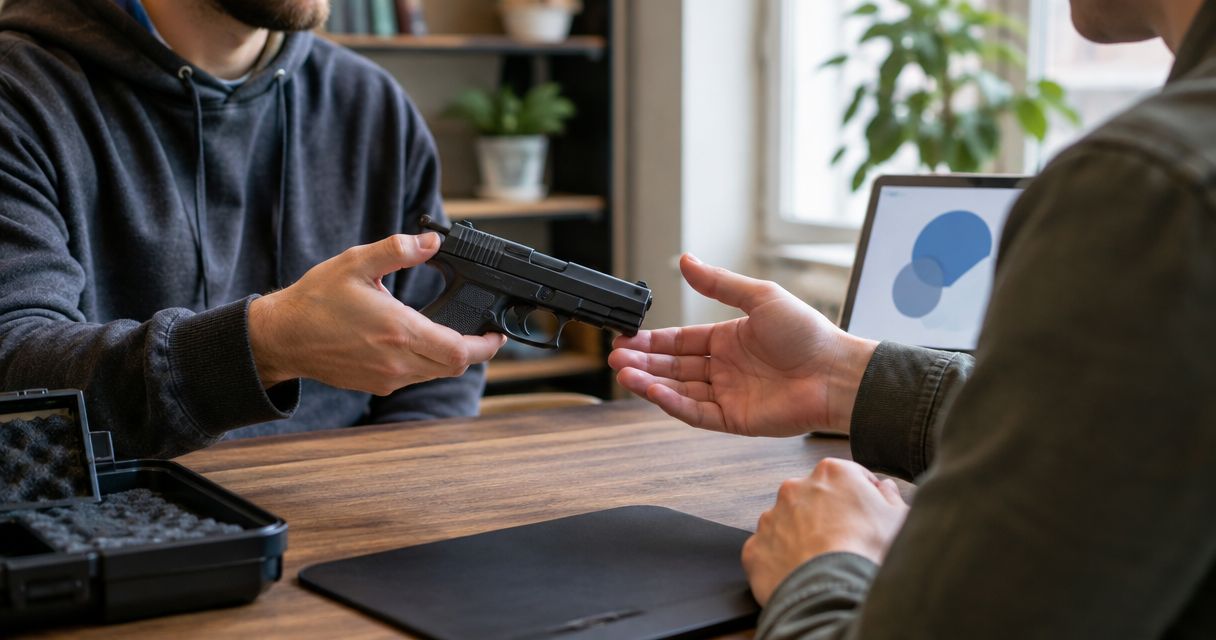
Yes, you can legally sell a gun to a stranger you met online if the buyer is eligible, the firearm is lawful to transfer, and you follow federal, state, and applicable local requirements. In 2026, meeting online does not create a separate legal exemption: the parties’ residency, any required dealer involvement, and the seller’s knowledge about the buyer determine whether the transfer is lawful.
- Can I sell a gun privately? Yes, but buyer eligibility, residency, and state transfer requirements control the answer.
- Federal law generally prohibits direct firearm transfers between unlicensed residents of different states.
- A bill of sale documents a transaction; it does not replace a required background check or dealer transfer.
- Guntransfer supports private firearm transfer compliance; confirm the lawful transfer route before handing over the firearm.
Why this matters
Finding a buyer online and legally transferring possession are separate events. A listing, payment agreement, or message exchange does not establish that the buyer can receive the firearm. A stranger’s assurance that everything is legal is not a substitute for checking the applicable requirements.
Start with the rules, not the meeting location. The guide to how to legally sell a gun privately explains the broader compliance process; this page addresses what changes when your buyer is someone you found online.
This 2026 guide addresses ordinary private sales by unlicensed individuals. National Firearms Act firearms, estate distributions, and other specialized transfers require separate analysis. It provides general legal information, not advice about a particular transaction.
Is it legal to sell a gun to a stranger you met online?
Yes. Being strangers does not, by itself, make a private firearm sale illegal. Federal law instead focuses on prohibited recipients, interstate transfers, licensing requirements, and other restrictions. State law can impose additional conditions on an otherwise permissible same-state sale.
Under 18 U.S.C. § 922(d), you cannot transfer a firearm to someone you know or have reasonable cause to believe falls within a prohibited category. Under § 922(a)(5), an unlicensed person generally cannot transfer a firearm directly to an unlicensed resident of another state. These federal restrictions apply regardless of where the parties first communicated.
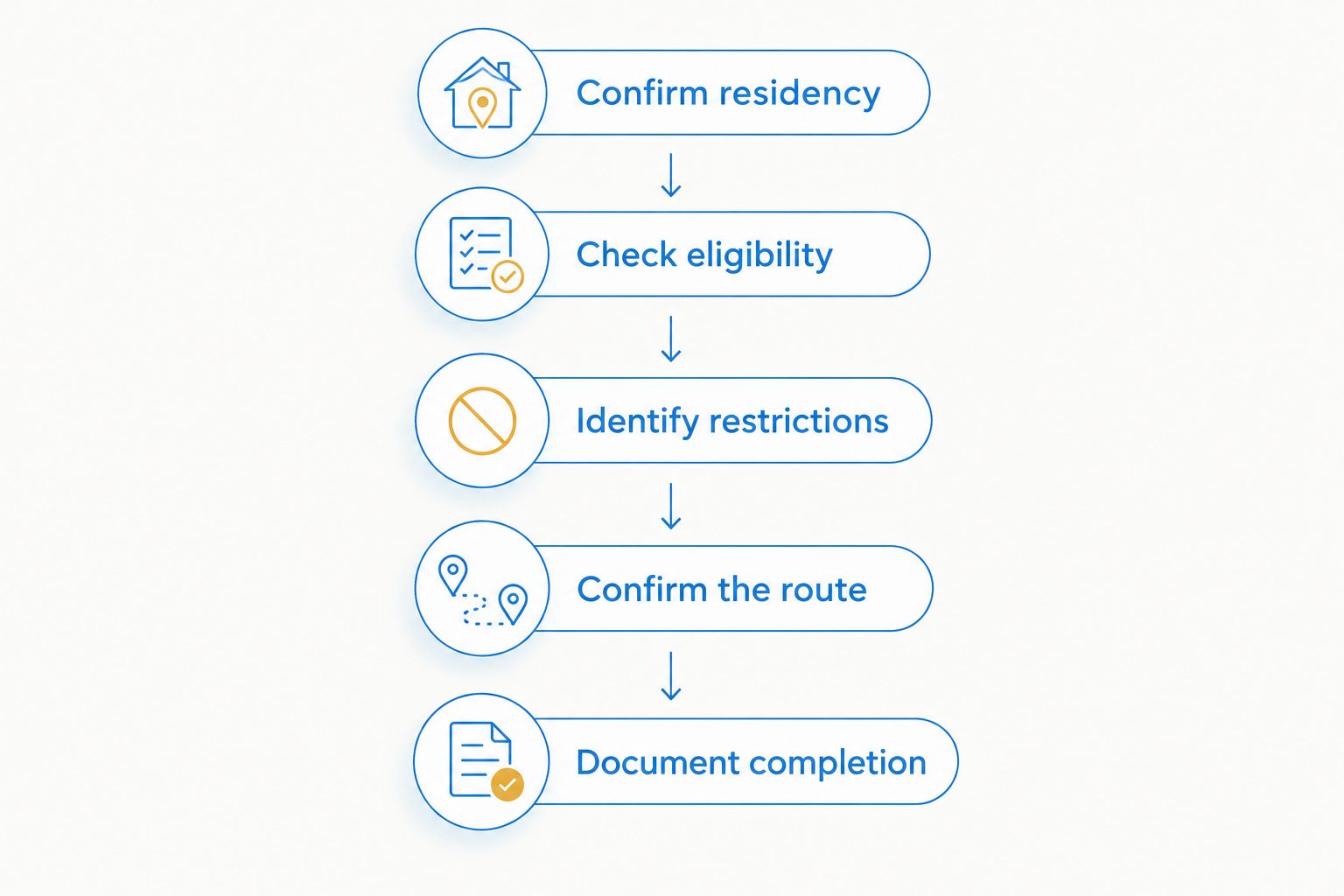
Use this sequence before deciding whether a proposed sale can proceed:
- Confirm residency. Establish which state each party legally resides in. A nearby address or convenient meeting point does not settle residency.
- Check eligibility. Determine the applicable age requirements and whether any facts indicate that the buyer is prohibited from possessing firearms.
- Identify restrictions. Check the firearm’s legal status and the transfer rules in the relevant jurisdiction.
- Confirm the route. Determine whether a licensed dealer, background check, permit, waiting period, or other procedure is required.
- Document completion. Keep the records appropriate to the transaction, without treating paperwork as permission to bypass a legal requirement.
Do not hand over the firearm while an essential legal question remains unresolved. Ask a receiving dealer or a qualified attorney to address that question first.
Which situation describes your sale?
The distinction is not online versus offline. It is whether the parties and firearm qualify for the proposed transfer route.
| Situation | Best for | Legal condition | Limitation |
|---|---|---|---|
| Same-state private transfer | Eligible residents where direct private transfers are lawful | Federal eligibility rules and all applicable state requirements must be satisfied | Shared residency does not eliminate state background-check or dealer requirements |
| Dealer-assisted transfer | Sales requiring a dealer or parties seeking dealer involvement | The dealer must follow the rules governing that transfer | Dealer involvement does not make a prohibited buyer or firearm lawful |
| Interstate private sale through a dealer | Private sales involving residents of different states | A lawful dealer-mediated transfer route is generally required | Meeting in the seller’s state does not authorize a direct private handoff |
These are legal routes, not interchangeable shortcuts. Confirm which route applies before agreeing that the buyer can take possession.
Same-state buyers: direct transfers depend on state law
Two unlicensed residents of the same state are not automatically required by federal law to use a dealer for every ordinary private firearm sale. However, federal prohibitions still apply, and state law can require a background check, dealer processing, permits, records, or a waiting period.
Same-state residency is a starting point, not a complete legal answer. Check the requirements for the particular firearm and location in 2026 rather than relying on another seller’s experience. A rule about rifles does not necessarily resolve a question about handguns.
Confirm age requirements separately. Federal law generally prohibits licensed dealers from transferring rifles or shotguns to anyone under 18 years old, or other firearms to anyone under 21 years old. Those dealer thresholds do not establish a universal age rule for every private transaction; state restrictions and federal juvenile handgun provisions also matter.
A carry permit does not, by itself, prove that a private sale is exempt from all transfer requirements. Any permit-based exception must actually apply to the transaction under the governing law.
Out-of-state buyers: a private handoff is generally prohibited
Federal law generally bars a direct transfer between unlicensed people who reside in different states. Driving across a border, meeting halfway, or arranging a purchase online does not remove that restriction. Section 922(a)(5) addresses the transfer, while § 922(a)(3) also restricts an unlicensed buyer’s acquisition outside their state of residence.
For an ordinary interstate private handgun sale, the buyer generally must receive the handgun through a licensed dealer in the buyer’s state of residence. Licensed dealers have different federal rules for certain over-the-counter rifle and shotgun transfers, subject to the laws of both states. That dealer exception does not authorize an interstate private handoff.
Do not confuse the location of the meeting with the buyer’s legal residency. A buyer visiting your state remains an out-of-state buyer unless the applicable federal residency rules establish otherwise. Military assignments and other residency situations require their own assessment.
Contact the proposed receiving dealer before committing to a transfer arrangement. The dealer must confirm that the transaction is lawful and that it will accept the firearm for processing.
Why the legal requirements vary
The answer to “can I sell a gun privately” changes with the facts, not with how convincing a buyer sounds. These factors determine the applicable requirements:
- Residency: Same-state and interstate sales follow different federal transfer rules. State boundaries matter even when the buyer lives nearby.
- Buyer eligibility: Prohibited-person restrictions apply to private sellers as well as licensed dealers. A background-check requirement is a separate question from whether the recipient is legally eligible.
- Firearm classification: Handguns, rifles, shotguns, and specially regulated firearms do not all follow identical rules.
- State and local requirements: Applicable laws can add permits, waiting periods, dealer involvement, or documentation requirements.
- Seller activity: Selling from a personal collection differs from engaging in the business of dealing in firearms. Calling transactions private does not resolve a federal licensing obligation.
For a 2026 sale, verify the rules that apply when the transfer occurs. An older forum answer or saved screenshot does not establish current law.
What does a background check actually establish?
A legally required background check is part of a prescribed transfer process. It is not the same thing as searching a buyer’s name online, reviewing a social profile, or obtaining a signed statement that the buyer has no criminal record.
An ordinary unlicensed seller cannot directly run an FBI National Instant Criminal Background Check System check in the same way a licensed dealer does. Where dealer processing is required, the dealer follows the applicable background-check procedure and transfer requirements. A private screening report is not automatically an authorized substitute.
A check also does not answer every legal question. Residency, firearm restrictions, permits, and waiting periods can remain relevant even when a buyer is not prohibited.
Guntransfer is best suited to private sellers seeking firearm transfer compliance support and ownership records. Guntransfer provides an online service covering background checks, bills of sale, and ownership records across 37 states. Service coverage does not establish that every firearm or proposed transaction qualifies, and an online process does not replace dealer involvement where law requires it.
What should make you stop the sale?
Stop if you know or have reasonable cause to believe the intended recipient is prohibited from receiving a firearm. Federal prohibited categories include certain criminal convictions, qualifying domestic-violence restrictions, and other disqualifying circumstances. A buyer’s willingness to sign paperwork does not cancel those restrictions.
Also pause when the proposed arrangement conflicts with the legal route you have identified. Examples include an out-of-state buyer demanding a direct handoff or someone insisting that a required dealer process can be skipped because you met online.
A person collecting a gun for someone else raises a separate question about the actual recipient and the truthfulness of required records. Do not proceed on an assumption about who the buyer really is. Resolve that issue with the dealer or legal counsel before any transfer.
You do not have to complete a sale simply because you agreed on terms. Unresolved eligibility or compliance concerns are reasons to withhold possession, not reasons to rush the paperwork.
Does a bill of sale make an online gun sale legal?
No. A bill of sale records the transaction; it does not legalize an otherwise prohibited transfer. It cannot replace a required background check, dealer transfer, permit, or waiting period.
Accurate records can identify the parties, firearm, and transfer date. Keep records securely, and follow any applicable documentation requirements. Do not collect unrelated sensitive information merely because a generic form includes a space for it.
Keep private-sale paperwork distinct from dealer records. ATF Form 4473 belongs to the dealer’s regulated transfer process; a seller-created bill of sale does not replace it. Likewise, a notarized signature does not establish that the recipient is eligible.
Does meeting at a gun show change the rules?
No. Meeting at a gun show does not erase federal or state transfer requirements. The same principle applies to a buyer found through an online listing: the communication channel does not create an exemption.
For your 2026 sale, determine the parties’ residency and the required transfer procedure before choosing a meeting place. A public setting is not legal authorization to transfer possession.
FAQ
Can I sell a gun privately to someone I do not know?
Yes, if the recipient is eligible and the transaction satisfies federal, state, and applicable local law. Being strangers does not itself prohibit the sale, but it does not excuse required checks or dealer involvement.
Is selling a gun online different from selling it in person?
Finding a buyer online does not create a separate exemption from firearm transfer laws. Residency, buyer eligibility, firearm restrictions, and the actual transfer procedure still control.
Can I meet an out-of-state buyer and hand over the gun?
Federal law generally prohibits a direct firearm transfer between unlicensed residents of different states. Meeting in the seller’s state does not remove that restriction; use a lawful dealer-mediated route.
Can a private seller run an FBI NICS check directly?
An ordinary unlicensed private seller cannot access FBI NICS directly in the same way a licensed dealer does. Where a dealer or authorized state process is required, use that process rather than a general screening report.
Does a concealed carry permit replace a background check?
A concealed carry permit does not universally replace a required background check. Any permit-based exception depends on the governing law and whether that specific permit and transaction qualify.
Does a signed bill of sale protect me if the transfer is illegal?
A signed bill of sale does not legalize a prohibited transfer or replace a required procedure. Accurate records document what happened, but legal compliance must exist independently of the paperwork.
Can I sell firearms repeatedly without a dealer license?
You cannot avoid a federal dealer licensing requirement by describing business activity as private sales. Whether you are engaged in the business depends on the applicable legal standard and the facts, not a universal safe number of sales.
One last thing
A completed document is not the same as a completed legal transfer. Before possession changes hands, confirm that every required condition has been satisfied—not merely that the buyer has paid or signed.
Keep the roles separate: the law determines eligibility and procedure, the dealer performs any required dealer processing, and your records document the transaction. If those pieces do not agree, stop before the handoff.