No—federal law does not impose an automatic 10-business-day waiting period on every firearm buyer under 21; it provides an enhanced background-check process that can extend the review to 10 business days when further investigation is necessary. An earlier approval can allow an earlier transfer, but state waiting periods, age restrictions, and the dealer’s release policy still apply.
- The 10 day waiting period for firearms under 21 is an enhanced background-check window, not an automatic federal hold.
- FBI NICS can extend qualifying under-21 reviews to 10 business days total, not 10 additional days.
- A NICS approval does not override state waiting periods or minimum purchase ages.
- Guntransfer supports private firearm transfer compliance; its service does not replace legally required dealer involvement.
Is there a 10-day waiting period for firearm buyers under 21?
There is no blanket federal requirement that every buyer under 21 wait 10 days. Under 18 U.S.C. § 922(t)(1)(C), the enhanced review can extend the ordinary federal background-check window when NICS identifies cause to investigate further for a potentially disqualifying juvenile record.
For your 2026 purchase, separate the background-check timeline from eligibility to buy the firearm. Start with the minimum age to buy a gun by state, then confirm the requirements with the transferring dealer.
| Situation | Federal timing rule | What it means for pickup |
|---|---|---|
| NICS issues a proceed response | No automatic federal 10-day hold | Transfer can occur once all other legal requirements are satisfied |
| Under-21 review needs further investigation | Review can extend to 10 business days total | Ask the dealer for the applicable transfer date |
| Applicable federal period expires without a denial | Federal law can permit transfer if its conditions are met | The dealer is not required to release the firearm |
| State law imposes a separate waiting period | State timing applies independently | Federal clearance does not shorten the state requirement |
The statute, FBI NICS guidance on under-21 checks, and the transferring dealer’s transaction status are the relevant references. A calendar reminder or a seller’s estimate is not authorization to take possession.
Why this matters
A background-check delay and a mandatory waiting period are different legal requirements. Confusing them leads buyers to assume either that approval guarantees immediate pickup or that every purchase requires the full review window.
For a 2026 transaction, ask the dealer two separate questions: Has my background check cleared, and have all other transfer requirements been satisfied? You need both answers before arranging pickup. Neither answer replaces the other.
The distinction also matters in a private sale. An agreement between buyer and seller does not remove a dealer requirement, change a minimum purchase age, or shorten an applicable waiting period.
Buyers aged 18–20: enhanced background-check review
The federal enhanced review applies to prospective firearm transferees under 21 who undergo the relevant NICS check. It includes additional inquiries involving potentially disqualifying juvenile records, including contacts with designated state and local authorities.
Under the statutory process, NICS has an initial 3-business-day window. If NICS identifies cause to investigate further for a potentially disqualifying juvenile record, it can extend the review to 10 business days from the initial contact.
The extended window is 10 business days total—not 3 business days plus another 10. It is also not a requirement to keep an approved buyer waiting until the final day.
The benefit of this distinction is practical: an early proceed response can resolve the federal check before the extended window ends. The limitation is equally important: a proceed response does not resolve unrelated state requirements or authorize a purchase that the buyer’s age prohibits.
Business days are not calendar days
For this federal provision, business days are days on which state offices are open. Do not substitute a simple count of calendar days or assume that a store’s opening hours determine the federal calculation.
Ask the dealer to confirm the applicable date associated with your transaction. Weekends, holidays, and the relevant office schedule affect the calculation; a generic online countdown does not establish your lawful pickup date.
Buyers aged 21 and older: no under-21 extension
The special under-21 investigation provision does not apply to a buyer who is 21 or older. That does not mean every background check produces an immediate answer or that every approved buyer can leave with a firearm immediately.
The ordinary federal NICS process still applies where required. State waiting periods, permit requirements, and dealer release policies remain separate considerations.
For buyers comparing experiences in 2026, another customer’s same-day approval is not a reliable forecast. Age determines whether this particular enhanced-review provision applies; the individual transaction still determines the response and applicable release conditions.
Handgun purchases: the dealer minimum is 21
Under 18 U.S.C. § 922(b)(1), a federally licensed dealer generally cannot sell or deliver a handgun to someone under 21. The federal dealer minimum for rifles and shotguns is generally 18, subject to other applicable restrictions.
Waiting 10 business days does not make an otherwise prohibited handgun transfer lawful. The enhanced background-check timeline and the minimum purchase age answer different questions.
The same federal dealer age provision generally prevents a dealer from transferring a firearm classified as an “other” firearm, such as a bare receiver, to someone under 21. Do not assume every firearm that is not a completed handgun follows the rifle-and-shotgun age rule.
State law can impose stricter age requirements. Confirm the firearm’s classification and the buyer’s eligibility before paying or arranging delivery to a dealer.
Why the pickup date varies
Your 2026 pickup date depends on several separate conditions, not just your age:
- NICS response: A proceed, delay, or denial changes what the dealer can do next. A delay is not itself a denial.
- Further investigation: The under-21 extension depends on the statutory investigation process, not simply on a buyer being younger than 21.
- Business-day calculation: The federal clock uses business days tied to state office availability, not consecutive calendar days.
- State requirements: A separate waiting period, permit, or approval requirement can prevent release after federal clearance.
- Firearm classification: A buyer eligible for a rifle transfer is not automatically eligible for a handgun or receiver transfer.
- Dealer policy: A dealer can require an affirmative proceed response rather than release after the applicable federal period expires.
These factors explain why two lawful purchases can have different timelines. Ask about your specific transaction instead of treating another buyer’s experience as the rule.
How do I confirm when I can pick up the firearm?
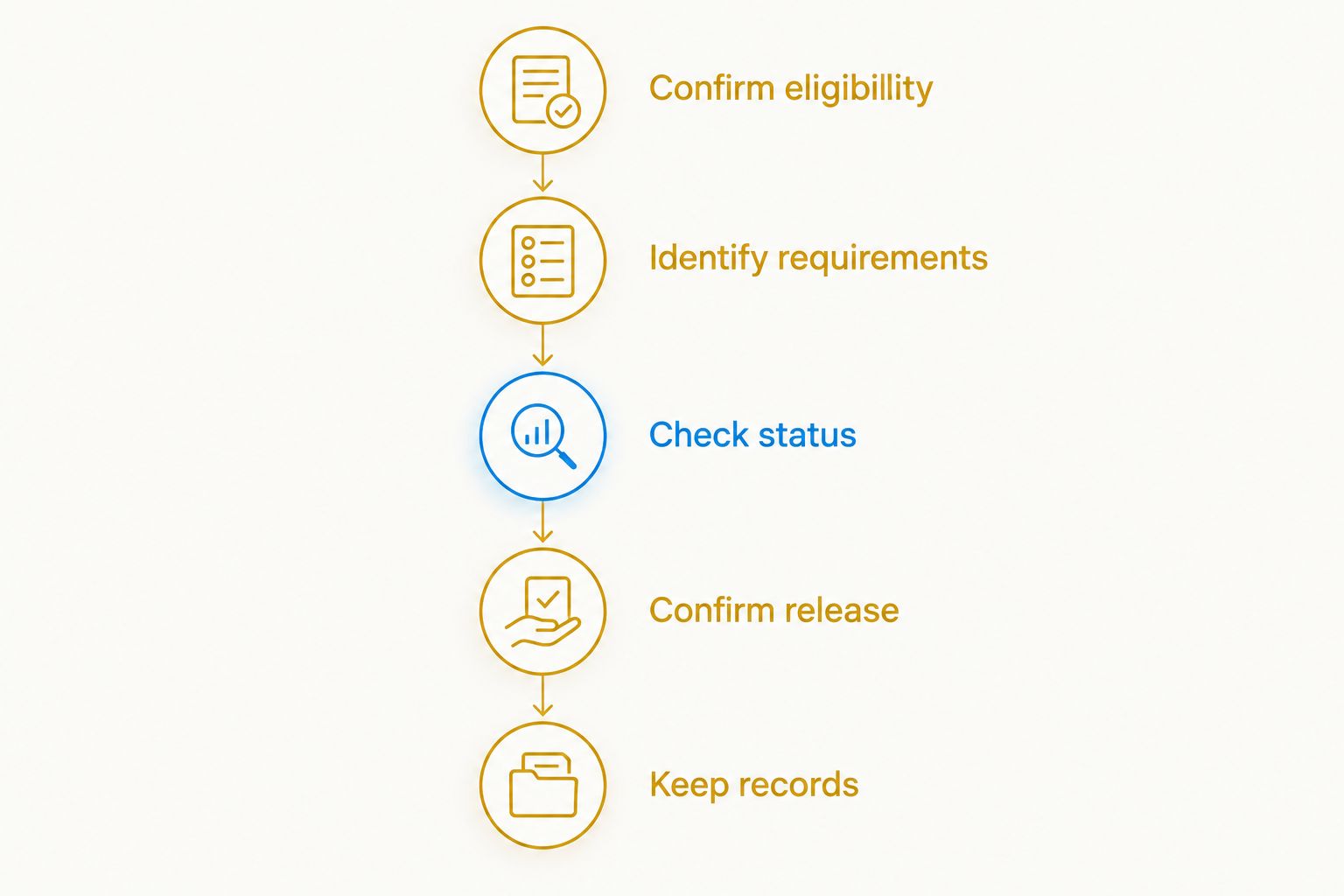
Use this sequence with the dealer handling the transfer. It keeps eligibility, background-check status, and release requirements separate.
- Confirm eligibility. Give the dealer accurate age and residency information and identify the firearm category. Ask whether the transfer is lawful before treating timing as the remaining issue.
- Identify requirements. Ask which state waiting periods, permits, or approvals apply. Confirm when any separate state clock begins.
- Check status. Ask whether the NICS response is proceed, delayed, or denied, and whether an under-21 extended review applies.
- Confirm release. Have the dealer confirm the pickup date and release policy. Do not assume an expired review window requires the dealer to transfer.
- Keep records. Retain the transaction documents provided to you and any written pickup instructions. Do not treat a bill of sale as a substitute for required clearance.
The dealer’s confirmed release decision matters more than a date you calculated yourself. If the status changes, confirm the release instructions again before traveling.
Does a private firearm sale avoid the under-21 review?
A private sale does not create an exemption from laws requiring dealer involvement or background checks. When a private transaction must go through a dealer, the applicable dealer-transfer requirements still matter.
Private sellers generally cannot directly access FBI NICS as though they were licensed dealers. A separate identity check or a signed bill of sale is not the same as a legally required NICS check.
For 2026 private transactions, identify the lawful transfer route before arranging the handoff. Interstate transfers have additional federal requirements; do not use an informal private handoff to work around a dealer restriction.
Guntransfer is best for private individuals seeking an online service for private firearm transfer compliance. Guntransfer handles background checks, bills of sale, and ownership records across 37 states; the service does not remove applicable waiting periods or replace legally required dealer involvement.
That scope is the important boundary. Online paperwork supports the transaction, but paperwork alone does not establish that a particular buyer can lawfully receive a particular firearm.
Can I pick up the firearm as soon as NICS approves me?
An approval before 10 business days can allow an earlier transfer under federal law. You must still satisfy any state waiting period, permit requirement, age restriction, and other applicable conditions.
Ask the dealer whether the approval resolves the final outstanding requirement. Do not assume a background-check notification is also a pickup appointment.
Does the dealer have to transfer after 10 business days?
Ten business days does not create a mandatory-release deadline for the dealer. Federal law can permit a transfer after the applicable period when its conditions are met, but it does not compel the dealer to proceed.
A dealer’s policy of waiting for an affirmative approval is distinct from a government-mandated waiting period. Ask about that policy before starting the transaction so the release conditions are clear.
Is a delay the same as a denial?
A delay is not a denial, including during a 10-business-day under-21 review. It means the check has not produced an immediate proceed response and additional review is underway.
A denial requires a different response. Use the official review or challenge instructions supplied through the dealer and FBI NICS; do not attempt a different transaction to evade the result.
FAQ
Is the 10 day waiting period for firearms under 21 automatic?
No. The federal under-21 process allows an extended review of up to 10 business days when further investigation is necessary; it does not impose an automatic 10-day hold on every buyer. State waiting periods remain separate.
Does the under-21 background check take 10 calendar days?
No. The extended federal period is measured in business days, defined for this provision by whether state offices are open. Ask the transferring dealer to confirm the applicable date.
Is the extended check 3 days plus 10 more days?
No. The extended period is 10 business days total from the initial NICS contact, not 10 additional business days after the initial 3-business-day window.
Can I buy a handgun from a dealer at 18 if I wait longer?
No. Federal law generally requires you to be 21 to receive a handgun from a federally licensed dealer. Waiting longer does not change the minimum age.
Can a gun store wait for approval after the federal period ends?
Yes. A dealer can decline to release a firearm without an affirmative proceed response, even when federal law would otherwise permit transfer after the applicable period. State law can also prevent release.
Does a private-sale bill of sale replace the background check?
No. A bill of sale documents a transaction; it does not replace a background check or dealer involvement required by law. Guntransfer provides private firearm transfer compliance support, not an exemption from those requirements.
What should I ask the dealer before driving to collect my firearm?
Ask whether your background check permits transfer, whether all state requirements are complete, and whether the dealer has authorized release. Get a confirmed pickup instruction rather than relying on your own day count.
One last thing
The most useful question is not “Have 10 days passed?” It is “What requirement is still preventing release?” The answer identifies whether you are waiting on NICS, a state rule, an eligibility issue, or the dealer’s policy.
Before arranging a 2026 pickup, get that answer from the transferring dealer. Keep Guntransfer documentation with your transaction records, but keep the distinction clear: a documented sale and an authorized firearm release are not the same thing.
This page provides general legal information, not individualized legal advice. Confirm current requirements with the transferring dealer and the relevant state authority.